A high-speed run in a Ford Mustang ended the way these stories usually do, but not before getting dangerously close to a very different outcome. What began as a routine sighting by a deputy turned into a triple-digit chase, aggressive moves through traffic, and a situation that could have gone much worse than it did. This wasn’t just speeding, it crossed into territory where one wrong move could have taken out someone who had nothing to do with it.
The incident unfolded April 12 in Currituck County, North Carolina. A deputy spotted a red Mustang heading north near Jarvisburg, and it wasn’t subtle, already moving at an estimated 100 mph, more than enough to warrant a stop on its own. The situation escalated from there. Another driver on the road later told investigators the Mustang looked like it was pushing closer to 140 mph. At that speed, a driver isn’t just bending the rules, they’re turning the road into a genuine risk for everyone else on it, and according to that account, the car nearly caused a serious crash during the run.
When the deputy attempted to make the stop, nothing slowed down. What started as a speed violation instantly became a pursuit, with pressure building on both sides every second as the Mustang pushed into a neighboring area, still moving fast and unpredictably. At those speeds there’s almost no margin for error, a slight miscalculation, a slower car in the wrong lane, even a moment’s hesitation can turn deadly, which is exactly why incidents like this draw attention so quickly. It isn’t about the car itself. It’s about what happens once someone decides to push it past the point of control in public traffic.
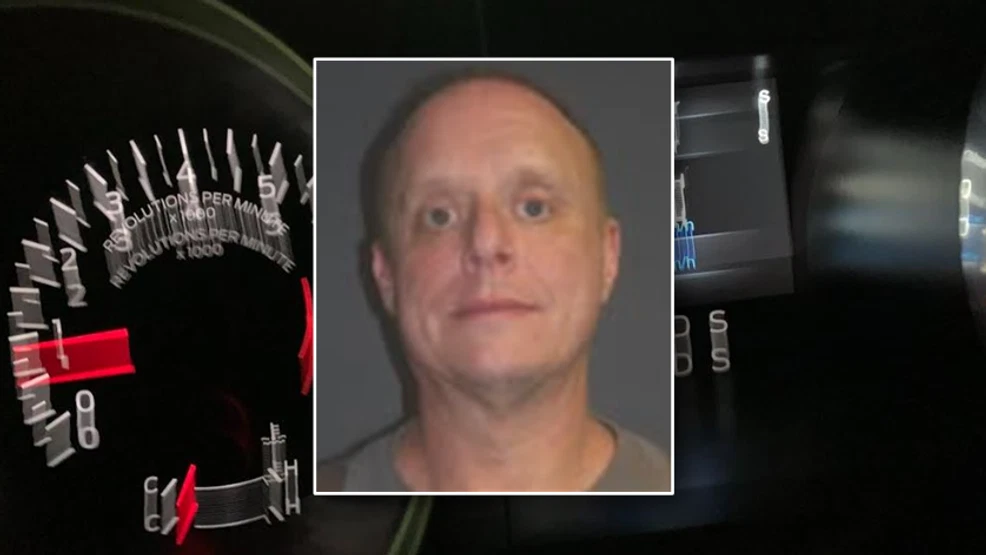
Eventually, the chase came to an end. The driver, identified as 49-year-old Kenneth Knoeber, was stopped and taken into custody, with no further incidents reported after the stop, which, considering how the situation started, is close to the best possible outcome. But the consequences didn’t stop with an arrest. Knoeber now faces multiple charges tied directly to what happened on the road, including fleeing to elude arrest, reckless driving, failing to comply with law enforcement, and driving left of center, each charge reflecting a different part of the sequence, from the initial decision to speed to the choices made throughout the pursuit.
There’s another piece here that raises the stakes even further. Authorities seized the Mustang under North Carolina’s Run and Done law, which changes the equation entirely. The car itself is now part of the penalty, removed from the driver as a direct consequence of the legal process. That’s a tough loss for anyone, especially with a car like a Mustang, but losing the vehicle is the entire point of a law like this. Laws such as Run and Done aren’t symbolic, they’re built to hit hard and specifically discourage this kind of behavior, and forfeiting the car sends a clear message about how seriously these cases are being treated now.
The pursuit raises the usual questions that come with cases like this: how far does a driver push things before realizing it isn’t worth it, and how quickly does a situation spiral once that first decision gets made? Here it started with speed and turned into something far more serious within moments. For people who genuinely respect performance cars, a story like this hits a nerve, not because of the Mustang, but because of how it was used. On a track or an open road with no traffic, a Mustang at speed is an incredible machine. In public traffic at triple-digit speeds, it becomes a liability instead.
In the end, nobody crashed and nobody got hurt, which, given how it started, is close to the best possible outcome available. The takeaway isn’t complicated: once a driver decides to run, the charges, the danger, and the loss of the car all follow directly from that first decision, and once it starts, it’s almost impossible to pull back.
Source
About the Author