The hypercar market is about to deliver another reality check for anyone still wondering what analog performance cars are worth in 2026. A one-of-a-kind Pagani Zonda Unica is heading to auction this week, with estimates suggesting the final hammer price could land somewhere between $11 million and $14 million. That kind of money doesn’t just buy speed anymore — it buys rarity, mechanical purity, and something the modern supercar industry is rapidly abandoning.
Why This Particular Zonda Matters
This Zonda matters because it represents almost everything collectors believe is disappearing from high-end performance cars. It has a naturally aspirated V12, sends power to the rear wheels, and, most importantly, uses a six-speed manual transmission, the detail that separates it from nearly every modern hypercar. At a time when nearly every modern hypercar relies on paddle-shift gearboxes, hybrid systems, and increasingly digital driving experiences, this Pagani feels almost rebellious, and that consistency is a huge part of why collectors keep chasing these cars aggressively years after regular production ended.
The Zonda Unica Is Not Just Rare
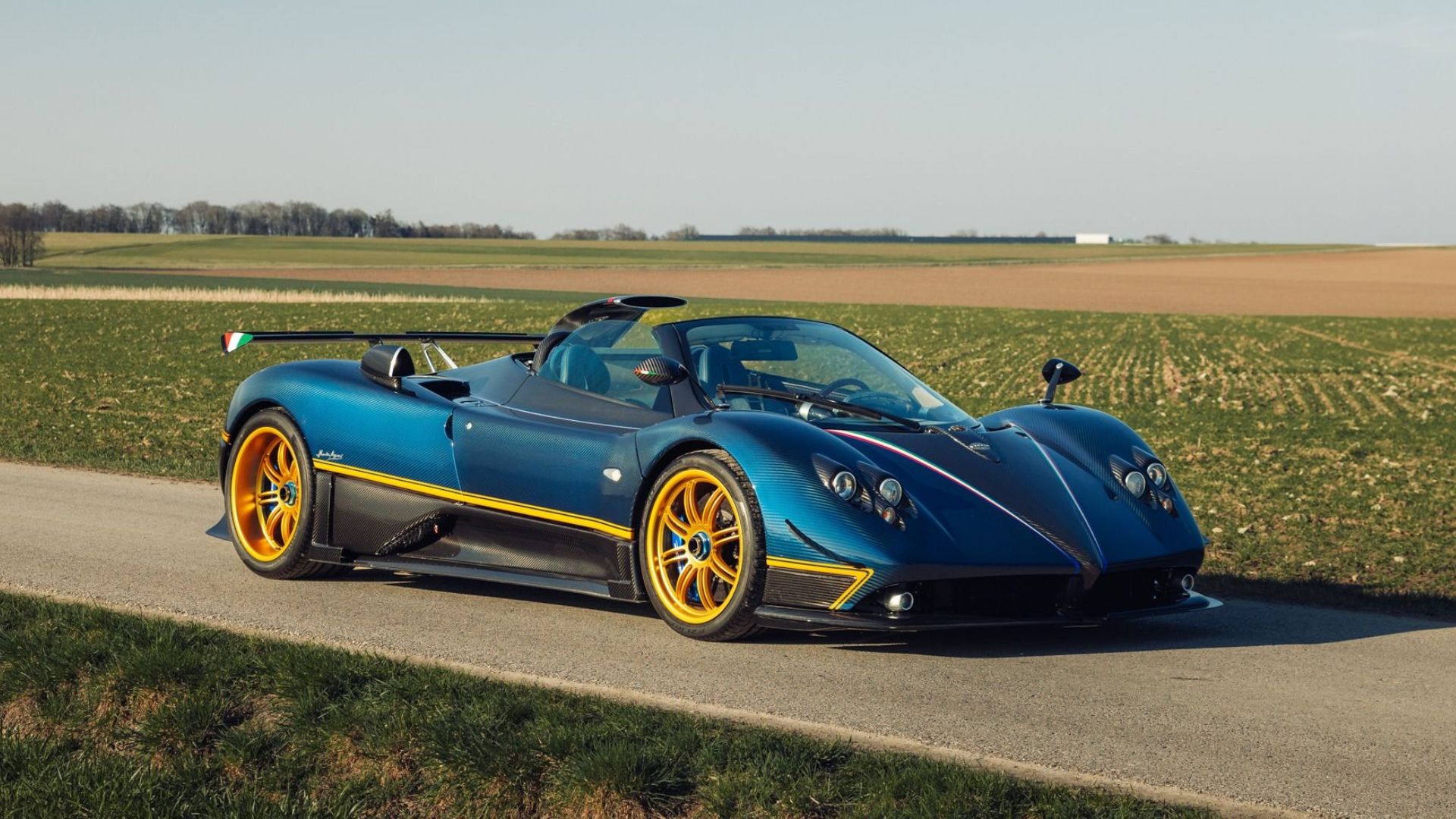
The car heading to auction isn’t simply another limited-production Zonda. It’s a one-off commission built specifically for the founder of Spain’s Top Car Design. Pagani has always operated differently from larger exotic manufacturers, building its reputation around personalization and bespoke craftsmanship — buyers weren’t just ordering a car off a production line, they were commissioning rolling pieces of automotive art, and the Zonda Unica pushes that idea further still. Built in 2018 near the end of the Zonda’s production timeline, chassis number 76135 was created as a completely unique machine, and Broad Arrow described it as a singular commission, emphasizing its standalone status even among the already rare Zonda family. It’s also worth noting this car shouldn’t be confused with the similarly named Zonda Unico revealed last year; despite the nearly identical naming, they’re separate vehicles, a distinction that matters because confusion in the collector world can affect perception and value quickly.
The Design Still Looks Untouchable
Even decades after the Zonda first appeared, the shape still feels dramatic in a way many newer hypercars struggle to replicate. The Unica uses exposed carbon fiber bodywork finished with a blue-tinted effect that shifts appearance depending on lighting conditions, and it borrows styling cues from the Zonda Tricolore, another ultra-exclusive version of the car. Green, white, and red accents appear across the hood, mirrors, and rear wing end caps as a nod to the Italian tricolor theme, while gold graphics and matching wheels further separate the car from other Zonda variants. Modern hypercars increasingly lean on sharp edges, giant screens, and overcomplicated styling themes to stand out, but the Zonda still manages to look exotic without losing elegance, a balance that’s part of why the design remains so respected among enthusiasts.
The Manual Transmission Is the Real Prize
Step inside the Zonda Unica and the contrast with modern hypercars becomes even more obvious, with analog gauges instead of giant touchscreen interfaces and blue leather seats featuring white quilted inserts continuing the bespoke theme found throughout the exterior. Many modern performance cars now feel dominated by software and digital interfaces, but the Zonda feels mechanical, tactile, and intentionally old-school, with every button, lever, and switch reinforcing the idea that the car was built for engagement rather than convenience.
As striking as the design is, the biggest factor driving interest in this car may ultimately be the powertrain. The Zonda Unica uses a naturally aspirated 7.3-liter AMG-sourced V12 producing 750 horsepower and 575 lb-ft of torque, numbers that remain serious even by modern hypercar standards, but the six-speed manual gearbox is what makes this configuration truly special. Manual transmissions have almost vanished from the ultra-high-performance segment as automakers moved toward dual-clutch and paddle-shift systems for faster lap times and easier usability, a switch that made sense from a pure performance standpoint but left something important behind for enthusiasts. Cars became objectively faster while often feeling less emotionally involving. The Zonda Unica represents the opposite philosophy, prioritizing mechanical interaction over optimization, and collectors are willing to pay enormous money for that feeling.
Low Mileage and Horacio Pagani’s Personal Connection
The hypercar has covered just 1,626 miles since new, keeping it firmly in collector-grade territory, and auction materials indicate some of those miles were reportedly driven by Pagani founder Horacio Pagani himself, adding another layer of exclusivity to an already nearly irreplaceable car. For collectors operating at this level, provenance matters almost as much as specifications, and the car has reportedly been carefully maintained throughout its life, which becomes critically important once values climb into eight-figure territory.
The Zonda Refuses to Fade Away
Pagani has since introduced the Huayra and the Utopia, but many enthusiasts still view the Zonda as the company’s defining creation. That loyalty says a lot about what the Zonda represented: exposed carbon fiber, dramatic aerodynamics, handcrafted interiors, and AMG-sourced V12 power blended into something that felt emotional instead of corporate, helping establish Pagani as one of the most respected boutique manufacturers in the world. Years after the original production run effectively ended, the market still can’t get enough of these cars, and that reality exposes something bigger happening in the collector world right now: enthusiasts are increasingly chasing analog experiences before those machines disappear entirely from the high-end automotive landscape. The Zonda Unica may sell for as much as $14 million this week, but the real story is why buyers are willing to spend that kind of money in the first place. They aren’t just purchasing horsepower or exclusivity — they’re buying one of the last remaining symbols of an era when hypercars still felt raw, mechanical, and deeply human.
About the Author