The industry keeps telling drivers to make peace with smaller engines, hybrids, and silent electric luxury. Mercedes-Maybach isn’t fully buying it. Against nearly every trend in the business, the ultra-luxury division is still fighting to keep its twin-turbo V12 alive, and American buyers are the biggest reason it can.
Customers Are Still Asking for the Real Thing
While automakers worldwide rush to kill large-displacement engines in the name of emissions targets and electrification, Maybach is openly admitting customers still want the real thing. Not a hybrid stand-in, not a downsized compromise, not a synthetic echo of old-school luxury performance. People walk into Maybach dealerships and ask for a V12 by name, and according to Maybach boss Markus Bauer, talking them into a V8 instead isn’t easy. That alone says a lot about where the luxury market actually stands.
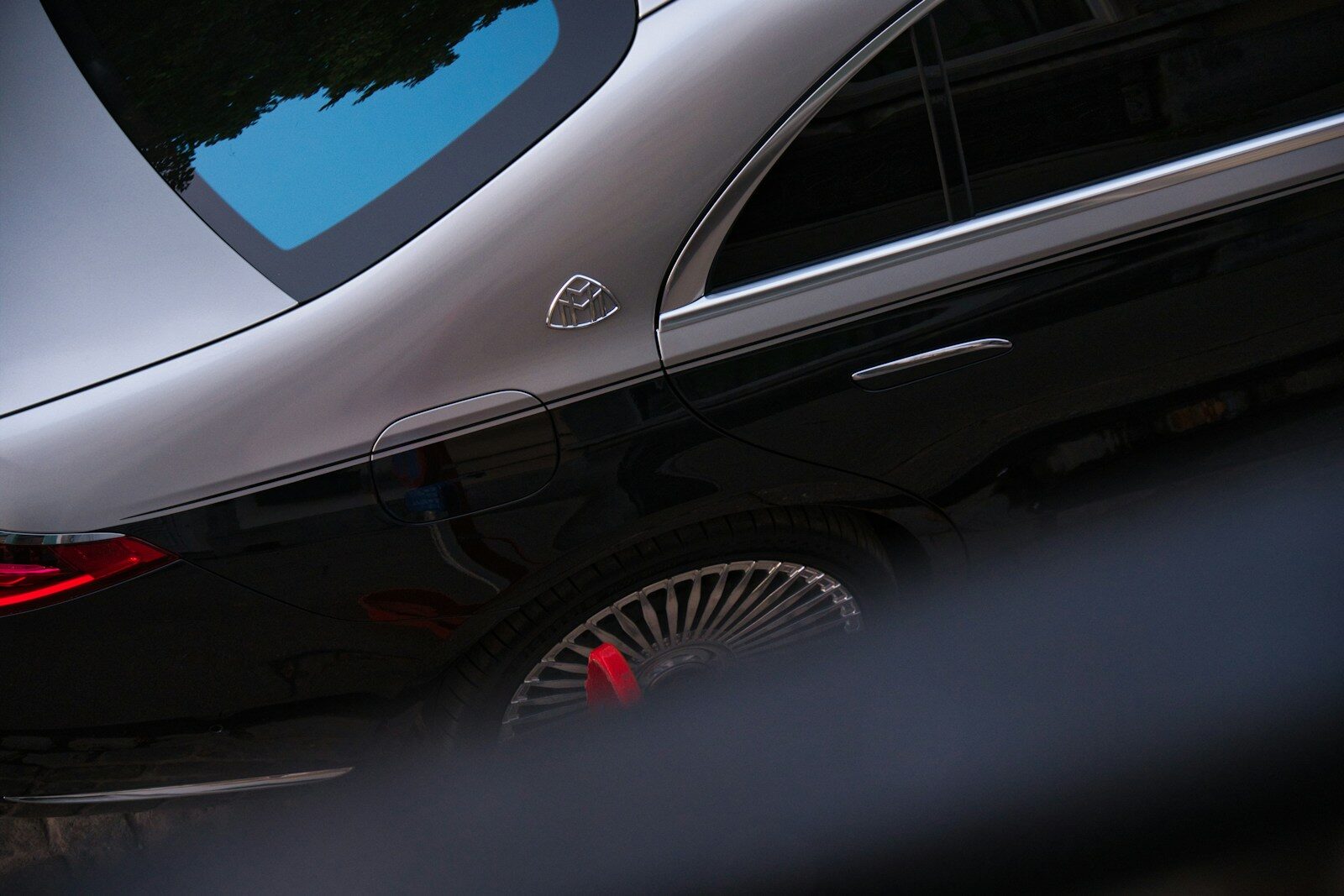
The V12 has become one of the last true status symbols in the car world. Plenty of engines make big power now, but a V12 is different, with an appeal built around smoothness and character that turns out to be difficult to replicate any other way. Mercedes-Maybach knows this, which is why the 6.0-liter twin-turbocharged V12 remains alive inside the S680. Right now, that engine produces 621 horsepower and 664 lb-ft of torque, massive numbers for a full-size ultra-luxury sedan, but raw performance is only part of the equation. The real appeal is how the power arrives — a V12 delivers torque in a way that feels almost endless, without harshness or drama, turning heavy luxury sedans into rolling expressions of excess.
America Has Become the V12’s Last Stronghold
The catch is that keeping a V12 alive today is getting politically and financially difficult. Europe has already walked away from the V12-powered S-Class almost entirely, which stings given that Europe was historically one of its spiritual homes. According to Bauer, the United States is now the biggest market for the Maybach V12, which isn’t surprising once you look at the broader luxury market. American buyers still gravitate toward large engines, high horsepower, and vehicles that feel unapologetically premium, and even as EV adoption grows, there remains strong demand for traditional luxury performance with real mechanical character.
Mercedes has already introduced a new flat-plane-crank twin-turbo V8 that’s powerful, modern, and technically impressive. On paper, it checks many of the same boxes buyers expect from a flagship luxury performance car, offering strong power delivery and the kind of refinement expected from a six-figure vehicle. But even Mercedes seems willing to concede there’s still a gap between a V8 and a V12. For years, automakers insisted buyers would happily accept downsized engines as long as the performance numbers held up. In some segments that worked; in others, people adapted because they had no choice. The ultra-luxury market doesn’t play by those rules — customers spending this kind of money aren’t chasing efficiency or practicality, they’re chasing exclusivity and emotional appeal, and a V12 delivers both. Strip it out and the identity of the car itself changes.
One of the Last 12-Cylinder Luxury Sedans Left
The S680 is now one of the last places left where buyers can still experience a modern 12-cylinder luxury sedan from a major automaker. Rolls-Royce and a shrinking list of exotic brands still offer similar engines, but the overall market has been collapsing fast, with manufacturers abandoning the V12 one by one, some because regulations forced their hand, others because demand finally dried up. Maybach appears determined not to rush that ending. For now, the company says the V12 will survive as long as regulations and demand allow, which makes this about more than performance or luxury. It’s become a question of identity, and Maybach keeping the V12 alive, even temporarily, reads like a deliberate stand.
For American buyers especially, this may be the final chapter of the twelve-cylinder luxury sedan. That leaves the S680 in a strange spot: a modern flagship and a rolling tribute to something the rest of the industry is busy retiring. For now, at least, America is making sure that story isn’t over yet.
About the Author