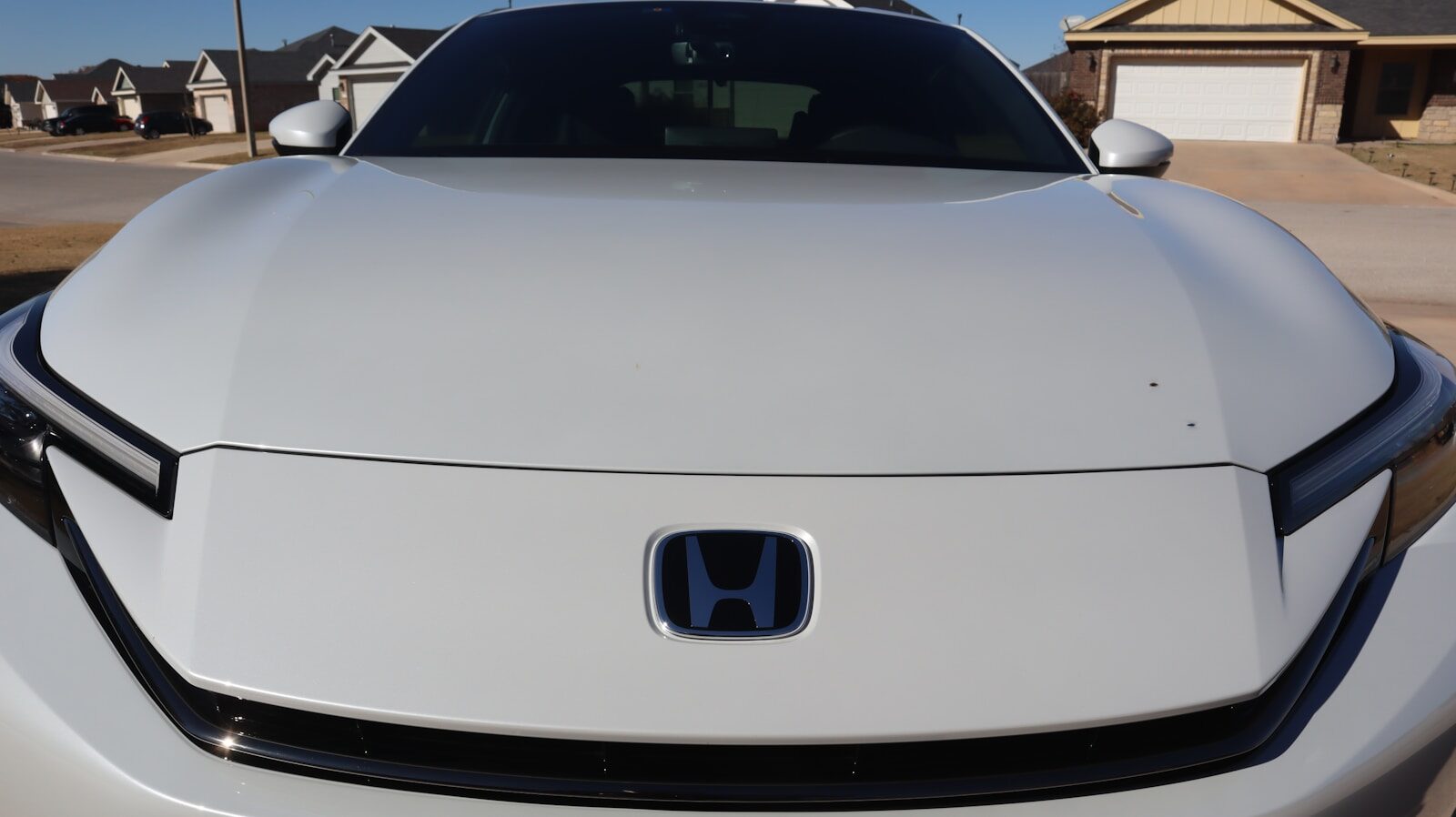
Quinn Attika’s name shows up in two separate federal lawsuits against American Honda Motor Co. this year, and that’s not a clerical accident. It’s a paper trail. The paint-peeling class action that just landed in the Central District of California isn’t Honda’s first rodeo with this exact fight — it’s a revival of claims a judge already stripped out of an older case back in March, and Honda is already moving to kill this version too.
The underlying dispute traces back to a complaint filed in November 2024, Clemmens v. American Honda, describing what plaintiffs call the Paint Defect: factory finishes that fail, peel, delaminate, bubble, and flake on certain Acura and Honda models dating to the 2013 model year, including the Acura MDX, Honda Odyssey, Honda Pilot, Honda Fit, and Honda HR-V. It isn’t just any white paint, either. Court filings single out five specific factory color codes — White Diamond Pearl (NH-603P), Taffeta White (NH-578), White Orchid Pearl/Bellanova White (NH-788P), and Platinum White Pearl (NH-883P) — the multi-stage pearl and metallic finishes that need a base coat, a pearl or mica layer, and a clear coat to get that glossy, three-dimensional look under showroom lighting.
That extra layering is exactly what makes these finishes more failure-prone than a basic single-stage color. Every additional coat is another bonding surface that can separate if primer, base, or clearcoat doesn’t cure or adhere correctly, and pearl finishes are notoriously sensitive to spray-booth humidity, temperature, and film thickness during the original paint job. Honda’s own paperwork suggests the company knew about trouble well before any lawsuit showed up: plaintiffs point to a 2019 technical service bulletin that extended paint warranty coverage specifically for White Diamond Pearl on 2014-2016 Acura MDX models, instructing dealers to inspect suspect panels and have a certified body shop repaint them — but only after Honda approved the repair. Plaintiffs allege Honda’s awareness dates back even further, to 2012, based on internal testing, though that particular claim hasn’t been tested in discovery yet.
It’s a familiar shape for anyone who has followed Honda’s handling of the HR-V’s exploding rear glass problem — a defect acknowledged in hundreds of federal complaints without the company ever calling it a recall. A technical service bulletin isn’t a recall. It doesn’t obligate a dealer to fix a car for free once the vehicle is out of its original warranty; it’s simply Honda’s internal instruction sheet for handling a known issue if a customer happens to catch it in time.
The three original plaintiffs’ stories, laid out in court filings, follow a similar arc. New Jersey owner Marie Toussaint bought a new 2014 Acura MDX in 2013, had a paint failure near the sunroof repaired under warranty in 2018, then watched the same defect resurface near the tailgate six years later — only this time, the dealer and Acura’s customer relations team declined to cover it. California plaintiff Terri Hernandez and Pennsylvania plaintiff Jim Clemmens tell nearly identical stories: Acura representatives allegedly acknowledged the paint problem was “a widespread issue,” then still refused to reimburse either owner for out-of-pocket repairs.
How a Judge Already Cut This Case in Half
Honda moved to dismiss the original complaint, and in July 2025, U.S. District Judge Otis D. Wright II granted that motion — but with permission for plaintiffs to go back and fix specific, identified problems with their pleading. Their attorneys used that opening to go much bigger. The amended complaint filed in August 2025 didn’t just patch holes; it added seven brand-new plaintiffs, including Quinn Attika, and six entirely new legal claims spanning consumer-protection statutes in a dozen additional states.
Honda argued the amendment blew past what the court had actually authorized, and in March 2026, Judge Wright agreed. His order struck every one of the new claims and every one of the newly added plaintiffs from the case, ruling that a judge’s permission to cure specific deficiencies isn’t a blank check to relaunch a lawsuit as a bigger one. Leaning on a similar dispute involving Toyota as precedent, the court didn’t even reach whether those new claims had merit — they were gone before anyone got that far.
So Attika Filed Her Own Lawsuit
Roughly nine weeks later, Quinn Attika filed again — this time as the named plaintiff on a brand-new, standalone complaint in the same Los Angeles federal courthouse, case number 2:26-cv-05532. Court records show the case was flagged as related to the original Clemmens litigation within weeks, and by late June it had been formally transferred as a related matter, a strong signal it will land in front of Judge Wright again or at least be shaped by the same institutional memory of how round one played out.
Honda didn’t wait long to respond. Docket records show the company filed a motion to dismiss Attika’s new complaint on July 22 — barely a week before this story published, and long before either side has argued a single fact in front of a jury. Whatever happens with that motion, it’s the same automaker running essentially the same defense against, functionally, the same allegations it already got trimmed down once.
Back in the surviving Clemmens case, Honda has also pulled out a different tool entirely. In late June, it filed a motion to compel arbitration against Clemmens personally, pointing to language buried in his original sales contract — an increasingly common tactic among automakers hoping to move consumer disputes out of open court and into private, faster, and generally more defendant-friendly arbitration proceedings. That motion was still working through briefing in mid-July, and its outcome could shape how much of either case — old or new — ever sees a courtroom at all.
Not everything Honda asked for got tossed, either. Judge Wright’s March ruling let the core California claims move forward — under the state’s Unfair Competition Law, False Advertising Law, and Consumers Legal Remedies Act — along with a breach-of-warranty claim specific to Clemmens. The judge also rejected Honda’s argument that peeling paint is purely cosmetic, agreeing that a compromised paint layer can accelerate corrosion of the metal underneath, potentially weakening structural connections at the frame, window and windshield mounts, the undercarriage, and suspension mounting points over time. That distinction matters legally, because defects tied to structural integrity get far more traction in court than defects a judge views as skin-deep.
What Owners Should Actually Do
If you own one of the affected models in a pearl or metallic white finish, the practical advice doesn’t hinge on how this litigation eventually shakes out. Document any peeling, bubbling, or flaking with dated photos the moment you spot it, and ask your dealer in writing whether a technical service bulletin covers your specific VIN before paying for a repaint out of pocket. A dealer’s informal comment that an issue is common or widespread isn’t the same thing as a warranty commitment — and, per the allegations here, it’s not unusual for that kind of acknowledgment to arrive right before a claim gets denied anyway. A full professional respray on a modern three-stage pearl or metallic finish commonly runs well into four figures per panel once color-matching, blending, and clear-coat work are factored in, which is exactly the kind of bill that makes having a warranty argument in writing worth the extra effort upfront.
Honda is hardly alone in fighting this particular kind of battle. GM buyers are still chasing reimbursement over a wheel defect on the C7 Corvette more than a year after the automaker admitted fault, and cosmetic-adjacent complaints that never rise to a formal recall often leave federal regulators with limited room to act on their own — a dynamic playing out right now in NHTSA’s handling of a denied Tesla door-handle complaint that triggered a federal rulemaking anyway, years after the agency first waved it off. Defects that sound minor on paper have a way of turning into bigger, longer fights than automakers expect once enough owners start comparing notes.
For now, the Clemmens case is bound for a jury trial reset to July 2027 after the parties blew through their original pretrial deadline and got a pointed reminder from the bench that court schedules aren’t optional just because a case’s posture feels unsettled. Attika’s case, barely two months old, is just getting started down the same road — motion to dismiss and all. Whether either lawsuit eventually forces Honda to answer for a defect it’s accused of knowing about since 2012, or simply fizzles out the way the first complaint nearly did, owners of the affected Acuras and Hondas are the ones left watching their paint bubble in the meantime.
About the Author