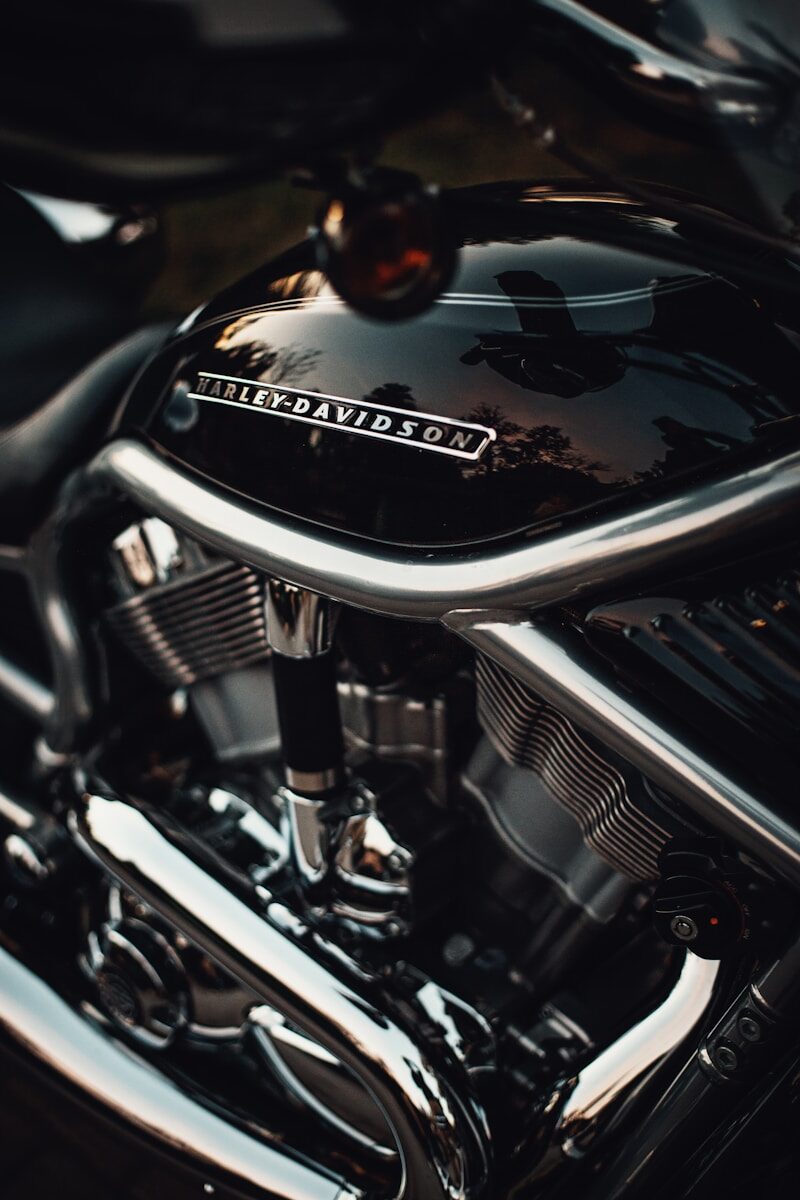
On July 29, 2026, Harley-Davidson Motor Company filed two federal trademark applications for the names RMCR and RMXR. Both landed with the U.S. Patent and Trademark Office on the same day, both cover International Class 012 (motorcycles and structural parts), and both were filed by the same in-house attorney working out of Harley’s Juneau Avenue headquarters in Milwaukee. Neither application includes a logo, a product description, or a hint of what the letters stand for. That’s normal. It’s also exactly the kind of document worth reading line by line, because trademark filings say a lot more than most people realize once you know what to look for.
What The Filing Actually Says
Both RMCR (serial number 50020187) and RMXR (serial number 50020053) were submitted on an intent-to-use basis, listed on the filing as Section 1(b). That’s a legal distinction with real consequences. A 1(b) filing means Harley hasn’t sold a single motorcycle under either name yet — the company is simply asserting a good-faith intention to use the marks eventually. Contrast that with a Section 1(a) filing, which requires proof the mark is already in commerce, like a dated photo of a nameplate on an actual bike. Right now, both applications sit in the earliest possible stage: “new application awaiting assignment to an examining attorney.” Nobody at the USPTO has even looked at these yet.
That distinction matters for anyone trying to guess when, or if, an RMCR or RMXR motorcycle actually reaches a showroom. Once an intent-to-use application clears examination and publication without opposition, the USPTO issues a Notice of Allowance. From there, the applicant has six months to either file a Statement of Use proving the mark is in commerce, or request a six-month extension. Those extensions can stack up to three years total before the mark dies for lack of use. In practice, that means Harley could be sitting on these names for years, or it could quietly let them lapse if the products behind them get canceled. A trademark filing is a paper trail, not a promise. Ford enthusiasts learned that lesson when a trademark filing hinted at a Mustang Boss revival that still hasn’t turned into a confirmed production car.
Reading The Letters
The letters themselves invite some educated guessing, and Harley’s own history gives that guessing a starting point. “XR” already carries serious weight inside Harley-Davidson: the XR750 is the most successful racing motorcycle in AMA flat-track history, a bike that turned midsize dirt ovals into a decades-long Harley highlight reel. “MX” is shorthand for motocross anywhere a dirt bike shows up. Pairing “RM” with those two suffixes suggests Harley may be sketching out a pair of related off-road or race-oriented models rather than a single one-off product, especially given both applications were filed on the same day, by the same attorney, with sequential internal docket numbers. That reads like a company organizing a family of names, not tossing out a random word to protect later.
Why Harley Might Want This
The timing tracks with where Harley-Davidson has actually been spending development money. The Pan America adventure bike pushed the brand onto gravel and fire roads for the first time in decades, and the X350 and X500, built with Chinese manufacturer Qianjiang, target smaller-displacement buyers outside Harley’s traditional cruiser base entirely. Both moves point at the same problem: Harley’s core customer has been aging for years, and the growth in global motorcycle sales is happening in adventure, off-road, and small-bore segments where Harley has almost no presence. Filing race-flavored trademarks fits a company looking for a foothold in that world rather than one planning another 800-pound tourer.
It would also put Harley into a segment that already has plenty going on without a new manufacturer wading in. Off-road and motocross culture has grown well past its dirt-lot reputation, complete with its own stars, sponsorship money, and occasionally, its own headline-grabbing trouble off the track. Whether Harley wants any part of that spotlight with an actual competitive machine, or just wants dealership showroom traffic from a smaller, cheaper bike wearing a race-inspired name, is impossible to tell from a trademark filing alone.
Traditional manufacturers reinventing what a motorcycle even is has become the norm rather than the exception lately. Honda’s frameless WN7 electric motorcycle rethinks basic chassis engineering from scratch, and smaller American builders like Boss Hoss have spent decades proving there’s a market for motorcycles that ignore convention entirely, big-block V8 cruisers included. Harley reserving a couple of unfamiliar names doesn’t look nearly as strange next to that backdrop.
The Realistic Timeline
For now, RMCR and RMXR exist only as four-letter strings in a federal database, tied to no engine, no price, and no release date. Worth watching, not worth reorganizing a garage budget over. If Harley clears examination and starts inching toward a Statement of Use, that’s the point these names start meaning something concrete. Until then, the smart move is the same one that applies to every trademark story: file it away, and check back when there’s an actual motorcycle attached to the paperwork.
About the Author