Paperwork rarely makes headlines, but when a manufacturer registers a motorcycle’s design with a country’s patent office, it is usually a reliable signal that a showroom launch is coming. That is exactly what just happened with the fifth-generation Ducati Monster, the naked bike Borgo Panigale revealed to the rest of the world last October and now appears to be preparing for India. Design filings like this rarely make for gripping reading on their own, since most of the bike’s specs were already public. But the real story sitting underneath the paperwork is worth pausing on, because Ducati did not just reshape the tank for nostalgia’s sake. The company re-engineered the heart of its best-selling naked bike, and the changes say a lot about where it plans to sell motorcycles next.
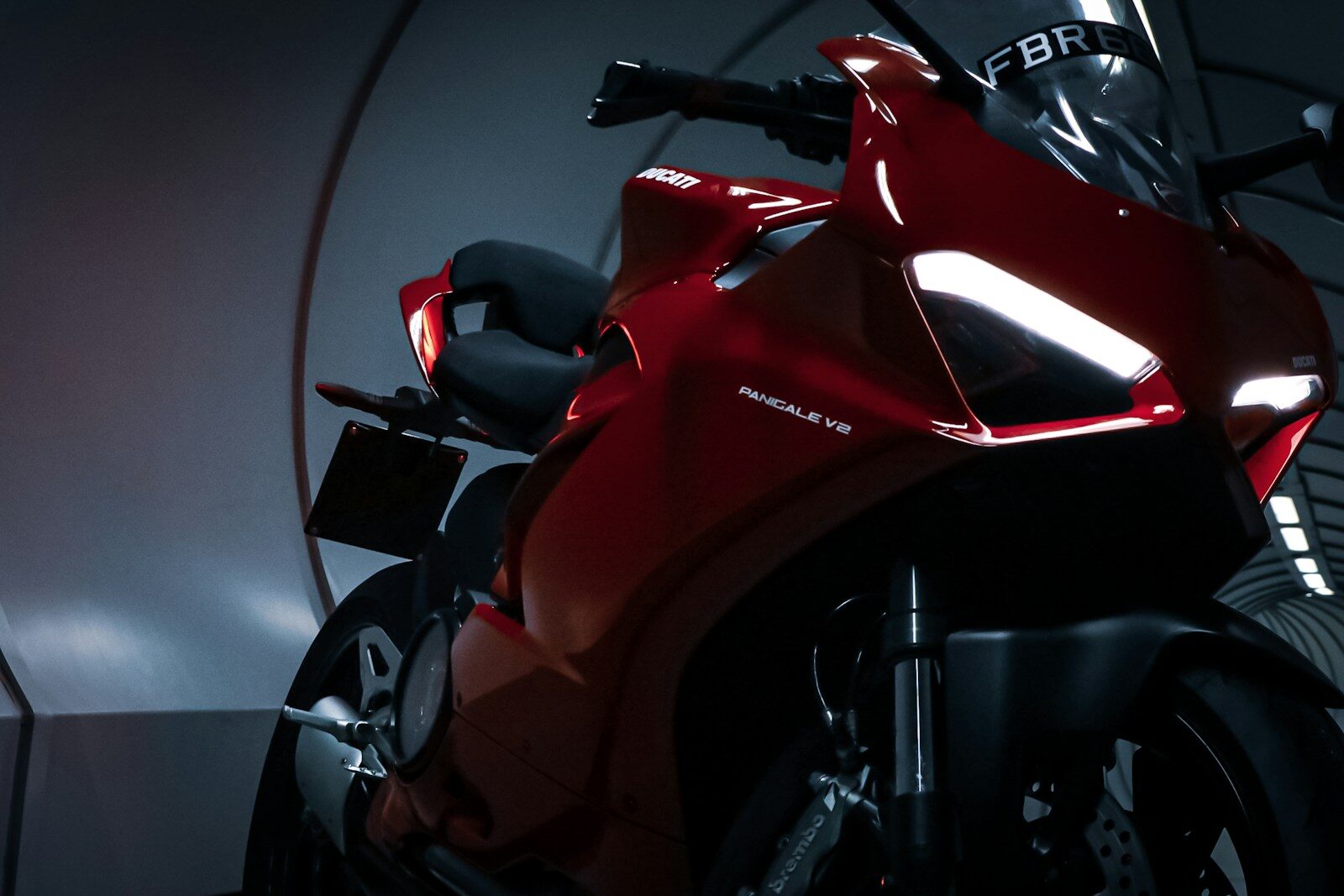
Visually, the fifth-generation Monster looks like a course correction. The outgoing model’s flatter tank drew criticism from longtime owners for straying from the muscular, sculpted shape that made the original 1993 Monster a design landmark, so Ducati brought that look back. The new tank adds intake-style vents that reference the second-generation Monster from the early 2000s, while a redesigned full-LED headlight now includes a circular daytime running light along with dynamic turn signals front and rear. None of that is groundbreaking by itself, but it quietly fixes the one complaint that stuck to the last redesign.
The Engine Is the Real News
The part worth caring about lives under the tank. Ducati built an entirely new 890cc V-twin for this generation, and the engineering choice that matters most is what it left out: desmodromic valve actuation, the spring-less, mechanically-closed valve system that has defined most high-performance Ducatis for decades. Standard valve springs return the valves instead, paired with a variable intake timing system that continuously adjusts the intake valve opening advance to smooth out low-rpm delivery without blunting the top end. It sounds like a downgrade to anyone who bought into the desmo mythology, but the payoff is real. Ducati says the resulting engine is the lightest twin-cylinder unit it has ever built at its Borgo Panigale factory, at just 54.4 kg, and it only needs a valve-clearance check every 45,000 km. For context, Ducati’s desmodromic twins have historically needed that same check far more often, a service that can run several hundred dollars at a dealer because of the labor involved in adjusting desmo shims. Stretching the interval to roughly 28,000 miles is the kind of change that actually saves owners money over the life of the bike, even if it will never show up in a brochure photo.
This 890cc V-twin is not exclusive to the Monster, either. Ducati is spreading it across the Multistrada V2, Streetfighter V2, and Panigale V2, essentially building a junior lineup on one engine architecture the same way it once built a whole family of naked, sport, and adventure bikes around the older 937cc Testastretta. Platform sharing like this is how a manufacturer keeps parts bins and dealer service training manageable while still filling out a broad catalog, and it is also exactly the kind of move that makes expanding into new markets financially sane: one engine, several bodies, one training curriculum for technicians. In Monster tune, the V2 is rated at 111 hp and 91.1 Nm of torque, with a bidirectional quickshifter borrowed from the flagship Panigale V4, four riding modes, four separate power modes, and a 35 kW-restricted version that qualifies for European A2 learner licensing.
Lighter, Lower, and Easier to Live With
Ducati trimmed weight everywhere else, too. The bike uses an aluminum monocoque frame, Showa suspension at both ends, and Brembo brakes running a friction compound tuned more for stop-and-go modulation than outright track bite. The whole package comes in at a claimed 175 kg wet without fuel, which is four kilograms lighter than the outgoing Monster despite the added electronics. Seat height dropped 5mm to 815mm, and Ducati’s accessory catalog offers a lower seat and a suspension-lowering kit that combine to bring that figure down to 775mm, which matters for anyone who found the old Monster a stretch at a stoplight. The instrument cluster grew as well, moving from a 4.2-inch display to a 5-inch, 16-percent-larger TFT unit with adaptive layouts and separate Road and Road Pro information modes.
Buyers get three colorways across the Monster and Monster+ trims: Ducati Red, Iceberg White with red wheels, and a new, sportier Sport livery. There is also a limited Monster 100 tricolor edition that borrows its paint scheme from the 2008 Monster S4Rs Tricolore, the final bike built before Ducati re-engineered the platform from the ground up. That is a deliberate bit of history-mining. The original air-cooled Monster ran from 1993 to 2008 and effectively created the naked sport bike category, so tying a modern special edition back to its last-ever iteration is Ducati reminding buyers exactly what lineage they are paying for, the same instinct that turns Ducati purists apoplectic anytime someone reinterprets a classic color scheme.
Why India, Specifically
None of this explains why Ducati is filing paperwork in India specifically, but it does explain why the destination makes sense. India is one of the largest motorcycle markets on the planet, and a growing slice of it is buyers moving up from commuter bikes into their first premium machine, exactly the audience a lighter, cheaper-to-maintain, learner-license-friendly naked bike is built to capture. Design registrations like this one are also common industry breadcrumbs right now. Ducati is not the only manufacturer leaving this kind of paper trail lately. A similar design filing surfaced for a VinFast sport bike aimed at a comparable market, and Honda did something comparable with its boosted V3R down in Australia, filing paperwork with a country’s design registry months before either machine is expected to reach a showroom floor. Filings like these do not guarantee a launch date or a price, but they are one of the few genuinely reliable leaks in an industry that otherwise loves to deny everything until the embargo lifts.
For Ducati fans in the U.S., none of this changes what is already sitting on dealer floors, but it is a useful preview of where the platform is headed next: a naked bike that finally looks like a Monster again, costs measurably less to maintain over time, and is light enough that the small-Ducati label no longer feels like an insult. If the brand’s fashion-world crossover appeal with the Streetfighter V4 proved anything, it is that Ducati is comfortable chasing buyers who never thought of themselves as superbike people. A Monster that is cheaper to service and lighter than before might end up doing that job better than any clothing collaboration ever could.
About the Author