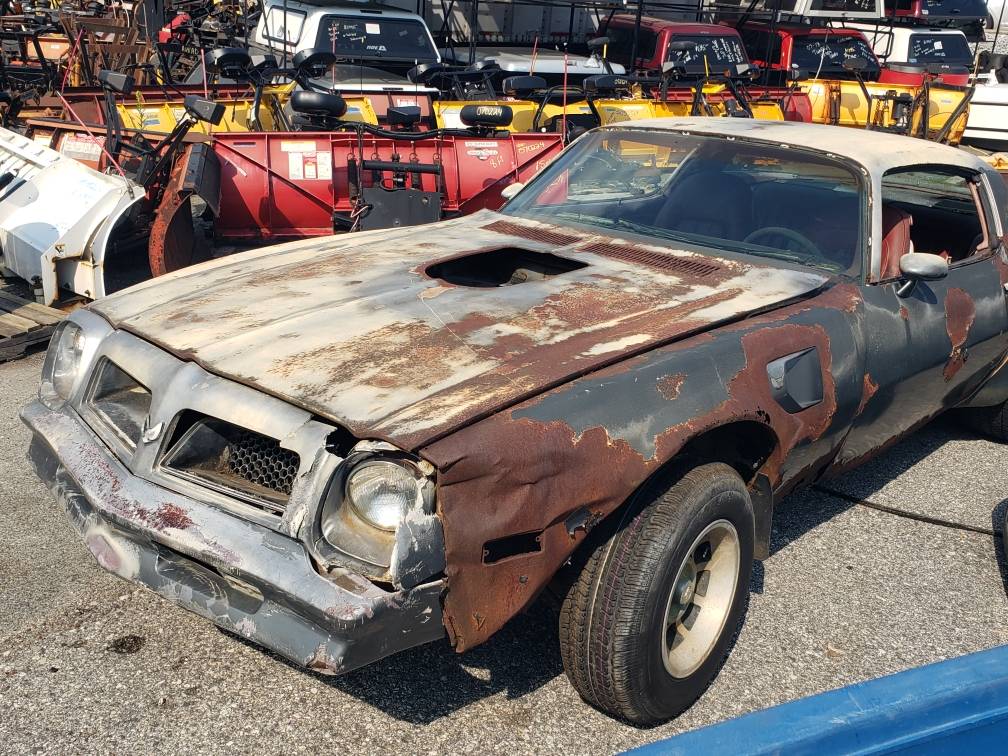
A battered 1976 Pontiac Trans Am rotting in a Pennsylvania junkyard is pulling at muscle car fans’ heartstrings for one simple reason: under the rust, the missing engine, and the years of neglect sits a genuine factory 455 four-speed car. That changes the whole conversation.
Rough at First Glance, but Genuinely Rare
At first glance, it looks rough enough to scare off most buyers before they climb out of the truck. The body wears heavy rust, the drivetrain is gone, and it’s clearly spent years parked outside, deteriorating while parts walked off one at a time. But this isn’t just another broken-down Firebird — VIN decoding says it left the factory with Pontiac’s 455-cubic-inch engine and a manual transmission, one of the most desirable combinations available in 1976. It’s sitting in York, Pennsylvania, with a $2,900 asking price and a title. That sounds cheap until you grasp what it needs: a complete restoration with serious labor, serious money, and a long list of missing components before it ever touches pavement again.
Why the Numbers Matter
The timing matters because 1976 was a big year for the Firebird. Pontiac shipped more Firebirds than it had in 1968, the previous high-water mark for the nameplate, and the Trans Am led the charge with 46,704 of them, by far the most popular trim, with the Esprit next at 22,252 and the base Firebird and Formula filling out the rest. Here’s the catch: nearly 47,000 Trans Ams sounds enormous, but far fewer got the optional 455. Most buyers took the standard L78 400, more than 39,000 of them. Only 7,528 Trans Ams left with the L75 455, and every one of those came with a manual transmission, which is exactly what makes them so interesting to collectors decades later.
Where the Original Engine Likely Went
Anyone who’s spent time around old muscle cars already knows the likely story. Rare engines and factory manual setups tend to vanish from junkyard cars because they get transplanted into cleaner projects. Let a car sit long enough in a salvage yard and the valuable bits disappear piece by piece until only the shell is left. That’s almost certainly what happened here, and it frustrates a lot of Pontiac fans, because genuine factory 455 Trans Ams are getting harder to find untouched. Once the original drivetrain is gone, so is much of the collector appeal.
The bigger problem isn’t even the missing engine, it’s the body. Photos reportedly show significant rust throughout the metal, enough that many buyers would walk away rather than attempt a restoration. Cars left outdoors in junkyards for years rarely come out clean, and structural rust is the kind of thing that quietly doubles a project’s cost.
A Surprisingly Intact Interior
Oddly, one of the better-preserved parts is the interior. The red cabin is in relatively decent shape considering how long the car reportedly sat, and, more importantly, desirable pieces like the seats are still inside instead of stripped and sold off years ago. That’s genuinely surprising — junkyard muscle cars usually lose their interiors fast, since seats, trim, dashboards, and consoles become valuable to other restorations the moment a rare car turns up unattended. The fact that some of it survived may boost the car’s value as either a restoration candidate or a donor.
A Debate Playing Out Across the Collector World
That’s where buyers split into two camps. Some look at this Trans Am and see a rare Pontiac worth saving no matter the cost. Others see a parts car whose best purpose is helping another build cross the finish line. It’s the same debate playing out across the collector world: genuine 1970s muscle keeps getting harder to restore affordably because even rough project cars now carry real emotional and financial weight. Years ago, a rusted, engineless Trans Am might have been ignored completely. Today, people argue over whether a shell like this deserves another shot, because surviving factory performance cars have only grown more important to collectors.
That changes the economics entirely. The $2,900 asking price feels cheap until the restoration starts, and then reality hits. Rare muscle cars aren’t cheap hobbies anymore; they’re expensive commitments demanding time, storage, parts availability, and deep patience. People keep chasing them anyway, because a 1976 Trans Am offers something modern performance cars often can’t: raw character, simplicity, mechanical identity, and the sense that the machine itself matters more than a touchscreen menu.
This battered Pontiac may never see the road again. It may hand its remaining parts to another build and quietly disappear. But even rusted in a Pennsylvania junkyard with an empty engine bay, it still reminds enthusiasts why old-school American muscle keeps pulling people back, no matter how rough the condition gets.
About the Author