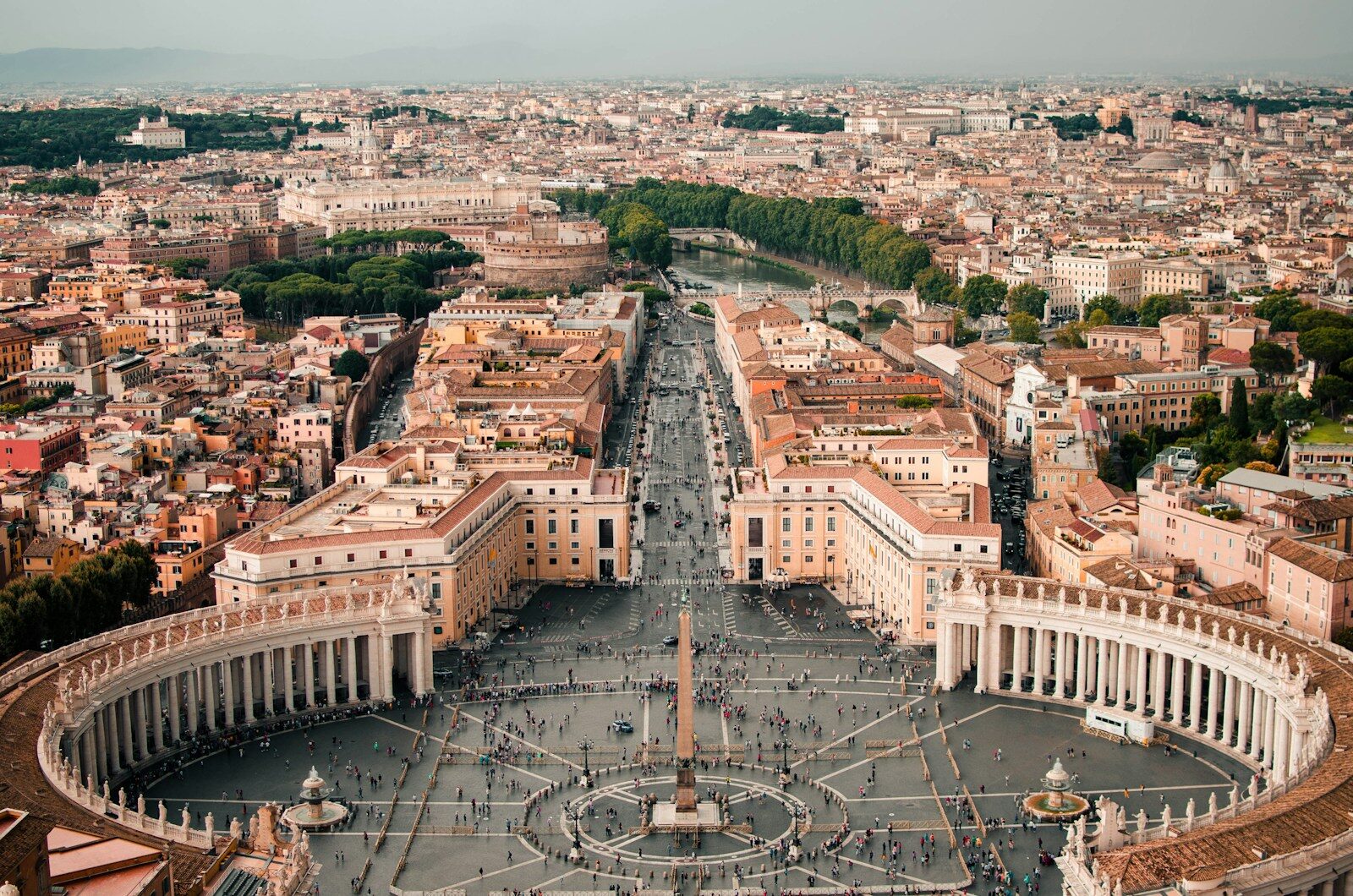
Formula 1 has spent years transforming itself from a racing series into something much bigger. On Wednesday, that reality became impossible to ignore after Formula 1 President and CEO Stefano Domenicali attended an audience with Pope Leo XIV at the Vatican.
At first glance, it might sound like an unusual crossover between motorsport and religion. But the meeting says a lot about where Formula 1 now stands globally and how aggressively the sport has expanded its influence far beyond the racetrack. This was not simply a ceremonial handshake for photographs. It was another sign that Formula 1 has become one of the most visible international entertainment platforms in the world.
That matters for fans, teams, sponsors, and even governments paying attention to the sport’s reach.
According to the information released surrounding the visit, Domenicali and Pope Leo XIV discussed several topics, including Formula 1’s impact around the world and the way the championship brings people together across countries and cultures. That’s a message Formula 1 leadership has leaned into heavily in recent years as the sport continues expanding into new markets and attracting larger global audiences.
This is where the story turns.
For decades, Formula 1 often carried the image of an exclusive European motorsport series followed mainly by hardcore racing fans. It had prestige, money, and engineering dominance, but its cultural footprint outside traditional racing circles remained relatively narrow compared to major stick-and-ball sports leagues. That has changed dramatically.
Now Formula 1 executives are operating in spaces once reserved for global political leaders, entertainment giants, and major international institutions. An audience at the Vatican reinforces just how aggressively Formula 1 has elevated itself as a worldwide cultural brand rather than simply a racing championship.
And honestly, the timing is hard to ignore.
Formula 1 has spent the last several years chasing mainstream attention with relentless intensity. The series expanded its calendar, increased its digital presence, pushed harder into the American market, and positioned drivers as global celebrities rather than just racers hidden behind helmets. The strategy clearly worked. Formula 1 is no longer a niche motorsport product consumed only by dedicated gearheads and engineering obsessives.
That’s where things get complicated for longtime fans.
Some enthusiasts love the explosion in popularity because it brings more money, stronger manufacturer interest, bigger events, and wider visibility for motorsport culture overall. Others worry the sport risks becoming more focused on image, celebrity appeal, and corporate branding than actual racing. Those tensions have existed inside Formula 1 for years, and moments like this Vatican meeting only intensify the debate.
Still, the meeting itself highlights something important about motorsport that often gets overlooked.
Racing has always had the ability to cross borders in ways many other forms of entertainment cannot. Fans from completely different countries, languages, and backgrounds can connect through the same drivers, teams, rivalries, and moments on track. Formula 1 especially thrives on that international identity. The championship travels across continents, places different cultures on the same schedule, and creates a level of global visibility few sports can replicate.
That detail matters.
Domenicali specifically discussing Formula 1’s ability to bring people together reflects how the series increasingly wants to define itself publicly. Modern Formula 1 leadership rarely talks only about lap times, tire strategies, or engineering battles anymore. The messaging now focuses heavily on global connection, cultural reach, and international impact.
For better or worse, that shift has completely changed how the sport operates.
Formula 1 today exists at the intersection of racing, entertainment, politics, tourism, business, and global branding. Cities fight for races because the events bring worldwide attention. Sponsors pour massive money into teams because the audience continues growing internationally. Governments understand Formula 1 weekends generate headlines and prestige far beyond motorsport media.
The Vatican audience fits directly into that broader transformation.
And yet, beneath all the polished global messaging, Formula 1 still depends on the same thing it always has: passionate fans who care deeply about racing. Without that foundation, none of the worldwide expansion matters. The glamour, celebrity presence, and high-level meetings only work because millions of people remain emotionally invested in the drivers, teams, and competition itself.
That’s why this moment will likely split opinion among enthusiasts.
Some will see the Vatican meeting as proof Formula 1 has achieved a level of legitimacy and influence unmatched in motorsport history. Others will view it as another example of the sport leaning too hard into image-building while fans continue arguing over racing quality, sporting rules, and the balance between competition and spectacle.
Both reactions are understandable.
Formula 1 has become incredibly powerful culturally, financially, and politically over the last several years. The series now commands global attention in ways that would have seemed almost impossible during previous decades. A meeting between the head of Formula 1 and the Pope would once have sounded bizarre to many racing fans. Today, it feels entirely believable because Formula 1 has deliberately positioned itself as far more than a motorsport championship.
Here’s the part enthusiasts should really pay attention to.
The sport’s growing influence creates opportunities, but it also increases pressure. As Formula 1 expands its reach into more cultural and institutional spaces, expectations around its image, leadership, and public identity continue rising. Every move becomes larger than racing itself. Every public appearance carries symbolic weight far beyond what happens on track Sunday afternoon.
That changes the entire conversation around the sport.
Formula 1 clearly wants to be viewed as a unifying global force with cultural importance extending outside motorsport. Wednesday’s Vatican audience reinforced that ambition in a very public way. Whether fans fully embrace that evolution or remain skeptical of where Formula 1 is heading, one thing is undeniable now: the championship’s influence stretches far beyond pit lanes and podium celebrations.
And the sport appears determined to keep pushing even further.
About the Author