McLaren is heading back to Le Mans with a new hypercar program, but the real story might not be the race car at all. It’s the machine buyers will never see on public roads, and that most enthusiasts will never get near.
McLaren Returns to Le Mans
The British automaker has officially revealed the MCL-HY, its new challenger for the top class of the FIA World Endurance Championship. That alone is major news considering McLaren’s limited history at Le Mans despite winning the race outright back in 1995. The car will compete in the FIA World Endurance Championship beginning next year as the company returns to the top level of Le Mans competition, driven by Mikkel Jensen with support from Gregoire Saucy and Richard Verschoor. Power comes from a hybrid-assisted 2.9-liter V-6 producing a combined 697 horsepower, and the car arrives wearing a Papaya-inspired livery influenced by the classic McLaren M6A prototype from the 1960s, connecting the new endurance effort with one of the company’s historic racing designs. For most manufacturers, that would be the headline. McLaren buried it by immediately revealing the unrestricted version.
A Customer Car That Escapes the Rulebook
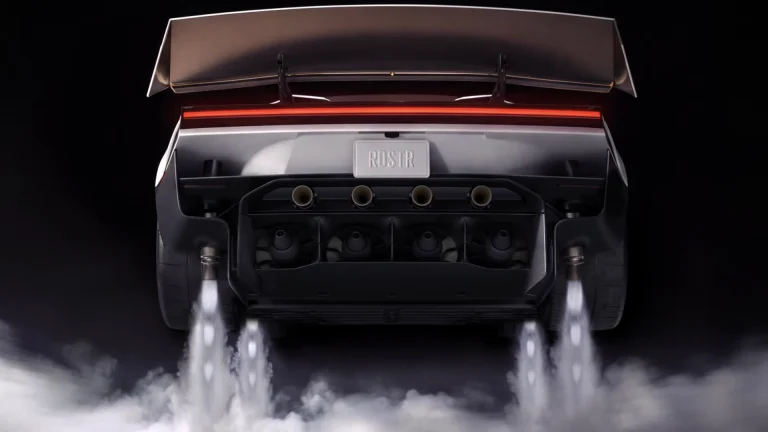
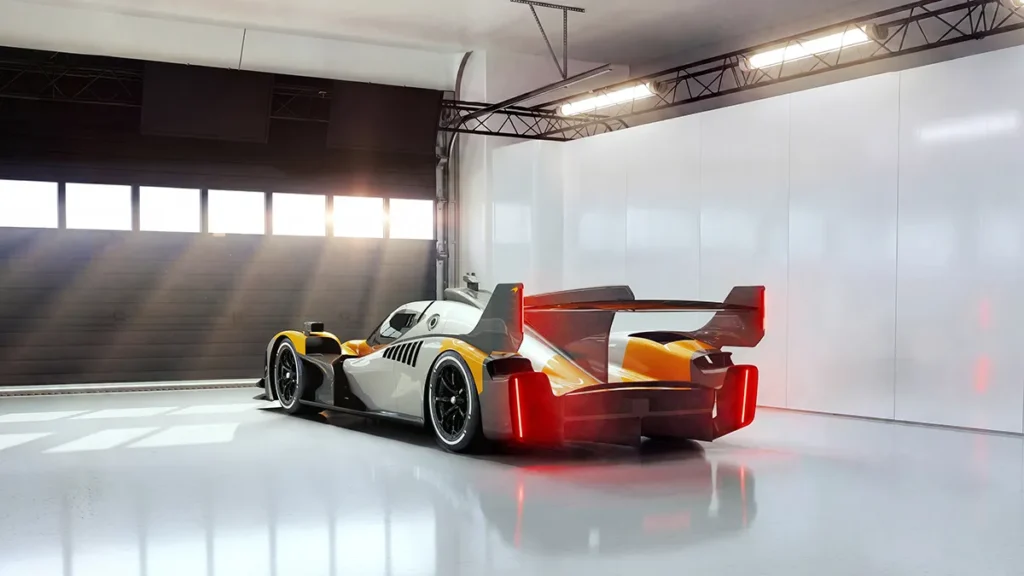
Sitting beside the race car is something even more aggressive: the track-only MCL-HY GTR, a customer version that escapes the regulations holding the race car back. Modern endurance racing is choked with balance-of-performance rules designed to keep every car competitive, and to keep any one of them from running away with it. The MCL-HY GTR keeps the same six-cylinder foundation as the race car but ditches the FIA-mandated hybrid system entirely — no racing regulations, no road-legality requirements, no endurance-balancing rules to satisfy. McLaren stripped the limitations and let the car breathe, pushing output even higher to 720 horsepower. On paper that bump might not sound huge, but losing the hybrid hardware sheds complexity, cooling demands, packaging compromises, and weight, and that detail matters more than the headline number.
The company confirmed the GTR will weigh less than the FIA’s 2,271-pound minimum required for Le Mans hypercars. McLaren hasn’t released an exact curb weight yet, but even a modest reduction transforms a car at this level — less mass changes braking performance, cornering response, acceleration, and overall driver feel. The customer version could end up feeling sharper and more brutal than the car actually racing at Le Mans, and there’s something genuinely fascinating about that. For decades, the race car was the absolute peak of what a manufacturer could build. Now automakers are increasingly making track-only customer cars that live outside the restrictions strangling modern motorsport engineering.
Exclusive by Design
This isn’t some watered-down collector special built for valet duty at luxury events. McLaren is positioning the GTR as a genuine no-compromise track weapon for a tiny group of buyers, offered only to carefully selected VIP customers through its Project: Endurance program. No pricing has been announced, but nobody should expect this to land anywhere near normal supercar territory — it’s exclusive by design, where access matters as much as money.
That approach says a lot about where the high-end performance market is heading. For enthusiasts on the outside, it’s both thrilling and frustrating: machines like the MCL-HY GTR prove engineers can still build something uncompromised when the rulebook gets out of the way, and almost nobody will ever get to touch one. That’s the divide running through the modern performance world in a nutshell. Still, from a pure engineering standpoint, the GTR sounds like exactly the kind of car that justifies the hype, and McLaren appears serious about getting it into customers’ hands and onto tracks.
There’s a bigger picture, too. Motorsport regulations are meant to improve competition and rein in costs, but they also cap how far engineering can go, and when the unrestricted customer car ends up more extreme than the factory race car, that contradiction is hard to ignore. McLaren’s Le Mans comeback matters for the brand. But the car built to break the rules might be the one people remember.
About the Author