Lamborghini is not backing away from excess. While much of the auto industry keeps talking about downsizing, efficiency targets, and quiet electrified transportation, the Italian supercar maker just revealed an open-top V12 monster with nearly 1,100 horsepower and a price tag that pushes beyond the reach of almost everyone on earth.
The Most Powerful Open-Top Lamborghini Ever Built
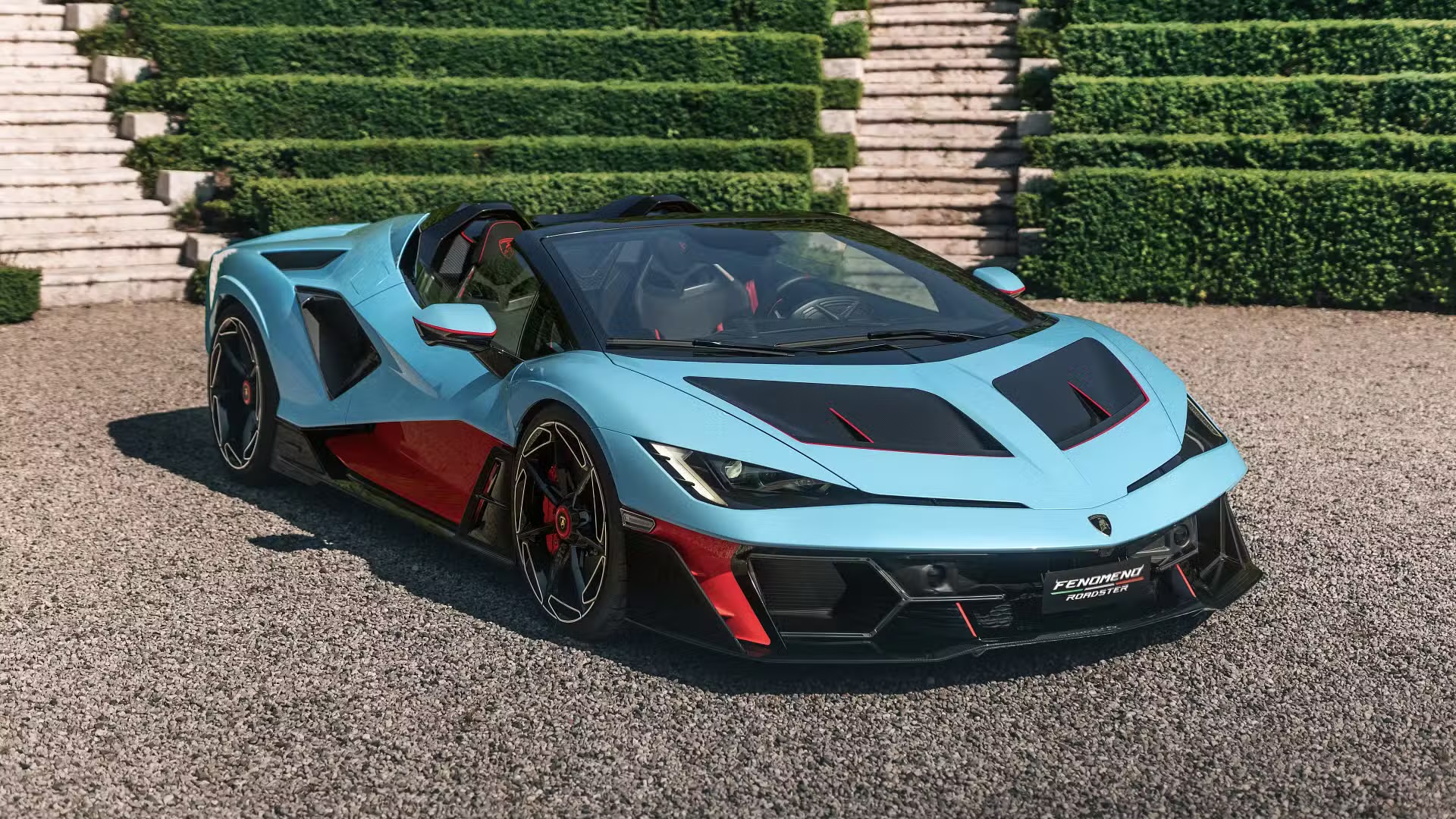
The new Lamborghini Fenomeno Roadster is officially the most powerful open-top model the company has ever built, and one of the most expensive. Limited to just 15 examples worldwide, the hybrid-powered roadster reportedly carries an estimated price of €5 million, or around AU$8 million, placing it deep inside ultra-elite collector territory. That alone would make headlines, but the bigger story is what this car represents: Lamborghini signaling that the era of emotionally excessive supercars isn’t dead yet. The Fenomeno Roadster feels almost defiant in today’s automotive climate, combining a massive V12 engine, open-top design, and nearly 800kW of output in a way few manufacturers are still willing to attempt.
Performance Figures That Enter Hypercar Territory
At the center of the Fenomeno Roadster sits a naturally aspirated 6.5-liter V12 paired with three electric motors and a lithium-ion battery pack, a setup derived from the Revuelto but pushed further here. The V12 alone now produces 614kW and 725Nm, making it the most powerful V12 Lamborghini has ever built, and with electric assistance from the hybrid system added in, total output climbs to 794kW, or 1,080 metric horsepower, putting it in a class of its own among open-top V12 cars. Most modern performance cars chase speed through turbocharging, downsized engines, or silent electric torque delivery; Lamborghini instead combined hybrid technology with one of the loudest and most emotional engine layouts ever created.
The numbers back up the ambition. Lamborghini claims the car can sprint from zero to 100km/h in just 2.4 seconds and reach 200km/h in 6.8 seconds, with a top speed said to exceed 340km/h — serious figures for any car, and even more extreme for an open-top roadster. Lamborghini didn’t simply remove the roof from the coupe and call it finished; the company reportedly redesigned the aerodynamic system specifically for the Roadster body style. Where the coupe featured a roof-mounted air scoop, the Roadster instead uses a spoiler integrated into the windscreen area to direct airflow over the cockpit and toward the engine bay. Around the rear, Lamborghini leaned heavily into motorsport-inspired design, drawing influence from the Essenza SCV12 track car and 1970s racing prototypes, with a massive diffuser and an active rear wing engineered to attack high-speed stability as aggressively as possible.
The Design Is Trying to Say Something
Lamborghini has never been subtle, but the Fenomeno Roadster feels especially theatrical. Hexagonal design themes appear throughout the car, including the air intakes, wheel arches, lighting signatures, and side details, with proportions that are low, sharp, and dramatic even by Lamborghini standards — it looks less like a production vehicle and more like something designed for a futuristic endurance racing game. That detail matters because these limited “Few-Off” projects often preview styling cues that eventually influence future Lamborghini production models. The Fenomeno Roadster isn’t just a rich collector’s toy for social media attention; Lamborghini is actively using these ultra-expensive limited projects as rolling laboratories, and certain aerodynamic solutions, styling ideas, chassis concepts, and hybrid performance systems introduced here could eventually shape the next generation of more accessible Lamborghini models. So while only 15 buyers may actually own this car, the broader enthusiast world could still feel its influence later.
Lamborghini’s Elite Buyer Strategy Is Becoming Clear
The pricing also says a lot about the modern exotic car business. The Fenomeno coupe was already extremely exclusive, limited to 29 examples at a reported €3 million price tag, and the new Roadster climbs even higher at roughly €5 million. Lamborghini clearly understands that demand exists for ultra-rare collector machines positioned above normal supercars, and the market keeps rewarding it — high-end manufacturers increasingly build ultra-limited halo cars because wealthy collectors continue paying enormous money for exclusivity, and these vehicles become status symbols, investment pieces, and private collector trophies all at once. The Fenomeno Roadster fits perfectly into that strategy. Lamborghini reportedly plans to reserve these Few-Off projects first for its most important customers, reinforcing the idea that access itself has become part of the luxury product; not everyone with money can simply walk in and buy one, and that exclusivity is part of the appeal.
Drivers Are Watching the Industry Split in Two
Cars like the Fenomeno Roadster also highlight a widening divide across the automotive world. Mainstream buyers increasingly face restrictions, rising vehicle costs, tighter emissions requirements, and growing pressure toward electrification, while the ultra-wealthy continue gaining access to limited-production V12 hypercars with massive power outputs and few compromises. Enthusiasts notice that contradiction: on one side of the market, performance cars are becoming quieter and more regulated, while on the other, brands like Lamborghini are still building wildly excessive machines for elite collectors willing to spend millions. The Fenomeno Roadster lands directly in the middle of that tension. It uses hybrid technology because the industry is changing, but it also refuses to give up the emotional centerpiece that enthusiasts still care about most — the naturally aspirated V12 remains alive here, screaming behind an open cockpit in a car capable of more than 340km/h. That may ultimately be why this Lamborghini matters beyond the price tag and horsepower figures: it feels like a company trying to preserve the old magic while the industry around it changes at full speed. Whether cars like this survive much longer is another question entirely.
About the Author