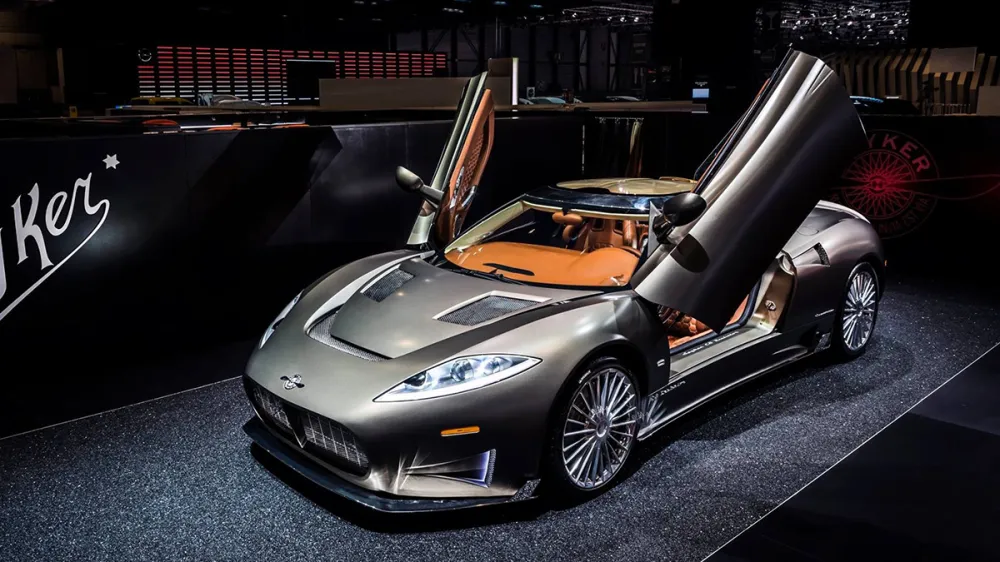
Spyker is trying to pull off one of the hardest comebacks in the automotive world, and the stakes couldn’t be much higher. After collapsing into bankruptcy for the second time earlier this decade, the Dutch automaker is once again attempting to resurrect itself with a brand-new supercar, and in an industry sprinting toward electrification and hybridization, Spyker is going in the opposite direction. The company’s next halo car will reportedly stick with a traditional gas-powered V8 instead of batteries or plug-in systems.
Spyker Has Been Here Before
Spyker first appeared in 1999 after being founded by Martin de Bruijn and Victor Muller. The company quickly gained attention with the C8 supercar, a machine that looked completely different from anything else on the road at the time, leaning heavily into handcrafted styling, dramatic interiors, and aviation-inspired design language. Spyker later expanded the lineup with the more luxurious C12, hoping the brand could establish itself among the elite names in the exotic performance world, and enthusiasts noticed the cars immediately. The problem was turning attention into sustainable business — Spyker built vehicles that attracted hardcore automotive fans and collectors, but the company struggled to reach the commercial success needed to survive long-term.
The Saab Gamble Changed Everything
Spyker’s story took a major turn in 2011 when the company acquired Swedish automaker Saab. At the time, the move looked ambitious, with some seeing it as an attempt to transform Spyker from a niche exotic brand into something much larger. Instead, it became one of the defining moments in the company’s collapse. By 2014, Spyker had entered bankruptcy. The brand returned to building cars in 2015, but the recovery never fully stabilized, and then came another bankruptcy filing in 2021. Two collapses in less than a decade would have permanently ended many automotive brands, yet Spyker somehow survived again, which explains why this latest comeback attempt feels very different from a normal product launch. This isn’t just another supercar reveal — for Spyker, it looks more like a last shot at relevance.
Victor Muller Is Back in Control
The company’s third attempt at survival will once again be led by co-founder and CEO Victor Muller, who repurchased Spyker’s intellectual property last year, effectively putting the brand back into familiar hands. Rather than reinventing itself completely, Spyker appears determined to reconnect with its earlier identity — instead of introducing an entirely new vehicle concept, the company plans to revive the C8 Preliator, the same supercar it first revealed at the Geneva Motor Show in 2016 before the project stalled and never reached production. Most struggling automakers facing another comeback would likely chase broader trends or safer market segments; Spyker instead decided to revive a low-volume supercar project that already failed to reach production once before, which is either incredibly bold or incredibly risky.
Spyker Is Ignoring Industry Trends on Purpose
The automotive industry today looks nothing like it did when the original C8 Preliator debuted nearly a decade ago. Electrification now dominates product planning across nearly every major manufacturer, hybrid performance systems have become normal even in the exotic space, and governments continue tightening emissions requirements while automakers race toward EV targets. Spyker seems almost completely uninterested in following that direction. According to Road & Track, the revived C8 Preliator will reportedly use a twin-turbocharged V8 producing around 800 horsepower, with Spyker targeting a top speed above 217 mph — no battery-heavy hybrid system, no full EV architecture, just a traditional internal combustion supercar aimed directly at enthusiasts who still want loud, fast, gas-powered machines. There’s probably an audience for that.
Enthusiasts Still Want Cars With Personality
Part of why Spyker’s comeback is attracting attention is that many enthusiasts feel modern performance cars are becoming increasingly sanitized. Electrification delivers enormous speed, but some drivers argue it also removes personality, drama, and mechanical emotion, and Spyker’s strategy appears built around exploiting that frustration. The company is leaning into the idea that there’s still demand for handcrafted exotic cars powered by combustion engines, and the reported 800-horsepower V8 setup reinforces that philosophy hard. Spyker isn’t trying to compete with mass-market luxury brands — it’s trying to appeal to buyers who want something unusual, emotional, and rare in a world increasingly dominated by software, touchscreens, and electrified drivetrains. That niche still exists; the question is whether it’s large enough to sustain an automaker that has already failed twice financially.
Monterey Car Week Is the Perfect Stage
Spyker’s new C8 Preliator will debut during Monterey Car Week at The Quail, A Motorsports Gathering, on Friday, August 14, a location that isn’t accidental. Monterey Car Week has become one of the most important luxury automotive events in the world, attracting collectors, investors, enthusiasts, and ultra-wealthy buyers who routinely spend massive amounts of money on rare and exotic machinery. If Spyker wants attention from the exact people capable of financing its future, there may not be a better stage available. Monterey is also filled with established brands unveiling increasingly advanced hypercars and cutting-edge performance technology, though, so Spyker will need more than nostalgia to stand out.
The Stakes Could Not Be Much Higher
This comeback carries enormous pressure because the automotive world has changed dramatically since Spyker first appeared. Small-volume exotic manufacturers now face higher development costs, tighter regulations, and brutal competition from both legacy supercar companies and new high-performance EV brands. Enthusiasts may love the idea of another gas-powered supercar entering the market, especially one tied to a cult-favorite brand, but admiration alone doesn’t keep an automaker alive. Sales do. Still, there’s something undeniably compelling about Spyker refusing to surrender — at a time when much of the industry is chasing electrification and corporate sameness, the Dutch brand is once again betting on drama, speed, and mechanical excess. The gamble could fail spectacularly, but if Spyker somehow manages to survive this third attempt, it will prove there’s still room in the modern automotive world for strange, emotional, combustion-powered supercars built purely for people who still love driving.
About the Author