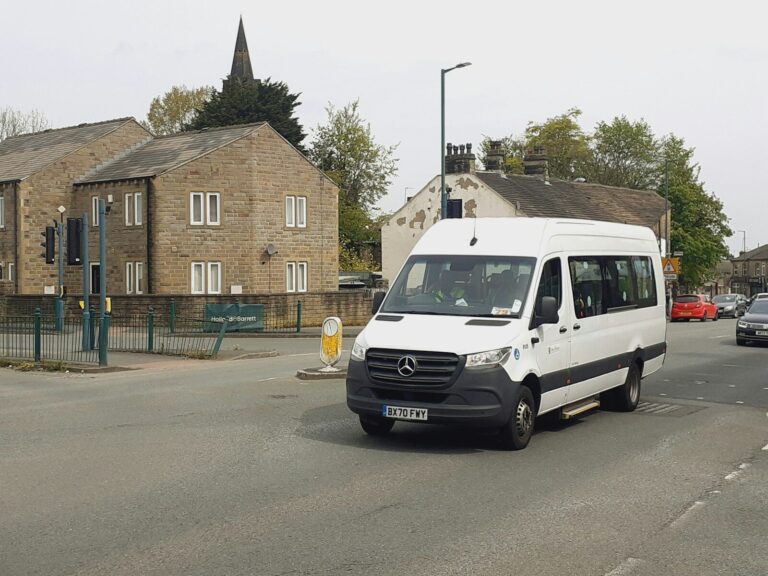
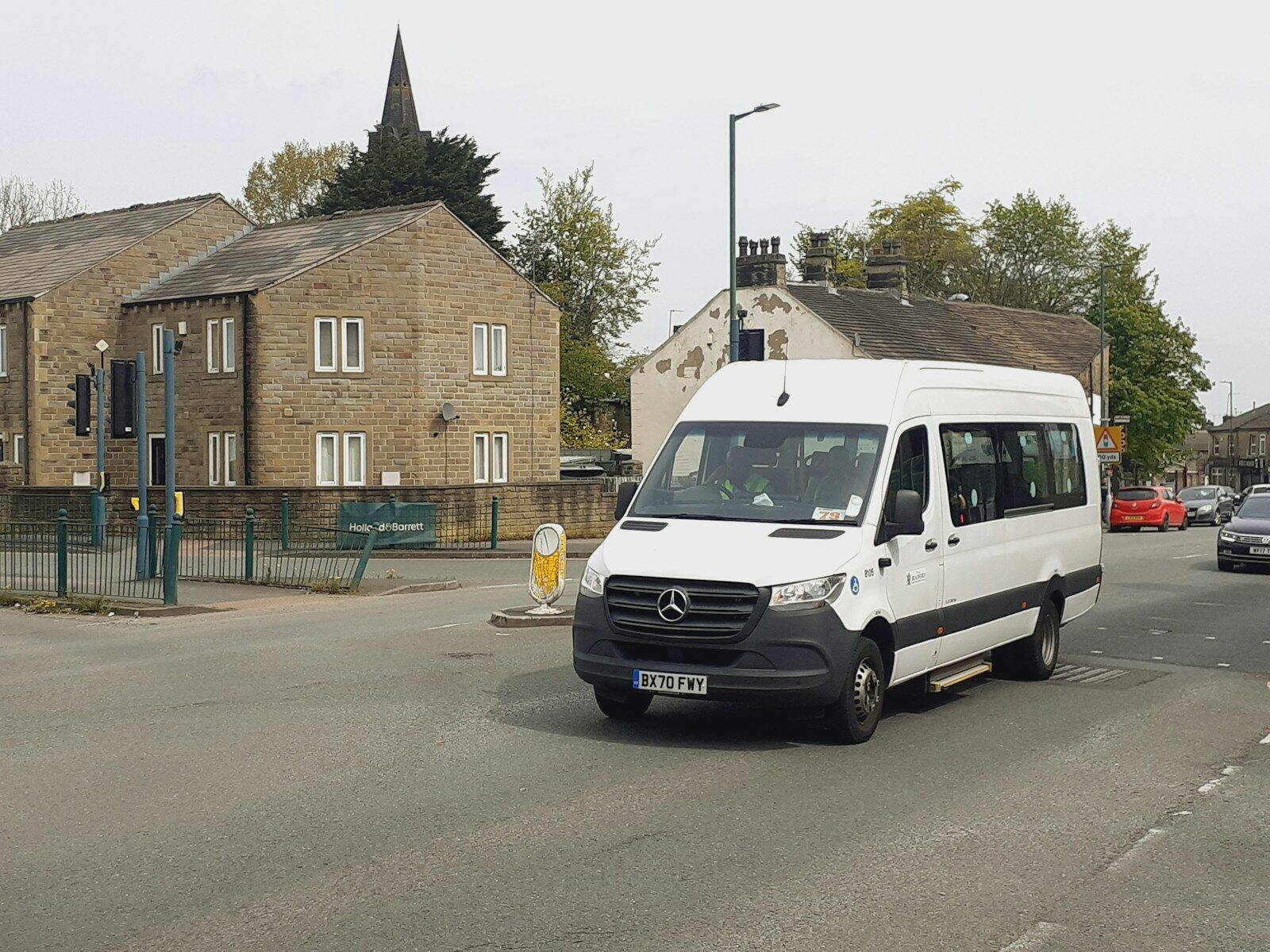
Darragh O’Grady came off a ferry in Holyhead, on the Isle of Anglesey in North Wales, on Monday, Aug. 24. That same evening he was driving a stolen minibus taxi the wrong way down the A55. On Tuesday, Nov. 10, a judge at Caernarfon Crown Court jailed the 31-year-old for three years and banned him from driving for five and a half.
He pleaded guilty, so this is no longer an accusation. According to North Wales Police’s account of the case, O’Grady admitted causing serious injury by dangerous driving, dangerous driving, aggravated vehicle taking, failing to provide a specimen for analysis and other driving offences. He also admitted theft and fraud by false representation. Officers found bank cards and a mobile phone on him that had been reported stolen on the ferry he had just taken, and police said he had spent more than £200 of the victim’s money.
Related Articles
- An LAPD Cruiser on a Halloween Party Call Killed a Mother of Two on Woodman Avenue. Were the Lights On? LAPD Hasn’t Said
- A Detroit Owner Asked 1.1 Million Followers to Find His Stolen $500K McLaren After a Takeover. Wayne County Can Penalize Filming Those
Under the law, the most serious charge against him carried a maximum of five years. After the discount for an early guilty plea and the release rules that took effect across England and Wales this autumn, a man the judge described as heavily impaired may be eligible to leave prison long before his driving ban runs out.
Twenty-five minutes from Holborn Road to the stinger
Police said the taxi was taken from Holborn Road in Holyhead. The force received the theft report at about 7:30 p.m. and had the vehicle stopped on the A55 between Rhosneigr and Rhostrehwfa 25 minutes later.
Between those two times, police said, drivers called in as they swerved to avoid the minibus. Several parked vehicles were damaged. On London Road, O’Grady hit a cyclist, who police said suffered serious and lasting injuries, and he kept going. He got onto the westbound carriageway of the A55 heading the wrong way. Officers stopped the oncoming traffic and used a stinger to bring the taxi to a halt near Rhosneigr.
The detail that made the case travel came from a motorist’s phone. According to the North Wales Pioneer’s report from the sentencing hearing, the court heard that O’Grady made eye contact with a person who was filming him on the wrong side of the dual carriageway and gave them a thumbs-up.
After he was stopped, he refused to give a sample of breath or blood.
Refusing the test didn’t keep impairment out of the sentence
Some drivers think refusing to blow helps them. It didn’t help O’Grady. Under Schedule 2 of the Road Traffic Offenders Act 1988, failing to provide a specimen after driving carries the same penalties as driving over the limit: up to six months in custody, an unlimited fine and an obligatory disqualification. A refusal leaves the court without a number. It doesn’t stop the court from deciding what the driving showed.
In this case the judge reached that conclusion without a reading. Judge Timothy Petts described O’Grady as “highly impaired by drugs and alcohol,” according to court reporting from the hearing. He called the driving “completely stupid and ridiculous” and said it posed “the most immense risk of danger to other drivers who just won’t be expecting someone to be driving towards them.”
The phrase “highly impaired” matters. The Sentencing Council guideline for causing serious injury by dangerous driving puts “Driving highly impaired by consumption of alcohol and/or drugs” in Culpability A, its most serious tier. The same tier includes a “Prolonged, persistent and deliberate course of dangerous driving.” A drive through residential streets, past a cyclist and onto a dual carriageway against the traffic is the kind of conduct that wording describes.
How three years was reached
The offence itself, section 1A of the Road Traffic Act 1988, was added in 2012 and covers dangerous driving that causes injury amounting to grievous bodily harm. The Sentencing Council lists a maximum of five years.
In the guideline’s worst box, top culpability with the most serious harm, the starting point is four years and the range is three to five. A guilty plea at the first opportunity earns a reduction of up to one-third. My own arithmetic, not the court’s: the four-year starting point minus a third is 32 months, and the five-year maximum minus a third is 40 months. O’Grady’s 36 months falls between them. The court reporting doesn’t say which harm category the judge chose or how much weight went to aggravating factors such as driving off from an injured cyclist, which the guideline lists. On the injury charge alone, though, a judge could only go about four months higher.
How long he actually spends in prison is a separate question. Under the progression model that started rolling out in October, the Ministry of Justice says offenders on standard determinate sentences will spend at least one-third of their sentence in custody, and more serious offences at least half. Release at the one-third point is not guaranteed: rule-breaking in prison can add days, and some offences are excluded. The court reporting didn’t say which release point applies to O’Grady. If the standard one applies, one-third of 36 months is 12 months, and time already spent on remand counts toward it.
Part of the driving ban covers his time in prison
The ban is long partly because of the prison term. Section 35A of the Road Traffic Offenders Act requires a court that jails and disqualifies a driver to add an “extension period” to the ban, so the ban isn’t used up while he is in a cell. According to the legislation.gov.uk annotation for sentences passed from Oct. 1, 2026, that extension is generally one-third of the custodial term. That would be 12 months on a three-year sentence, with the older half-of-sentence rule still applying to excluded offences. When the ban ends, section 36 requires him to pass an extended driving test before he can drive in the UK again.
Who pays for a crash in a stolen taxi
O’Grady had no licence and no insurance, but the minibus was insured. Under the Motor Insurers’ Bureau’s rules, when a vehicle is used in a way its policy doesn’t allow, the vehicle’s own insurer is usually the one that handles and pays third-party claims as an “Article 75” insurer, under the bureau’s Uninsured Drivers Agreement. That is the usual route for claims like the cyclist’s injuries and the damaged parked cars. The MIB is funded by motor insurers, so that money comes out of the premiums every policyholder pays.
The owner of Tacsi Zoe, the Holyhead firm whose vehicle was taken, said in a statement on social media, as reported by MônFM: “I was personally caught up in this and, like many others, found the whole situation extremely scary and traumatic.” A small taxi firm also loses earnings while its vehicle is off the road, and the criminal sentence pays none of that back.
Wrong-way crashes in the same weeks
O’Grady’s drive came during a run of deadly wrong-way crashes. On the night of his arrest, MônFM reported that seven people, two of them police officers, had died two days earlier when a car travelling the wrong way hit a patrol car on the A66 near Middlesbrough. Twelve people had been arrested in that investigation. The same station reported that five teenagers had died the weekend before in a head-on crash on the M9 in County Kildare, Ireland.
Related Articles
- A Wisconsin Deputy Added 17 Seconds to an I-39 Stop for a Drug Dog. A Federal Judge Called It Unconstitutional
- Canada’s Most-Stolen Vehicle Is a Honda CR-V Again, Its 3rd Title Since 2021, and the Anti-Theft Rules Date to 2007, Équité Says
Speed explains why these crashes are so often fatal. The national speed limit for cars on a dual carriageway is 70 mph, so two cars meeting head-on can close at about 140 mph. In the force’s statement after sentencing, Temporary Assistant Chief Constable Nick Evans said: “The A55 is the main route to Holyhead Port and at national speed limit, it is incredibly lucky that no fatalities occurred.” He also called O’Grady’s actions “reckless and inherently dangerous.”
What the defence told the court
Richard Edwards, defending, told the court that O’Grady had only a “limited recollection” of the evening and was remorseful, the Pioneer reported. He had previous convictions, but none in the UK. In court reporting from the hearing, Edwards is also reported to have said that O’Grady pleaded guilty early, accepted responsibility, apologised and has been diagnosed with schizophrenia.
He will serve the custodial part of his sentence and the rest on licence. The cyclist is still living with injuries that police called lasting. Five years was the most Parliament allowed for injuring that cyclist with dangerous driving, and new release rules may cut the time O’Grady actually serves. Should lawmakers raise the maximum for causing serious injury by dangerous driving, or is three years after a guilty plea about right when nobody died?
About the Author