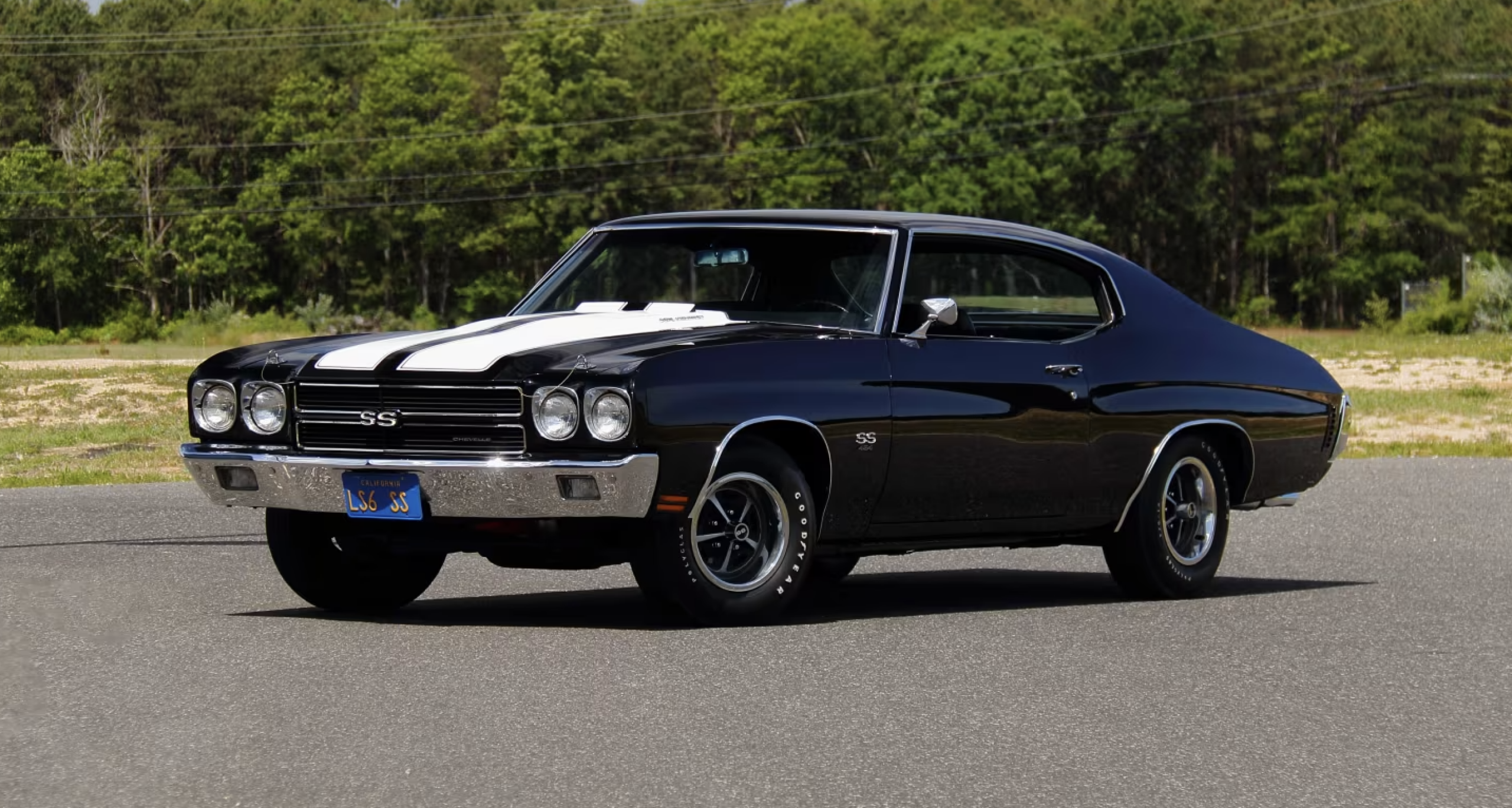
Somewhere in the wilds of Pennsylvania, a black 1970 Chevelle has been sitting on two secrets for over half a century. One build sheet lived where you would expect, tucked away with the rest of its paperwork. The second was folded up under the front seat, riding along for every mile since it left the factory. That second sheet is a big reason this particular LS6 is crossing the block as the headliner of Mecum’s Harrisburg sale this Saturday, July 25, not the horsepower number, not the color, and not even that cowl induction hood poking through the scoop.
Chevelles have a habit of stealing attention in places you would not expect, whether that is crashing a celebrity wedding reception or headlining a 1,200-car auction weekend, and this one earns its spot the old-fashioned way: with paper trail rather than press-release polish.
What’s Actually Under the Sheet Metal
Cataloged as Lot S141, the Tuxedo Black Chevelle carries VIN 136370A161771 and shows 23,095 miles on an odometer Mecum notes only reflects the current reading, standard auction language for “we can’t vouch for total mileage.” Under the hood sits the numbers-correct 454-cubic-inch LS6, factory-rated at 450 horsepower, backed by a Muncie four-speed manual and a 4.10 Positraction rear end, with the original Gardner exhaust still in place. The car still wears power steering, power brakes, its original body panels, and a black split-bench interior with headrests, riding on the correct five-spoke SS wheels under a cowl induction hood.
It has been repainted once, back into its factory code-19 Tuxedo Black, which in muscle car circles gets treated less like a flaw and more like routine maintenance on a 55-year-old paint job.
How a One-Year Engine Became a Registry Obsession
The LS6 itself is a footnote-turned-legend that only existed because Chevrolet blinked. General Motors had spent years enforcing an internal rule capping engine displacement in its mid-size cars, a policy aimed at keeping the Chevelle and its rivals from cannibalizing Corvette sales and drawing unwanted attention from insurers and regulators. For 1970, GM finally dropped the cap, and Chevrolet answered by stuffing its 454 big block into the Chevelle in LS6 trim. The option lasted exactly one model year before rising insurance surcharges, tightening emissions standards, and a shifting market made big-inch muscle a hard sell, and Chevrolet quietly let it disappear after 1970. Documented production of the LS6 engine that year lands at 4,475 units, split between the Chevelle and El Camino, which puts a genuine one in fairly rarefied company before condition even enters the conversation.
That rarity is exactly why the paperwork under the seat matters more than the shine on the paint. A GM build sheet is essentially a factory work order, listing the exact options, trim, and drivetrain a given VIN left the assembly line wearing, and because they rode inside the car during assembly instead of sitting in a warehouse, most were lost to time, tossed during a seat swap, or ruined by decades of moisture. Finding one intact is good. Finding a second copy nobody knew was there is the kind of detail that turns a nice driver into a benchmark car. This Chevelle is also listed in the LS6 Registry, an independent database enthusiasts use to cross-reference VINs, build sheets, and ownership history for the model, and it made an appearance at Carlisle’s 2020 event marking the LS6 engine’s 50th anniversary.
None of that paperwork changes how the car drives, but it changes what a serious buyer will pay, the same way a numbers-matching Corvette commands a premium over one that merely looks the part.
The Real Cost of Buying “Documented”
For anyone shopping in this end of the market, the lesson is worth remembering long after this specific lot sells. A rebuilt LS6-spec 454 with correct heads and internals can run well into five figures if you are chasing factory-correct parts instead of reproduction pieces, and a genuine Muncie four-speed core is not cheap either once you account for scarcity. Insurance is its own conversation: a car like this typically gets written on an agreed-value collector policy rather than a standard auto policy, meaning the owner and insurer settle on a fixed value up front, usually with mileage caps and enclosed-storage requirements attached. Skip that step and run it on a regular policy, and a total-loss claim can leave an owner arguing over depreciated book value instead of what the car is actually worth.
Before paying a premium for “documentation” on any muscle car, ask to see the actual build sheet and registry listing rather than taking a seller’s word for it. Paper can be recreated far more easily than a car can, and buyers have learned that lesson the expensive way before.
Where This Leaves the Market
The broader muscle car market has cooled some over the past year, with average sale prices softening across the board, but genuinely documented, registry-listed cars have been the exception rather than the rule when it comes to holding value. Watch how quickly a resale can evaporate on a car built to look the part instead of actually being one, and the gap makes sense. Restomods have been grabbing plenty of attention lately too, but a matching-numbers survivor with its original paperwork still plays a different game entirely.
As the headline lot in a 1,200-vehicle sale at the Pennsylvania Farm Show Complex, this Chevelle is likely to be one of the clearer signals of where that top tier of the market actually sits right now, for better or worse. It is far from the only interesting thing crossing a Mecum stage this year, either, from a 340-powered Barracuda that turned heads a few months back to whatever six-figure surprise shows up next. This one crosses the block Saturday afternoon in Harrisburg, and whatever hammer price it pulls will say more about the state of documented muscle than any pre-auction estimate could.
About the Author