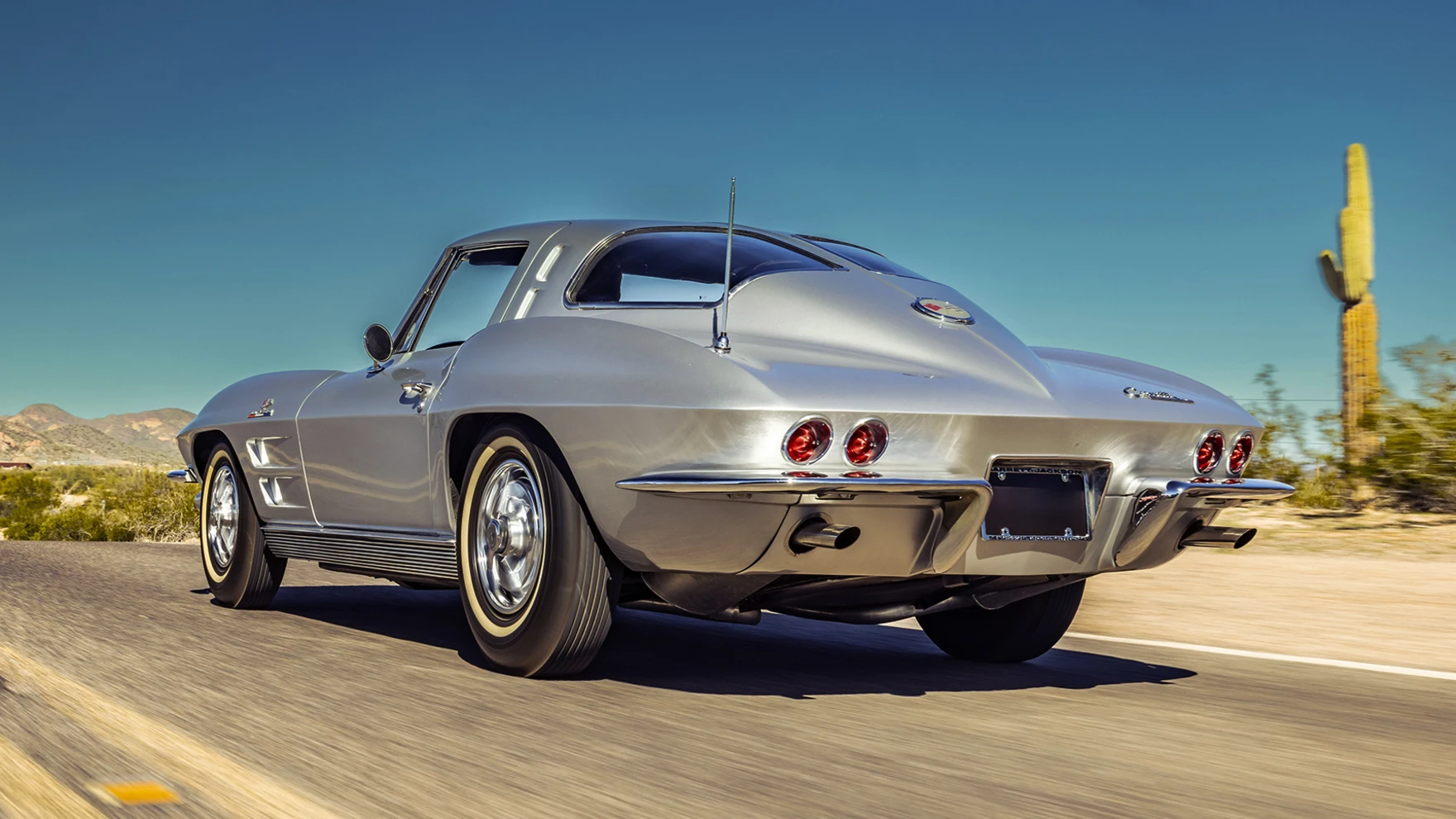
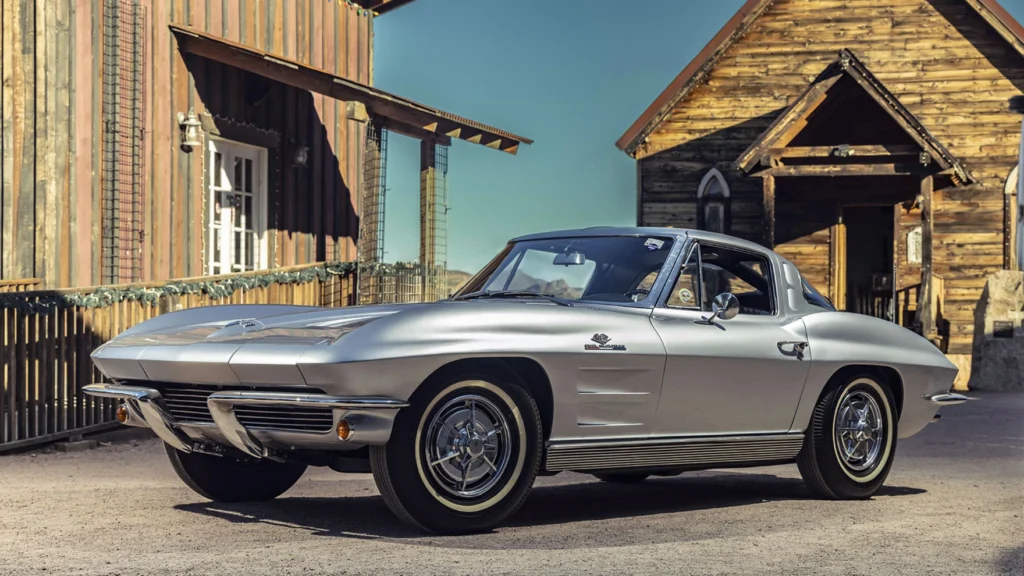
The 1963 Chevrolet Corvette split-window coupe is one of the most coveted shapes General Motors ever put on the road, and right now one of the rarest versions of it is sitting on the prize table. This is not a tribute build or a clone wearing the right badges to fool people at a distance. It is a numbers-matching Fuelie, the exact kind of Corvette that collectors spend decades chasing, and whoever wins it also walks away with twenty grand in cash on top of the keys.
That combination is what makes this one stand out from the usual giveaway car. You see plenty of restomods and crate-engine builds offered up as prizes. You do not often see a documented, factory-correct fuel-injected split-window put on the line.
The Body That Lasted One Year
The split-window design is the whole reason this car carries the mystique it does. Chevrolet built the divided rear glass for the 1963 model year and then dropped it for 1964, which means the look existed for a single season before it was gone. That short run is exactly why these coupes turn ordinary car shows into staring contests and why owners tend to hold onto them.
A one-year-only body style does something to a car’s standing in the hobby. It creates a hard ceiling on how many will ever exist. Every split-window coupe still on the road traces back to that one production window, and no amount of money brings more of them into the world.
The Engine Is the Real Flex
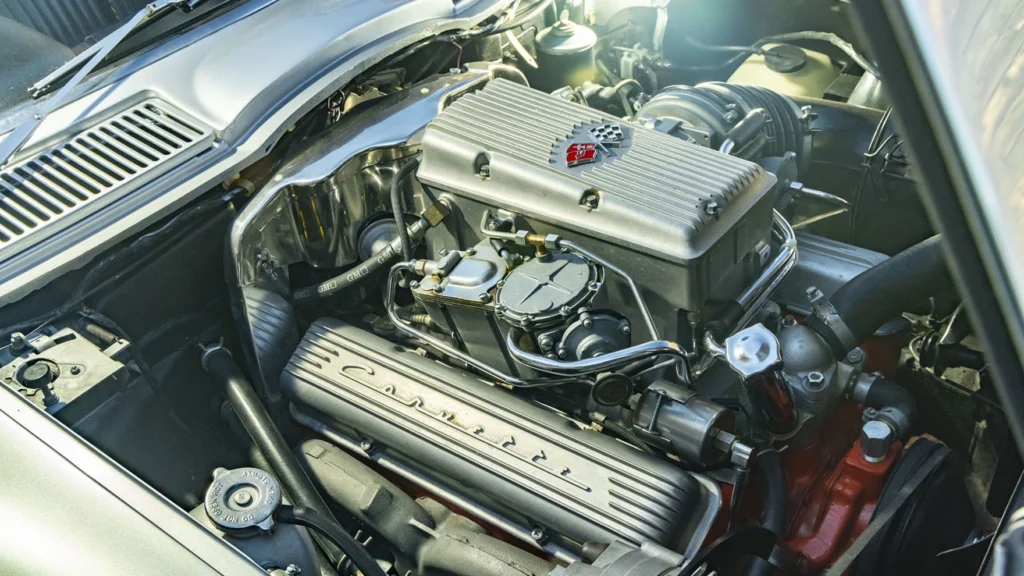
Chevrolet built 21,513 Corvettes for 1963. Only 2,610 of them left the factory with the L84 327/360hp fuel-injected engine, the setup enthusiasts simply call the Fuelie. That means the fuel-injected cars made up a small slice of an already limited model year.
Here is the part that matters. This car still has its factory original matching-numbers L84 under the hood, paired with the factory BorgWarner T10 four-speed manual. Matching numbers is not marketing fluff in this corner of the hobby. It is the difference between a correct car and a car that has had its heart swapped out somewhere along the way, and it is the single detail that separates the serious examples from everything else.
A No-Hit Body and a Frame-On Rebuild
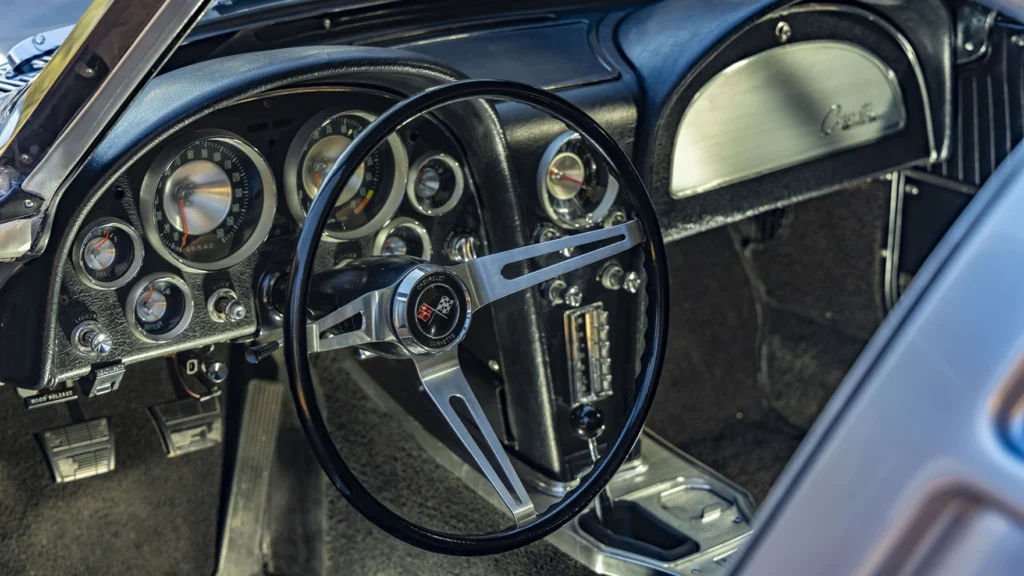
The work backs up the pedigree. The Corvette went through a comprehensive frame-on restoration, and it started from a no-hit body, meaning the foundation was sound before anyone picked up a paint gun. That is the right way to do one of these, because you cannot fake a clean starting point no matter how good the finish looks later.
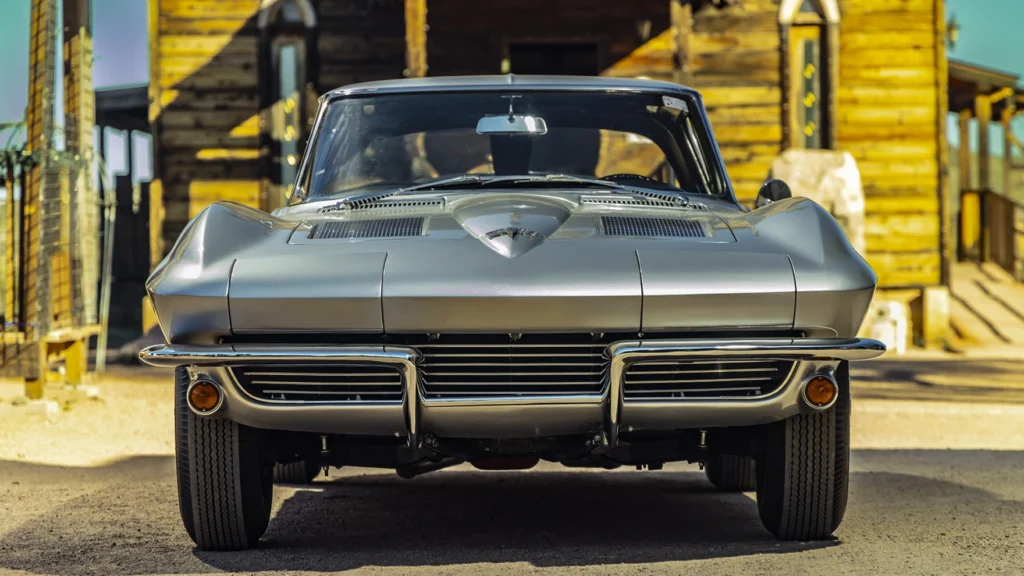
The exterior was refinished in Sebring Silver over a black interior, a combination that suits the early Sting Ray lines without trying too hard. The car keeps its factory power windows and rides on factory wheels wearing spinner-style wheel covers. New whitewall tires finish off the period-correct stance.
The Finish Goes Further Than Most
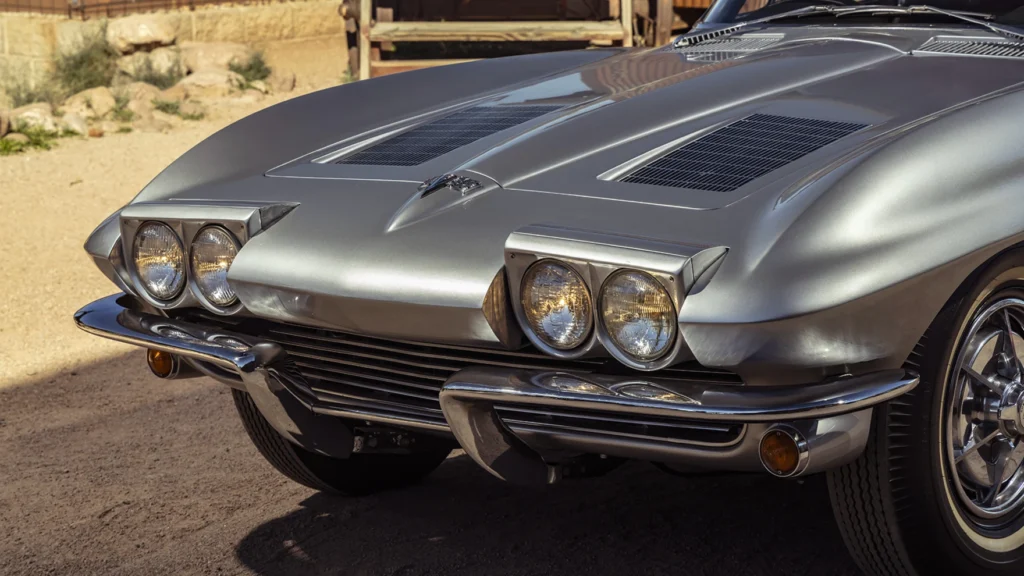
The paint was not left to fend for itself either. The car wears a Level 5 ceramic coating applied by Tint Cartel using the Ceramic Pro Gold Package. That setup consists of four layers of 9H coating with an additional layer on the exposed areas that take the most abuse.
That is a level of protection most people reserve for daily drivers they actually worry about, not a six-decade-old collector car. It tells you the work was meant to last, not just to photograph well for a listing.
Why This One Hits Different
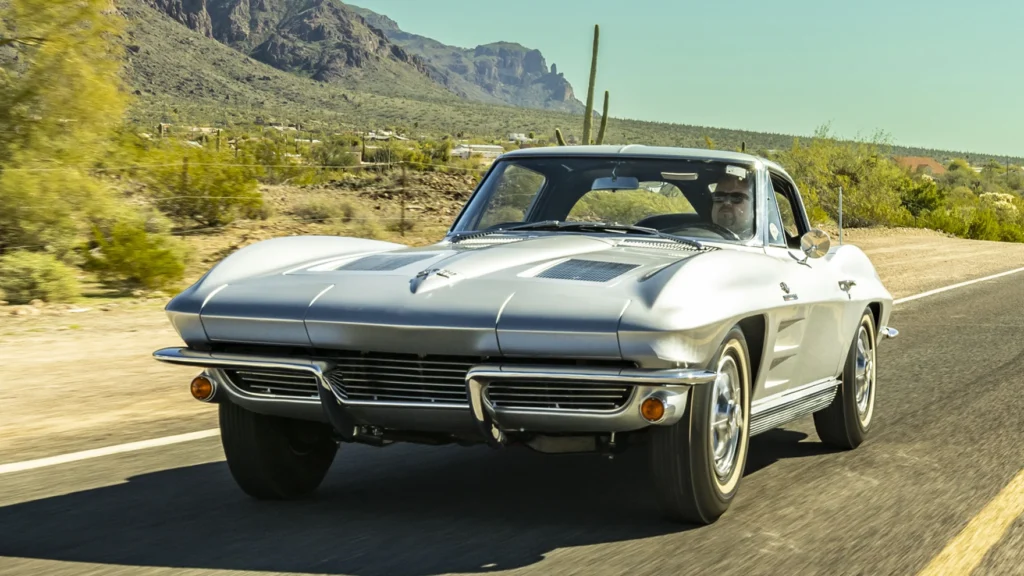
Strip away the giveaway framing and look at what is actually being handed over. The split-window body, the matching-numbers L84, and the factory four-speed together form the trifecta that defines a desirable 1963 Corvette. Each one of those boxes is hard to check on its own. Getting all three in the same car is what makes collectors lean in.
Cars like this tend to vanish into climate-controlled collections and private garages, bought by people who already own several. A giveaway flips that script. It puts a car that normally trades among a small circle of serious buyers within reach of someone who simply entered.
The $20,000 in cash is not an afterthought tacked on to round out the prize. A car this significant comes with responsibilities, and having money in hand changes what a winner can actually do with it. It gives whoever wins room to keep the car, protect it, and enjoy it instead of being forced to flip it the moment it lands in the driveway.
That is the question worth sitting with. A car like this almost never reaches a regular enthusiast through the front door of the collector market. This time, the door is wide open, and the keys to one of the most chased Corvettes of the decade are on the other side.
Win This Car Here
About the Author