Image via Gunther Werks
A German business report claims Porsche is deep in talks to buy RUF Automobile, the small Bavarian manufacturer that has spent more than eight decades building its own take on the 911 shape without touching Porsche’s factory tooling. Neither company has confirmed anything, which is usually the moment to slow down rather than speed up.
The claim comes from Germany’s WirtschaftsWoche, which reports that Porsche executives and RUF owner Alois Ruf have discussed folding the small manufacturer into Stuttgart’s lineup as an exclusive, low-volume sub-brand, with a deal described as close. The same report claims Porsche’s first call went to Southern California instead, where Singer Vehicle Design reportedly passed on a similar arrangement. None of that has been verified by either party, and this is not the first time a Porsche-RUF tie-up has been floated in enthusiast and trade circles. Treat the specifics as a rumor with a named source attached, not as settled fact.
Why RUF Isn’t a Tuner With a Fancy Badge
This is the detail that gets lost every time this rumor resurfaces: RUF Automobile is not a tuning shop that leases Porsche’s blessing. Founded by Alois Ruf Sr. in 1939 and still run out of Pfaffenhausen, Bavaria, RUF holds its own government-recognized manufacturer status in Germany, meaning every car that leaves its factory carries its own vehicle identification number rather than a modified Porsche VIN. That distinction is not paperwork trivia. It’s the reason RUF can build a car like the CTR Anniversary around a carbon-fiber monocoque tub designed and produced entirely in-house, rather than starting with a donor chassis.
The current lineup, according to RUF’s own product pages, includes the SCR, a 510-horsepower coupe weighing roughly 2,760 pounds that RUF says will reach close to 199 mph, alongside the CTR3 Evo and the newly introduced Ehra grand tourer. None of that is possible for a company that simply reworks somebody else’s finished car.
The Singer Comparison Is the Legal Story Here
If Porsche really did approach Singer Vehicle Design before RUF, the rejection makes more sense once you understand how differently the two companies operate. Singer’s recent joint project with Louis Vuitton is a useful example: both 911s shown were built on customer-owned Type 964 donor cars, meaning the underlying vehicle, its VIN, and its factory registration all originated at Porsche before Singer’s shop in Torrance reworked them.
Buying a company built on modifying somebody else’s finished, VIN-stamped product creates a tangle of licensing and liability questions that a company already sitting on the original design rights probably doesn’t need. RUF’s proprietary monocoque sidesteps that entirely. Porsche would be acquiring a manufacturer with clean intellectual property and its own type approval, not a workshop dependent on a steady supply of used 911s and whatever trademark arrangement lets it reference Porsche parts and shapes.
Porsche’s Motive Tracks With What It’s Already Said Publicly
The timing lines up with problems Porsche has acknowledged on its own earnings calls over the past two years: electric-model demand came in softer than the company’s internal targets, and Porsche has already pushed back combustion-engine phase-out dates for several model lines. A boutique manufacturer that already knows how to build hand-finished, six-figure specials in small numbers is a faster route back to relevance with buyers who never wanted an EV in the first place, and it wouldn’t require touching the 911 assembly line in Zuffenhausen at all.
Porsche’s appetite for tightly controlled scarcity is already visible in its own recent 100-unit Nurburgring anniversary GT3, a run so limited and so tied to German market allocation that American buyers can’t legally import one for decades. Owning RUF outright would let Porsche run that same playbook with a completely different design language, engineering team, and price ceiling.
What Buyers and Owners Should Actually Track
None of this is close enough to affect a purchase decision today, but it’s worth watching if you’re anywhere near this market. RUF’s independence has always been part of the pitch to collectors: you’re not buying a modified Porsche, you’re buying a car from a manufacturer that answers to nobody in Stuttgart. If that status ever changed, it could affect how existing and future RUF cars get classified for classic-vehicle insurance and registration in markets that currently treat RUF as a separate marque rather than a Porsche derivative.
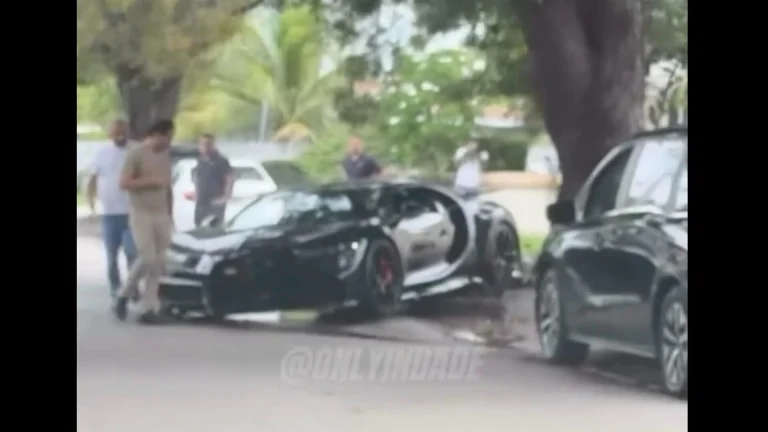
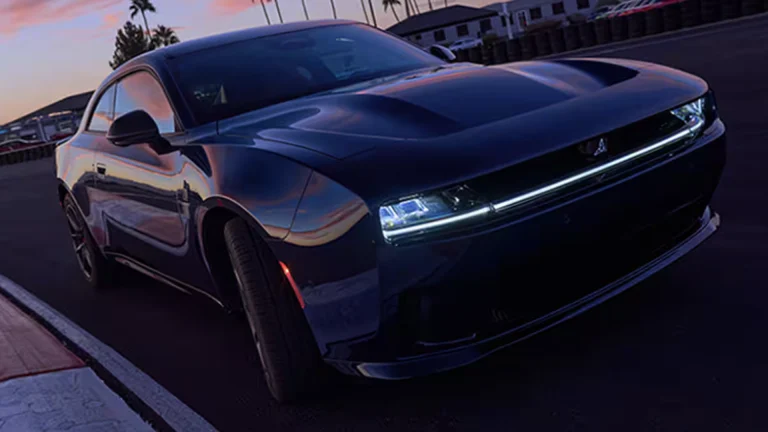
History also isn’t kind to boutique builders once a bigger parent enters the story a car is sold on. A customized Hellcat-based Charger recently lost the vast majority of its original sale price once the market decided the story behind the build mattered more than the build sheet itself. The restomod segment more broadly has gotten crowded enough that even mainstream auction houses are moving factory-adjacent, small-batch trucks and specials through the block regularly, so RUF wouldn’t be entering unfamiliar territory as a formalized division of a larger automaker. It just wouldn’t be RUF in the way collectors currently understand the name.
This Is Still Just a Report
Porsche has not confirmed talks with RUF. RUF has not confirmed talks with Porsche. A German business outlet says conversations are happening, and the outlet that carried the story in English says a deal is imminent, but imminent has described this exact rumor before without a signature ever showing up. Until one of these two companies puts out a statement, the more interesting story isn’t whether the acquisition happens, it’s what RUF would have to give up on paper to let it.