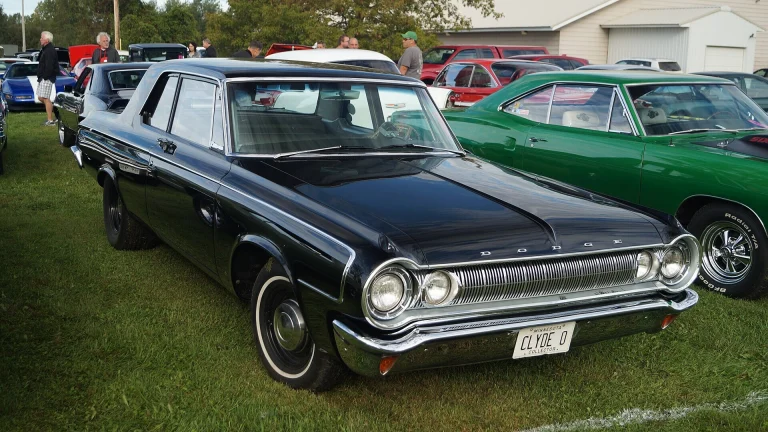
Image via Tesla
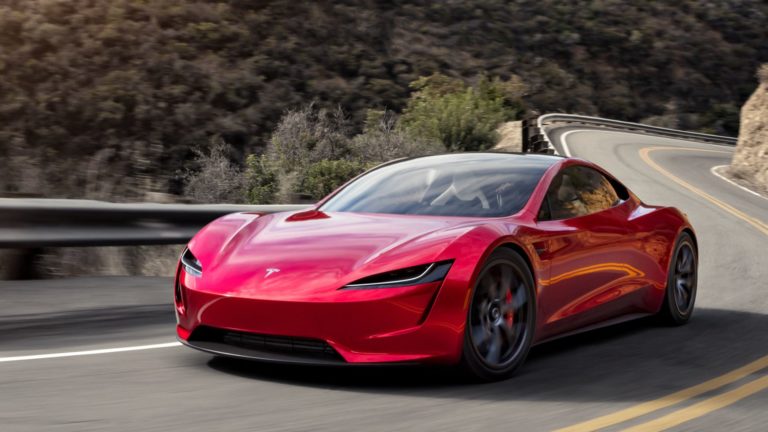
Elon Musk posted on X that future Tesla Roadster demos could include flying over Idaho’s Snake River, or maybe the Grand Canyon, and landing on its wheels while “exceeding half the speed of sound.” Tesla had unveiled the car on Thursday, Oct. 15, at SpaceX’s test site in McGregor, Texas, where, according to The National News Desk, the Roadster used SpaceX-developed thrusters to leave a ramp, flip in the air and land, once after clearing a line of cars and a semi-truck.
Executives said production would begin in 2028, and no price was announced, the same report said. Tesla’s reservation page, as that report describes it, lists a $50,000 payment for the Performance version and $250,000 for the Thrust version, plus an invite-only, single-seat Rocket version with a “full flight system.” The car has been promised since its 2017 concept, and Backfire News has been tracking Musk’s performance claims for it since at least 2024.
A post that names a river but no site, date or landowner
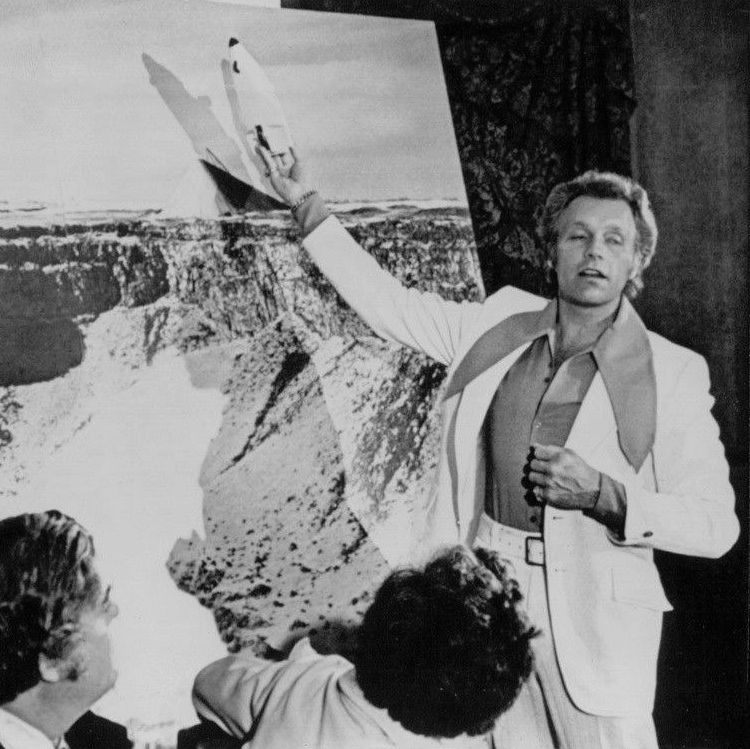
The text of the post I could read does not mention Evel Knievel, a date or a launch point. The Snake River Canyon runs for more than 50 miles, according to the Idaho State Department of Education, so “the Snake River” covers a lot of rim. The Knievel connection is the 1974 history: the Smithsonian dates his steam-powered rocket attempt to Sept. 8, 1974, and Visit Idaho calls the jump unsuccessful and says his dirt launch ramp is still visible on the south rim, east of the Perrine Bridge in Twin Falls. The state tourism site says that bridge spans the canyon nearly 500 feet above the river. Backfire News covered another rocket-car river crossing that went wrong, Ken Carter’s 1979 attempt over the St. Lawrence.
Half the speed of sound is about 380 mph
NASA puts the speed of sound at about 761 mph on a standard day at sea level, so half of it is roughly 380 mph. Musk said at the Texas event, per The National News Desk, that certain Roadster versions can top 230 mph. The jump he floated needs about 150 mph more than that, and “exceeding” means more still. The target also moves with the weather: NASA’s formula ties the speed of sound to air temperature, so a cold Idaho morning lowers the number and a hot afternoon raises it.
Tesla’s case for thrusters, as reported, is that tires limit every road car, and the company says its system produces four to five times the force tires can. That is a claim about acceleration. Nothing I found from Tesla addresses holding a car at that speed across a canyon or landing it on its wheels.
The FAA definition of aircraft and the ultralight limits
Federal aviation rules define an aircraft as “a device that is used or intended to be used for flight in the air.” A road car fitted with thrusters and built to fly reads onto those words. The broad exemption for light recreational flying, the powered-ultralight rule in 14 CFR 103.1, requires a single occupant, an empty weight under 254 pounds, no more than 5 gallons of fuel and a top speed of no more than 55 knots, about 63 mph. A road car weighs far more than 254 pounds, and 380 mph is six times that speed limit. Vehicles inside the ultralight rule need no airworthiness certificate, registration or pilot certificate; one outside it does not get that pass.
I found no FAA statement about the Roadster, and whether the agency would treat a demonstration flight as aircraft operation is its call. Tesla’s flights so far were at SpaceX’s test site, and neither Musk’s post nor Tesla’s Roadster page says where a public-canyon jump would be cleared or by whom.
What happens next
Production is not due until 2028, and the post gives no date for any jump. The next scheduled chance for Tesla to be asked about it is its third-quarter earnings date, which the company’s investor site lists as Oct. 21. The reservation page lists $50,000 and $250,000 payments for a car whose price Tesla has not announced.
Should a production car built to fly be held to the FAA’s aircraft rules, or are road-vehicle rules enough as long as it lands on its wheels?
About the Author