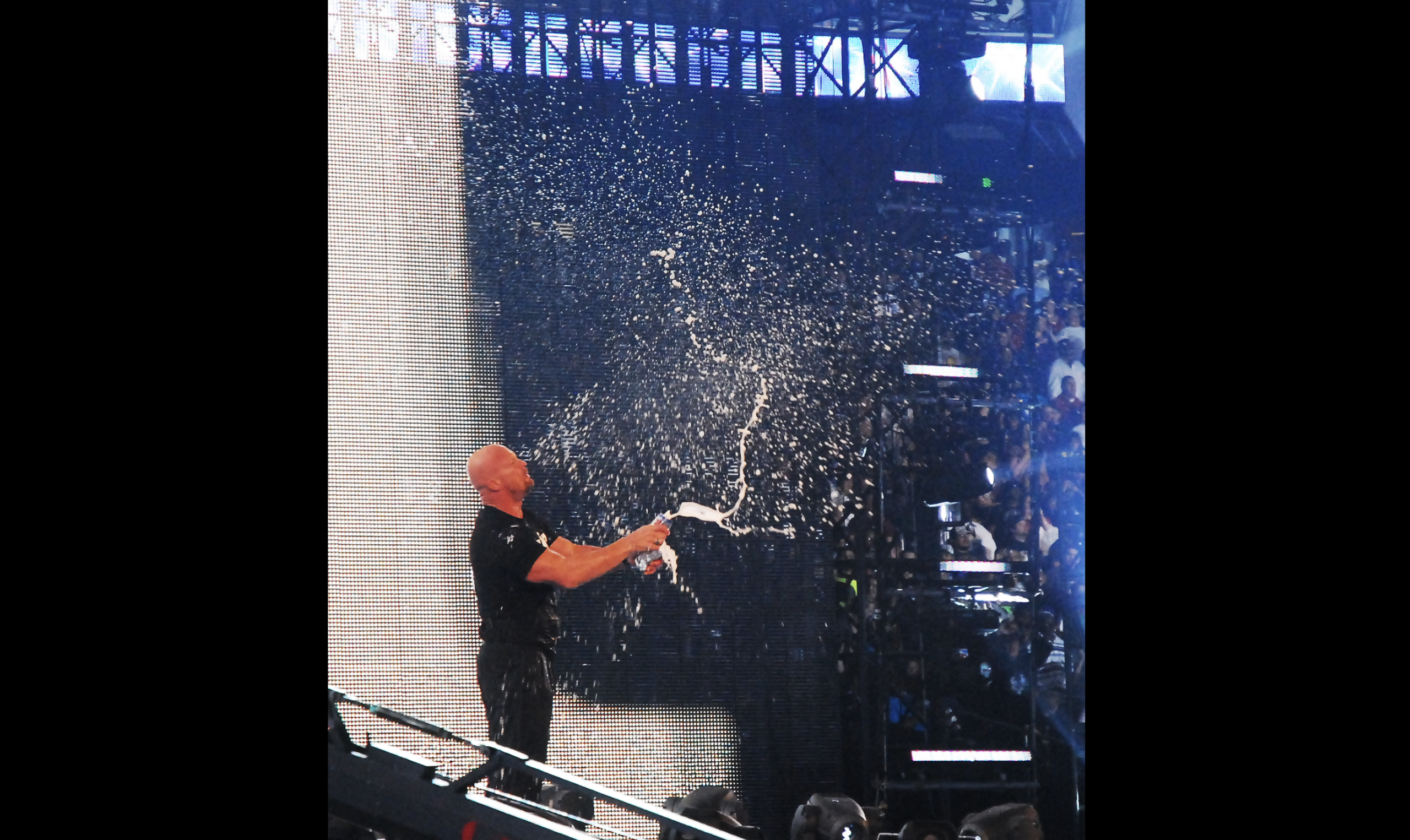
Steve Austin spent the better part of two decades convincing wrestling fans that the guy taking the beating always gets back up. On Saturday, August 22, the Nevada desert tested that same premise for real. The 61-year-old WWE Hall of Famer put his number-316 race buggy on its side during the Valley Off-Road Racing Association’s Stomping Grounds 300 near Yerington, and unlike a scripted finish, nobody handed him a folding chair to sell it.
Austin runs his own outfit, Steve Austin’s Broken Skull Racing, and two days after the wreck he posted a photo of himself standing next to the flipped car on the team’s Instagram page. He owned it completely, writing that he had made a mistake on the course, and that the error, not any mechanical failure, is what knocked him and his co-driver out of the race. Both men walked away unhurt. The car did not.
That car is the part of this story worth lingering on, because it is not the desert buggy most people picture when they hear off-road race car. Austin’s rig is a Kawasaki Teryx H2, a factory side-by-side that ships with a 999cc inline-four squeezed by a supercharger, rated at 250 horsepower and 146.3 lb-ft of torque. That is not a typo or a marketing rounding error. A vehicle you can order through a Kawasaki dealer, register, and technically drive to a trailhead makes more peak power than a base Chevrolet Camaro, out of an engine smaller than a Honda Civic’s. It fits a pattern with Kawasaki lately, a manufacturer whose engineers seem willing to chase unusual ideas all the way to production, whether that means a supercharged UTV or a patent-pending robot pack horse.
The choice to supercharge rather than turbocharge matters mechanically, not just for bragging rights. A supercharger is belt-driven straight off the crankshaft, so boost shows up the instant the throttle opens, with none of the lag a turbo generates while it spins up on exhaust gas. In a UTV bouncing through whoops and silt at speed, that immediate, predictable throttle response is arguably more valuable than outright peak output, because the driver needs the power to arrive exactly when the right foot asks for it, not a half-second later while the car is already airborne. It is the same tradeoff Kawasaki’s rivals wrestle with every time they pick a turbo over a belt-driven blower, and it is the same reasoning that recently pushed Honda toward a boosted engine of its own without touching a turbo at all.
The photo Austin posted shows exactly why he is walking away from a car on its roof. He is standing in a full fire suit with a helmet still resting in the cage, and the buggy itself is built around a tube-frame chassis with a roll cage and racing harnesses rather than stock sheet metal. Off-road racing sanctioning bodies mandate that hardware precisely because rollovers are routine, not rare, on courses full of blind rises, whoops, and silt beds that hide their depth until a tire is already buried in one. The safety gear did its job. The scorecard did not care.
What happened after the rollover is its own small lesson in how desert racing actually works. Austin credited a VORRA recovery volunteer for helping right the car, but he and his co-driver then drove it back to the pits themselves, on back roads, under its own power. That detail matters because it means the car was never trailered out mid-race, even though it was too damaged to continue on course. In series like VORRA, a did-not-finish is a did-not-finish regardless of how close a team came to the checkered flag, and there is no partial credit for limping home on a bent chassis. The mistake cost Austin a finish in a season he had otherwise been racing well, including an outright win earlier this year at VORRA’s Prospector 250.
For anyone who owns a UTV purely for weekend trail riding, there is a real takeaway buried in the damage report. A factory Teryx H2 starts at 32,899 dollars and climbs to just over 41,000 dollars for the top Limited eS trim, before anyone adds the racing seats, harnesses, radios, and lighting visible on Austin’s car. After any rollover hard enough to bend bodywork, a proper inspection means pulling the cage measurements, checking frame alignment, and re-torquing suspension mounts before the vehicle goes back out, race or no race. It is also worth knowing that standard personal auto insurance does not follow a vehicle off the pavement. Off-highway vehicles typically need their own specialty policy, and competitors in organized races generally carry separate racing or event coverage, because a factory warranty and a street insurance card both stop being useful the moment the wheels leave a public road.
VORRA itself is not some pop-up series chasing a celebrity name. The Nevada-based club is marking its 50th year of sanctioning desert races in 2026, making it one of the longest-running off-road racing organizations in the American West, with roots that go back to full-size trucks and buggies long before UTVs became a class of their own. Austin is not a tourist buying his way onto a grid for a photo opportunity; he is racing a full points-paying schedule against people who do this every weekend, which is exactly why a single blown line on a Yerington hillside was enough to end his day early.
The car number splashed across that crumpled bodywork, 316, is not a coincidence for anyone who watched Austin’s wrestling career, and it is a reminder that this is very much the same guy who built a persona out of getting knocked down and finishing the fight anyway. His team is already prepping the Teryx H2 for VORRA’s Gold Rush, a point-to-point run from Virginia City to Tonopah scheduled for October 8 through 11, which does not leave much time to sort out a car that just got rolled onto its roof in the desert. Austin would not be the first wrestling name to end up in an automotive headline for the wrong reasons, but this one is refreshingly simple: no DUI, no lawsuit, just a driver admitting he pushed too hard on a course that does not forgive it.
About the Author