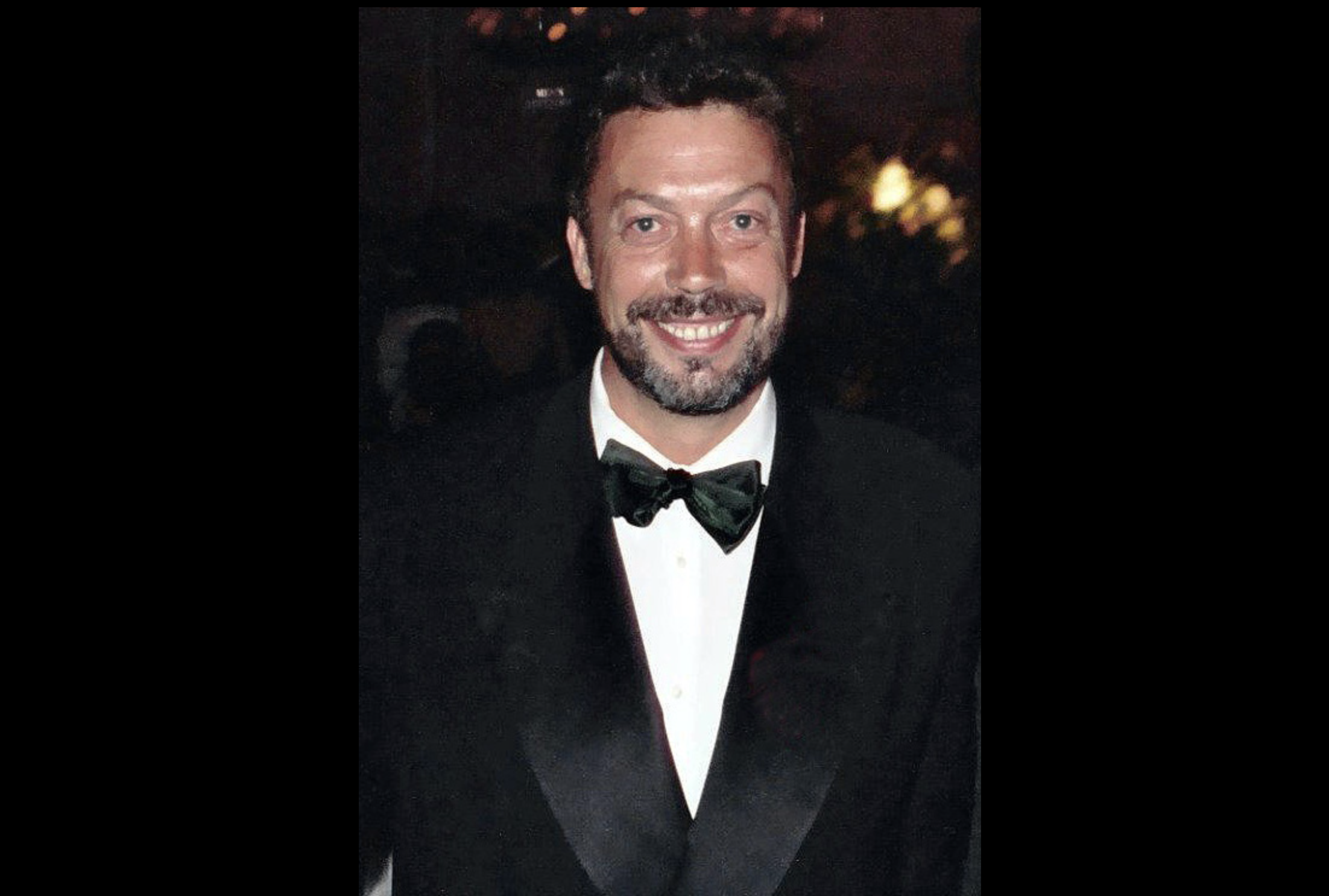
As news of Tim Curry’s death breaks, we’re revisiting the automotive trail around one of cinema’s most unforgettable performers.
We were just thinking about Tim Curry the other day.
Not in the usual way, either. We were wondering whether the actor behind Dr. Frank-N-Furter, Pennywise, Wadsworth, and so many other unforgettable characters had a hidden car collection somewhere in his past. Was there a favorite British grand tourer? A peculiar American luxury car? A garage full of the kind of strange machinery one might expect from the man who made The Rocky Horror Picture Show immortal?
Then the news began to break that Curry had died at 80.
So, given the moment, we went looking. And the honest answer is this: there is no well-documented Tim Curry car collection to celebrate. No verified list of owned classics, no racing résumé, and no credible evidence that he spent his career publicly identifying as a car enthusiast.
But there is still an automotive story worth telling.
It lives in The Rocky Horror Picture Show.
The 1975 cult classic is not a car movie. Its legacy comes from Tim Curry’s singular performance as Frank-N-Furter, the midnight screenings, the music, the costumes, and the freedom it gave generations of fans to be unapologetically themselves. Yet its opening act is built around an automotive idea almost as old as the road movie itself: a couple gets stranded while driving through the rain.
Brad and Janet’s journey toward Frank-N-Furter’s castle begins in a Ford Country Squire wagon. The film also includes a Ford Falcon, a Harley-Davidson WLA, and a Kawasaki Z1, according to the vehicle catalog maintained by the Internet Movie Car Database. The full vehicle listing is here.
The wagon is the important one.
A Ford Country Squire is about as far from Frank-N-Furter’s world as an automobile can get. It is long, wood-paneled, family-minded, and unmistakably suburban. Put it in the hands of Brad and Janet, and it becomes a visual shorthand for conventionality—the safe, respectable life they believe they are living before the storm, the flat tire, and the castle turn everything sideways.
That is why the vehicle choice works. The car does not need to be exotic. It needs to be normal.
The Country Squire makes the strange feel stranger. It gives the movie a baseline before Curry arrives and blows the doors off it. By the time the film reaches the castle, the wagon and the conventional world it represents seem to belong to a different universe.
The other vehicles add to the film’s collage of American and British pop-culture imagery. The 1964 Ford Falcon is another modest slice of mid-century American motoring, while the motorcycle appearances bring a little more outlaw energy to a movie that never had much interest in behaving itself. None of them are the stars of Rocky Horror. Curry was. But they helped establish the contrast that made his entrance so powerful.
This is not a story about a celebrity garage. It is a story about the cars that sat at the edge of one of cinema’s strangest—and most enduring—worlds.
Tim Curry’s career was never about fitting neatly into anyone’s expectations. He gave audiences characters that were funny, frightening, glamorous, dangerous, and impossibly alive. If The Rocky Horror Picture Show has an automotive lesson, it may be that the most memorable journeys do not always begin in something rare or expensive. Sometimes they begin in a family wagon, on a dark road, in the rain, with no idea what comes next.
Rest in peace, Tim Curry. We may never know what was in his own garage, but we will always remember the strange road he helped take us down.
About the Author