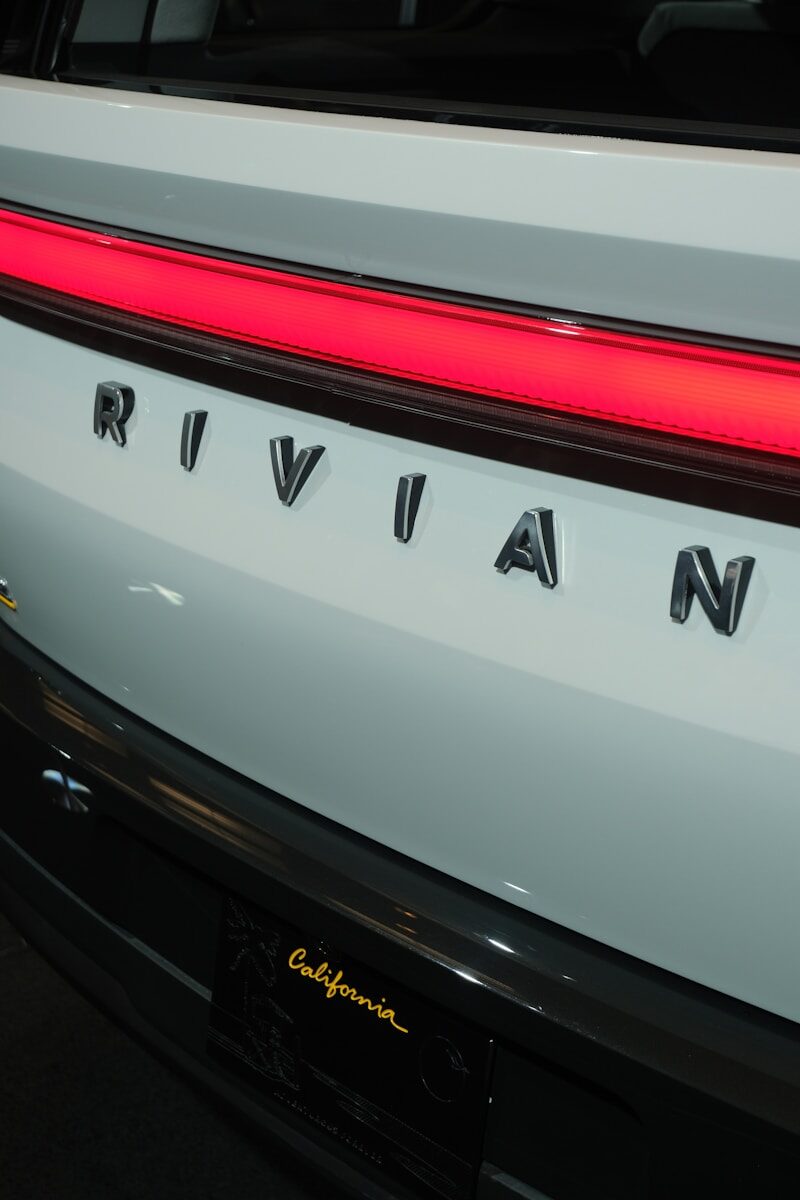
On August 5, an R2 owner plugged into a Rivian Adventure Network fast charger, watched the session start normally, and then watched it shut off on its own a few minutes later. Then came the smell: sulfur, unmistakable, filling the cabin. At the service center, the diagnosis was blunt. The bus bar linking the charge port to the high-voltage battery had failed, and it took an internal cable down with it. The owner’s R2 sat in Rivian’s shop for more than two weeks while engineers sorted out exactly what happened.
That owner wasn’t alone for long. Over the past two weeks, Rivian has been proactively calling a subset of R2 owners, telling them the company detected a potential issue with the high-voltage distribution system and asking them to bring their SUVs in for inspection. One owner’s in-app chat with Rivian support, dated August 19, shows a technician describing the work as an “engineering investigation” and recommending the owner hold off on DC fast charging until the appointment, purely as a precaution. Level 1 and Level 2 AC charging, Rivian told owners, remain unaffected.
The joint that’s failing, and why fast charging makes it worse
The actual fault lives at the joint where the DC fast-charging connector meets the charge header inside the port, the physical splice that carries current from the plug into the vehicle’s wiring. Rivian’s technicians are checking that joint for gap and thermal abnormalities, engineering-speak for a connection that isn’t seated tightly enough. That distinction matters more than it sounds. Electrical connections don’t fail because current flows through them; they fail because of how much heat that current generates when resistance is higher than it should be. Heat from a bad connection rises with the square of the current, not in a straight line, which is why a marginal joint can sit for months without complaint on a 240-volt home charger pulling roughly 30 to 48 amps, then start cooking itself the first time it sees the 200-plus amps of a DC fast charger. If a joint tests out of spec, Rivian is replacing both the DC fast-charging header assembly and the connector assembly rather than patching the individual part, treating the whole connection as suspect once it has shown it can misbehave.
How many cars we’re actually talking about
How many R2s are affected is murkier. Owners tracking the issue across forums and social media had counted roughly 15 confirmed cases as of mid-August, out of more than 6,000 R2s built or delivered since deliveries began in June, an informal, crowdsourced tally rather than a figure from Rivian or any regulator. VIN numbers shared by affected owners span a wide range, from the high-1000s into the mid-3000s, which suggests Rivian is working through a batch of early production units rather than one narrow build window.
Why this isn’t a recall, at least not yet
Here’s the part that matters if you own an R2 and are wondering whether to panic: this is not a recall. A search of NHTSA’s public database for recalls, investigations, and complaints tied to the 2026 Rivian R2 turns up nothing at all, no open investigation, no complaint on file, no recall campaign. Rivian’s own newsroom hasn’t published a release or safety notice about it either. What’s happening instead is a direct-to-owner service action, the kind of individualized outreach an automaker can run quietly as long as the scope stays contained and nobody has to notify the federal government. A real recall carries legal weight: manufacturers must notify NHTSA and mail every affected owner within 60 days of deciding to fix a safety defect, and NHTSA then tracks completion rates until the campaign closes. Rivian using the internal phrase engineering investigation in a support chat doesn’t trigger any of that. It’s company shorthand, not a regulatory filing.
That’s a meaningfully different process than the one working through the system right now for a Tesla door handle complaint that NHTSA initially denied yet that still ended up reshaping a federal rulemaking, or the kind of formal defect probe NHTSA opened after Mark Ruffalo’s Kia outperformed his Tesla in a side-by-side suspension comparison. Voluntary outreach like Rivian’s can absolutely turn into a recall later if the failure rate climbs, but for now, R2 owners are dealing with a manufacturer quality action, not a federal one.
The telemetry behind the phone calls
The proactive phone calls are a reminder of what modern EVs report home. Rivian vehicles stream vehicle health data continuously, and several owners who got the call had noticed nothing wrong with their own charging before Rivian reached out, suggesting the company is either monitoring for early resistance or voltage anomalies at the connector joint, or has traced a specific supplier batch to a range of VINs and is working through them methodically. Not every car that gets flagged actually has a problem. At least one owner’s service ticket came back closed as complete with no further action needed after inspection, meaning Rivian is verifying case by case rather than swapping parts on every car that gets a call.
What R2 owners should actually do
If you own an early R2 and haven’t heard from Rivian, the current guidance doesn’t apply to you, and there’s no reason to avoid public fast chargers preemptively. If you have gotten the call, or if a fast-charging session aborts repeatedly or you notice anything unusual in the cabin, stop trying to fast charge and get the car looked at. Towing and the inspection are covered under warranty, and a fried bus bar isn’t a repair worth diagnosing yourself in a parking lot. In the meantime, Level 1 and Level 2 charging haven’t shown the same failure mode, since neither pushes anywhere near the current a DC fast charger sends through that same joint.
The bigger picture for Rivian
None of this happens in a vacuum for Rivian. The R2 is the company’s first genuinely mass-market product, its second clean-sheet platform after the R1 trucks and SUVs, and it’s arriving while Rivian is simultaneously funding other bets, including the e-bike spinout that just raised $150 million to chase autonomous delivery. A charge port issue on a brand-new platform during its first production summer isn’t unusual. New high-voltage architectures tend to surface their weakest joints in the first few thousand builds, which is exactly why Rivian appears to be running this as a targeted inspection campaign instead of waiting for a wider pattern to emerge. Catching a bad connector before it becomes a fire statistic is the system working as intended, even if the fact that it happened at all invites scrutiny of how fast Rivian is ramping a brand-new vehicle.
What’s worth watching isn’t the failure itself, it’s the method. Rivian resolved this without a press release, without an NHTSA filing, and without most of its own customers ever hearing about it, using vehicle telemetry and one-on-one phone calls instead. That’s efficient, and probably better for the affected owners than waiting months for a recall notice to arrive by mail. It also means the only reason the public knows about it at all is because owners started comparing notes online. As more of a car’s intelligence, and its failures, get managed through software and phone calls rather than public paperwork, that kind of owner cross-talk may end up being the main way anyone outside the company learns a fix was ever needed.
About the Author