Seventeen months ago, Also, Inc. was a stealth skunkworks project inside Rivian, building electric bikes nobody outside the company had seen. This week the spinout announced $150 million in fresh venture capital, pushing its total funding past $455 million, and used the announcement to say the quiet part out loud: the e-bikes and cargo quads were never the whole plan. They’re the proof of concept for a fleet of autonomous vehicles the company hasn’t shown anyone yet.
The Series D closed August 19, led by Prysm Capital, with Eclipse Capital, Greenoaks, and MVP Ventures all writing checks again. Stack it against Also’s prior rounds and the math is straightforward: $105 million from Eclipse Ventures when Rivian spun the company out in March 2025, $200 million in a Greenoaks-led Series C this spring with DoorDash chipping in as a strategic investor, and now $150 million more. Also didn’t attach a valuation to any of it, which is its right as a private company, but three rounds in seventeen months is not the pace of a business that’s short on investor interest.
One Platform, Several Robots
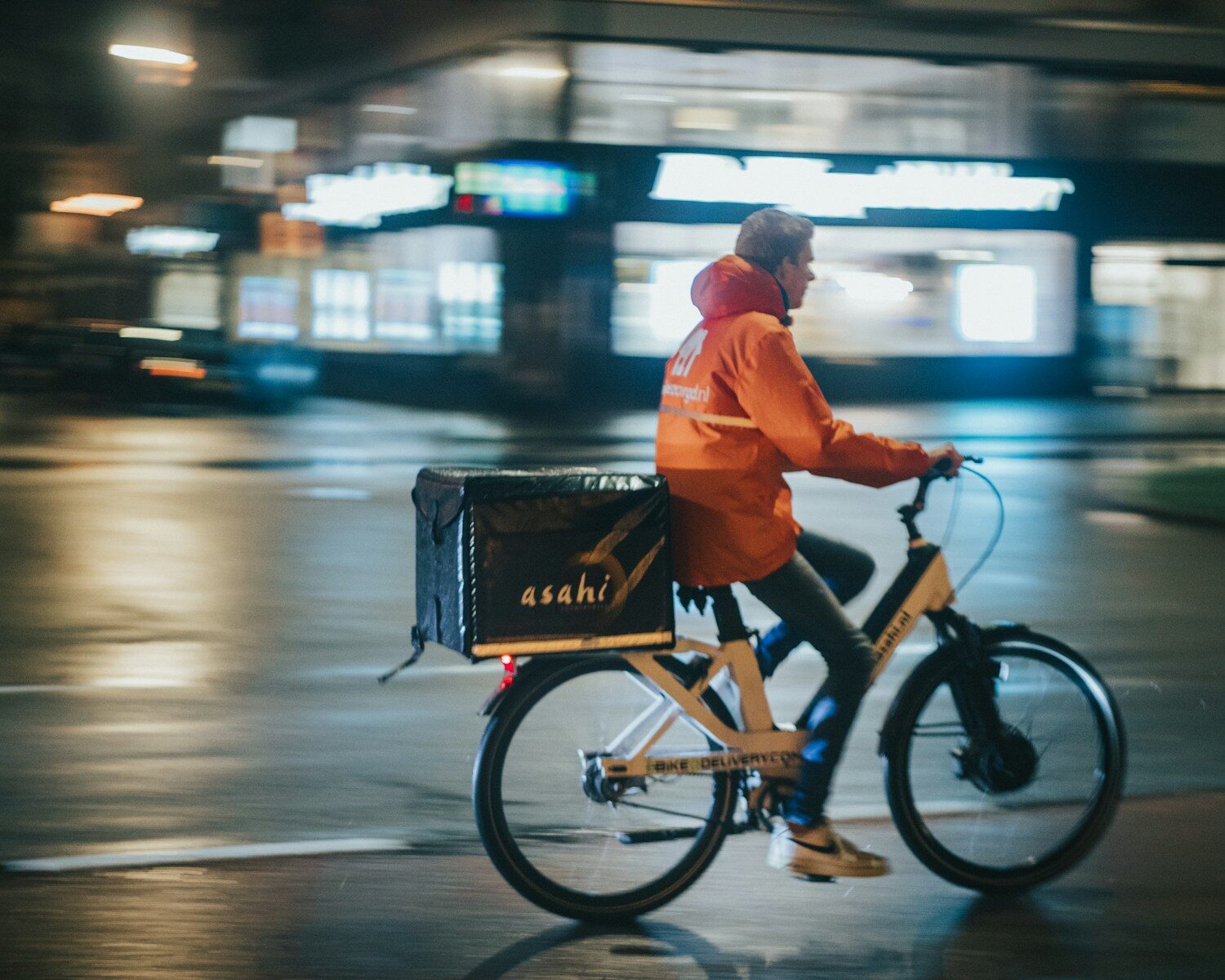
The new capital is earmarked for developing multiple autonomous form factors at once, covering both goods and people moving through cities. What separates this from someone bolting sensors onto a golf cart is that Also plans to build every one of those vehicles on the same electric architecture already underpinning the TM-B e-bike and the TM-Q cargo quad. That’s an engineering decision as much as a financial one: sharing a battery pack, drive motor, and software stack across a bicycle, a cargo quad, and eventually a fully autonomous delivery vehicle lets Also spread its R&D cost across every unit sold instead of starting from zero for each new shape. It’s the same logic automakers use when they stretch one platform across a truck, an SUV, and a van, just shrunk down to a scale that fits in a bike lane.
An Investor Betting on the Rivian Playbook a Second Time
Prysm Capital co-founder Jay Park, whose firm backed Rivian early, described Also as applying that same vertically integrated approach to smaller vehicles built for commercial operators. It’s a fair comparison: Rivian designs its own drive units and battery packs rather than buying them off the shelf, and Also is doing the same thing at a fraction of the size and cost. Whether that discipline is worth $455 million to prove out on a bicycle-shaped vehicle is a separate question, but the investor logic holds together.
DoorDash, Amazon, and the Curb-Space Land Grab
Also isn’t raising money on a hypothetical. In March, the company signed a multi-year commercial agreement with DoorDash tied to a strategic investment from the delivery platform, aimed at deploying small EVs in the bike lanes, shoulders, and curbsides that swallow traditional delivery vans whole. DoorDash Labs co-founder Stanley Tang joined Also’s board as an observer as part of that deal. Amazon is also named as a commercial partner in Also’s funding announcement, tied to the TM-Q cargo quad, though neither company has published a vehicle count or a rollout date. Co-founder and president Chris Yu summed up the pitch this way: whether a vehicle is driven or autonomous, “the need to solve for congestion and cost per trip doesn’t change.”
Rivian’s Arm’s-Length Bet
Rivian isn’t running Also day to day, but it isn’t out of the picture either. When Rivian spun the unit out in March 2025, it kept a minority ownership stake and installed founder and CEO RJ Scaringe as Also’s board chairman. That structure lets Rivian benefit if the micromobility bet pays off without diverting engineering headcount or capital away from R2 and R3, the vehicles actually funding the company’s core business. It also means Rivian isn’t on the hook if a driverless quad rolls into a bike lane and does something a regulator doesn’t like. Also raised its own capital, carries its own liability, and answers to its own board.
The Regulatory Gap Nobody’s Filled
Autonomous vehicles smaller than a car and faster than a pedestrian occupy a legal gray zone the law hasn’t caught up to. California only recently sorted out rules for driverless semis, and the state’s own driverless trucking framework has already drawn a lawsuit from the Teamsters over how the comeback was structured. Waymo’s much larger, far more heavily regulated robotaxis are still getting stuck in San Francisco intersections and testing the patience of city officials. A software-defined delivery quad sharing a bike lane with actual cyclists raises a different, arguably harder set of questions about right-of-way, insurance liability when there’s no driver to cite, and who’s responsible when a piece of curb infrastructure gets in the way. None of that shows up in a funding announcement, but it’s the actual product Also is now promising to build.
Why the E-Bike Hiccups Matter Here
There’s reason to temper the enthusiasm with a little skeptical arithmetic. Also’s first consumer product, the TM-B e-bike, shipped months behind its original spring 2026 target, and the company’s own reservation agreement pre-loaded force-majeure language for supply chain delays before it needed one. That’s not damning by itself, startup hardware timelines slip constantly, and Also’s refund policy is more generous than most. But it’s a useful data point for anyone reading a press release about multiple autonomous form factors launching on an unspecified timeline. Building a bicycle with a software-defined drivetrain and building a self-driving delivery robot that shares public roads with cars are different orders of engineering and regulatory difficulty. Also has now raised nearly half a billion dollars to close that gap. The e-bike buyers still waiting on Launch Edition units are, whether they realize it or not, the beta testers for whether this company can execute at all.
Also hasn’t said when an autonomous vehicle will actually appear in public, what it will cost to build, or which regulator gets to sign off first. Until those blanks get filled in, the $455 million is a bet on a team and a parts bin, not a product. That’s a perfectly normal way to fund a startup. It’s a considerably riskier way to fund something that might eventually share a lane with your car.
About the Author