Photo by Mike van Schoonderwalt on Pexels
The collector car market has had a turbulent few years. After an extraordinary run of appreciation following the pandemic-era buying frenzy, prices for many vehicles have cooled, corrected, or plateaued. For buyers with discernment, that creates genuine opportunity. For anyone chasing the headlines without doing their homework, it creates traps.
Understanding where the market is today — and more importantly, why — is the starting point for any collector car purchase worth making.
The Current Landscape
The high end of the market has held up remarkably well. Ultra-rare, historically significant, and well-documented cars continue to attract serious bidding at major auctions. What’s softened is the middle segment — vehicles that rode a wave of enthusiasm a few years ago but lacked the fundamentals to sustain those elevated valuations. The lesson here is familiar: scarcity plus documentation plus genuine historical interest equals durable value. Hype alone doesn’t.
The auction circuit continues to provide a useful benchmark for where the market sits. Results from events like Mecum Indy and major Barrett-Jackson sales tell a story about which categories have genuine collector support and which have become more speculative. Paying attention to pass rates — the percentage of vehicles that fail to meet reserve — is often more informative than the headline sale prices.
Categories Worth Watching
A few segments of the collector market continue to look attractive for buyers entering in 2026. Early Japanese performance cars from the 1990s and early 2000s have seen significant appreciation but still represent value relative to their European equivalents. The market for well-maintained Supra, NSX, and R34 GT-R examples has matured, but prices for anything in clean, unmodified condition continue to find enthusiastic buyers.
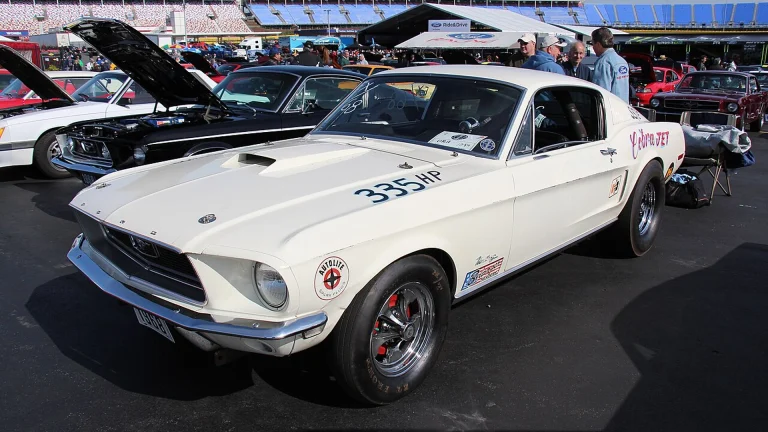
American muscle cars from the late 1960s and early 1970s retain enormous cultural gravity, particularly for factory-correct examples with documented provenance. The challenge in this segment is the prevalence of restored vehicles with replaced or incorrect components — doing thorough research before buying is non-negotiable. A car that looks correct from ten feet away may tell a very different story under proper inspection.
Classic American trucks have carved out their own collector segment, with well-preserved examples from the 1950s through the 1970s generating real competition at auction. Part of what drives this is the broader cultural moment — the truck-as-lifestyle vehicle has been dominant for years, and that sentiment has translated into collector interest in historical examples. If you want to see what a built restomod can look like at the top end of that market, take a look at the 550-HP 1979 Ford F-150 Ranger restomod that’s been generating serious attention.
The Provenance Premium
One theme that runs consistently through the high end of the market is the premium commanded by documented ownership history. A car that can be traced back to its original owner, through documented service history, with verifiable mileage, is worth meaningfully more than an otherwise identical vehicle with gaps in its story. The steam-powered record car heading to auction with no reserve is a fascinating example of how unusual provenance can create outsized interest — the story is inseparable from the value.
Celebrity ownership is another factor that can move prices significantly, as we’ve seen with vehicles like Serena Williams’ custom one-off Lincoln Navigator. The key question is whether the celebrity connection adds lasting value or merely temporary attention. In most cases, the fundamentals of the car itself need to be strong enough to stand independently of the famous name attached to it.
What to Avoid
The clearest trap in today’s market is overpaying for a vehicle whose value was driven primarily by momentum rather than underlying merit. If a car’s price appreciation happened entirely within the past three years, scrutinize it carefully. Ask whether it would have been collectible a decade ago. If the answer is no, consider whether anything has fundamentally changed about the car itself — or whether you’re looking at the tail end of a trend.
High-mileage examples of typically low-mileage collector cars present another challenge. The mileage penalty in this segment is real and often severe. Unless you’re buying specifically as a driver rather than an investment, the numbers matter.
The Long View
The best collector car purchases are the ones that would be satisfying regardless of what happens to the market. A car you genuinely love, that you’ll drive on good days and maintain carefully, that tells a story worth telling — that’s the investment thesis that tends to work out over time. Market cycles come and go. Authentic passion for the machines is what endures.
About the Author