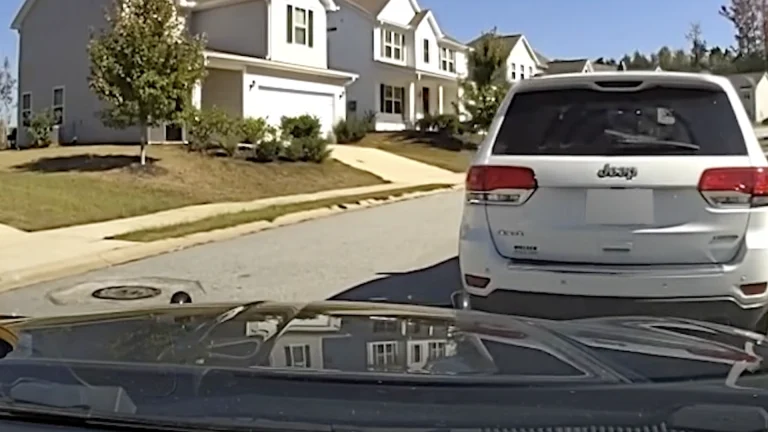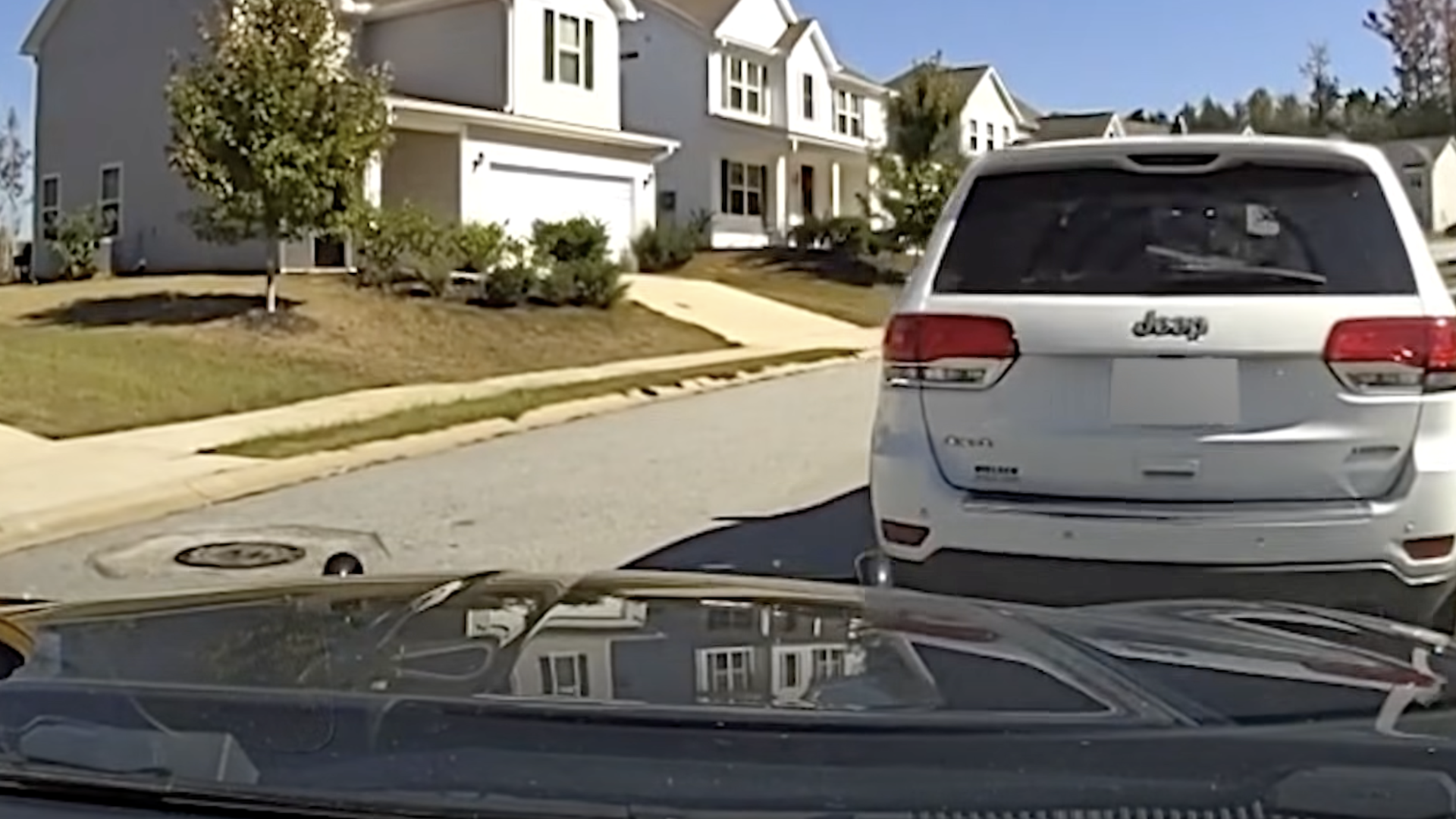
At about 2:30 p.m. on October 15, Greenville County deputies tried to stop a vehicle reported stolen near Simpsonville, South Carolina. The driver, a 16-year-old, did not stop, according to the sheriff’s office. The vehicle crashed into a house on Renwood Road. No one was injured, officials said. The driver and his 15-year-old passenger ran from the wreck. Deputies caught the passenger on foot. The driver was taken into custody in Spartanburg County. Both teens were charged with possession of a stolen vehicle.
The Greenville County Sheriff’s Office released video of the incident this past weekend. It shows a wrecked white SUV against the house, with heavy damage around the garage. The sheriff’s office said deputies did not pursue the vehicle before it crashed. That detail matters more than the wreck. South Carolina’s new fleeing law took effect five months before this crash, and its felony tier only applies when a deputy is actually chasing you.
How the dogs and the drone found the driver
The sheriff’s office described the search in a Facebook post on Saturday, October 24. Deputies said K-9 teams used several dogs to follow the driver’s path, and drones watched the area from above. Fox News Digital reported that the released video shows a dog picking up a scent from the vehicle before beginning the track.
Related Articles
- GAA Classic Cars Offers 1984 Corvette VIN #1 With Just 279 Miles
- Peugeot E-T16 Concept: 816-HP Electric Rally Tribute Explained
Two K-9 teams followed the trail into a swampy area nearby. One dog found the driver’s pants and footprints there, deputies said. The driver crossed into Spartanburg County, where he was quickly taken into custody. In its first report on October 15, FOX Carolina said the Spartanburg County Sheriff’s Office made that arrest.
The sheriff’s office used the episode to promote its methods. Its post said people who run from Greenville County deputies learn the department has several ways to find them.
The new felony requires a pursuit, and deputies said there wasn’t one
South Carolina rewrote its failure-to-stop law last year. Governor Henry McMaster signed H. 3127 on May 12, 2025. The law took effect one year later, on May 12, 2026.
Under the current version of Section 56-5-750, failing to stop for blue lights or a siren on a first offense with no serious injury is a misdemeanor. It carries a fine of at least $500 or up to three years in prison, plus a license suspension of at least 30 days. The 2025 law added a new felony tier. A driver found to have led law enforcement on a high-speed pursuit can be sentenced to up to ten years. The statute defines a high-speed pursuit as a driver increasing speed or taking evasive action to avoid the pursuing law enforcement vehicle.
The definition requires a pursuing police car. If no deputy chased the vehicle, there was no pursuing vehicle, and the new felony tier is hard to apply. The sheriff’s office has said deputies did not pursue the vehicle before it hit the house. By the statute’s own wording, this case sits outside the new felony. An SUV fled and hit a house, and the felony still doesn’t apply without a deputy behind it.
Earlier drafts of the bill would have covered this situation. A version introduced in December 2024 listed several aggravating circumstances that would make a first offense a felony, including running from the scene on foot after the pursuit ended. A February 2025 committee version added a collision that caused property damage. Neither provision made it into the final law. During Senate debate, Minority Leader Brad Hutto argued against making every first offense a felony. He gave the example of an 18-year-old who sees blue lights and drives a few blocks to a well-lit gas station before stopping.
The only charge the sheriff’s office has publicly announced is possession of a stolen vehicle. The office has not said whether failure-to-stop charges were filed. Because the case is in juvenile court, those records are not public.
What the stolen-vehicle charge carries, and where the case is heard
Under Section 16-21-80, the penalty for possessing a stolen vehicle depends on the vehicle’s value. A vehicle worth $2,000 or less makes it a magistrate-level misdemeanor, punishable by up to 30 days in jail. A vehicle worth more than $2,000 but less than $10,000 makes it a felony with up to five years. A vehicle worth $10,000 or more raises the maximum to ten years. The sheriff’s office has not identified the vehicle or its value.
Those penalties apply to adults. A 16-year-old in South Carolina is a “child” under the Juvenile Justice Code, so his case starts in family court. A family court can transfer a 16-year-old to adult court only on charges equivalent to a Class A through D felony, or a felony with a maximum of 15 years or more. Neither the stolen-vehicle statute’s top tier (10 years) nor the new fleeing felony (10 years) reaches that threshold. If the charges stay as announced, the driver’s case remains in family court.
A family court adjudication isn’t legally a conviction, but the judge still has teeth. Restitution is on the table, weighed against how many people caused the loss, the teen’s role in it, and what he can realistically pay. The court can also suspend or restrict the teen’s driver’s license until his 20th birthday. A commitment to the Department of Juvenile Justice cannot extend past his 22nd birthday.
Who pays for the house on Renwood Road
South Carolina’s parental liability statute, Section 63-5-60, allows a property owner to sue the parents of a minor living at home who maliciously or willfully damages property. Recovery is limited to $5,000 in actual damages. Five thousand dollars doesn’t go far when a vehicle has gone into a garage. The statute also covers only malicious or willful damage, and a crash while fleeing may not meet that standard. The homeowner can still sue the teen directly, but a judgment against a minor is often difficult to collect.
Related Articles
- Aumann Auctions Offers Rare 1933 Ford V8 Roadster Pickup, One of Only 306 Built
- Ochre 1972 Chevrolet Blazer 4×4 With Removable Hard Top Crosses the Block at Freije & Freije Auctioneers
In practice the homeowner’s insurer pays first, and the homeowner still eats the deductible.
What happens next
What happens next happens in family court, behind closed doors. If either teen is held in secure detention, the law requires a detention hearing within 48 hours, excluding weekends and holidays, and periodic reviews afterward. The sheriff’s office has not said whether either teen remains in custody, and South Carolina does not release juvenile court outcomes.
Since May 12, 2026, running while an officer chases you can mean a ten-year felony, even on a first offense. Running when nobody chases you may not. Deputies chose dogs and a drone over a chase, which keeps a pursuit off the road. It also costs prosecutors the charge the legislature wrote for drivers who flee.
See the Facebook post here.
A teen drove an SUV into a house and the new felony doesn’t reach him. Should South Carolina close that gap, chase or no chase, or did lawmakers get it right by tying the felony to an actual pursuit?
Images Via: Greenville County Sheriff’s Office on Facebook
About the Author