Image via Oracle Red Bull Racing
Two crashes in two consecutive races, at two different circuits, both traced to the same part failing in the same way — for two completely different reasons. That’s not a fluke, and it’s not a “we’ll tighten a bolt and move on” problem. That’s a team principal standing in front of cameras admitting his engineers have now found two separate ways for a rear wing to betray a driver at 180 mph, and neither explanation makes the other one less alarming.
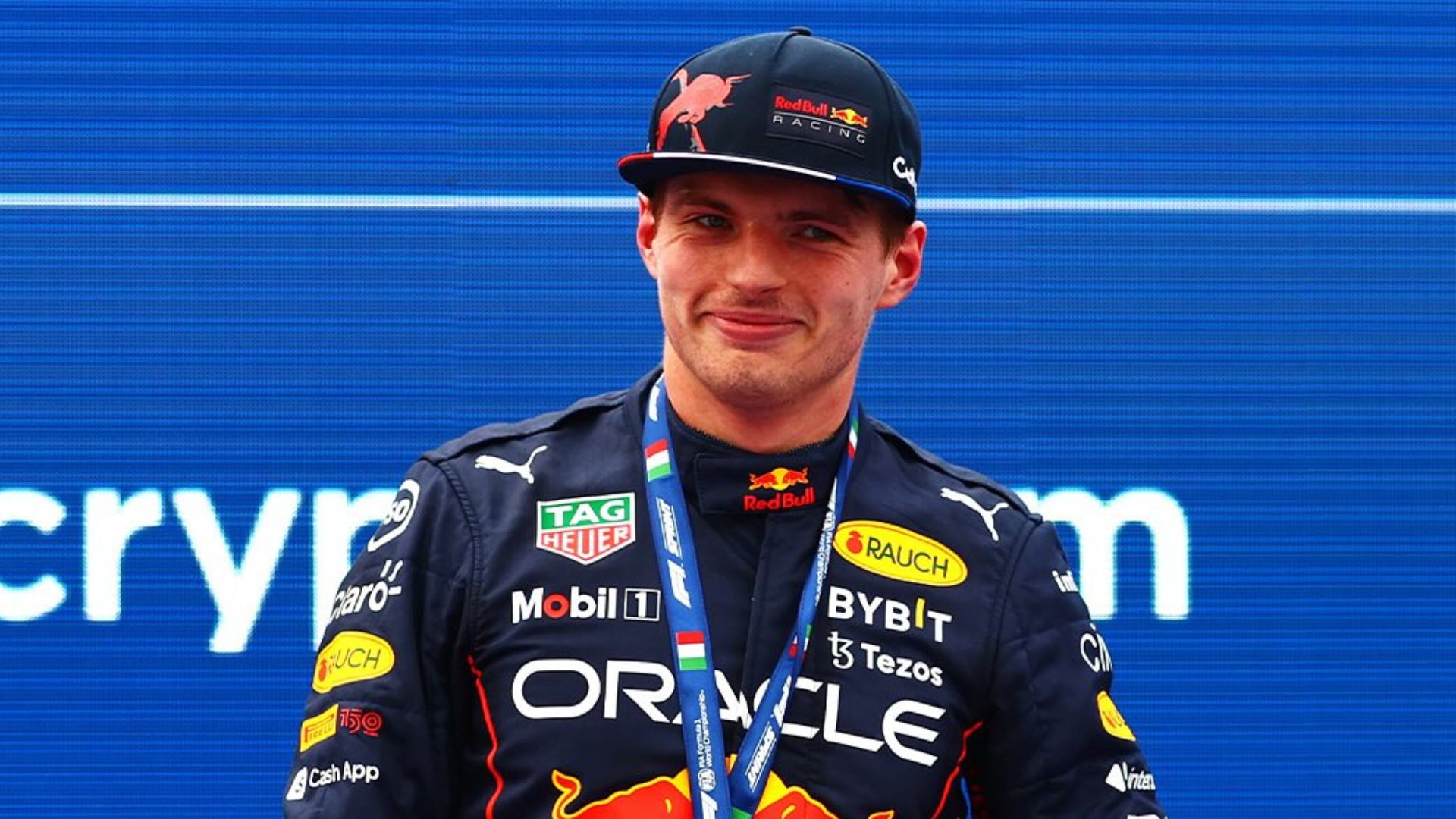
Max Verstappen found that out the hard way for the second time in as many rounds when he speared into the gravel at Stowe corner four laps from the end of the British Grand Prix, in front of the biggest crowd Formula 1 has ever drawn to a single race weekend. He’d been running third, hassling George Russell for position, right up until the rear wing on his RB22 failed to fully reattach at the end of a straightline-mode zone and the car simply let go.
If that sequence sounds familiar, it should. One week earlier at the Red Bull Ring, Verstappen’s Austrian Grand Prix weekend ended in Q3 the exact same way: rear wing, same closure failure, same instant loss of rear downforce, same trip through the gravel. Red Bull Team Principal Laurent Mekies didn’t try to shrink the coincidence down to something smaller than it is. “It is very unpleasant for drivers to be let down by the car in high-speed corners in two consecutive races, let it be for two different reasons,” he said after Sunday’s race. He confirmed the team understood what happened at Austria, but that Silverstone’s crash was, in his words, “a different type of failure.” His own conclusion mattered more than either explanation: “Whether or not the failure is different, that doesn’t really matter.”
He’s right, and that’s the uncomfortable part for Red Bull. A single failed component is a manufacturing defect — annoying, embarrassing, fixable with a supplier audit and a redesigned bracket. Two unrelated failure modes inside the same system in back-to-back weekends means the system itself, not any one part of it, is the problem. And the system in question isn’t some obscure homologated bracket buried in the floor. It’s the wing everyone in the paddock has been talking about all season.
A Trick Red Bull Didn’t Invent
Here’s the detail that turns this from a reliability story into an aerodynamics story: Red Bull hasn’t been running some in-house design that quietly went wrong. For the past five races, going back to Miami, the team has raced its own version of what the paddock nicknamed the “Macarena” wing, a rear wing engineered to visibly twist and rotate under load, bleeding drag on the straights well beyond what F1’s official straightline-mode deployment provides on its own. Ferrari built the concept first, unveiling it in preseason testing to enough double-takes that the dance-move nickname stuck within days. McLaren has since built its own interpretation, and Ferrari’s version keeps evolving mid-season even as the team works through its own uneven form this year. Red Bull adopted the idea rather than inventing it, and it’s now the very system sending its four-time champion into gravel traps.
That’s worth sitting with for a second. This isn’t a case of a team’s own flawed engineering finally catching up with it. It’s a case of a proven rival’s trick, borrowed and adapted, turning out to carry risks that weren’t obvious until it started failing on Red Bull’s car specifically, twice, in two different ways, in consecutive rounds. Verstappen wasn’t shy about how that feels from the cockpit: “This is becoming dangerous for myself. And obviously, I don’t want that.”
Why A Legal Wing Can Still Be A Dangerous One
The reason wings like this exist at all comes down to how the FIA actually polices flexible bodywork, and it’s worth understanding because it explains how a part can be perfectly legal and still fail catastrophically. Under the current technical regulations, teams aren’t banned from building bodywork that flexes. They’re banned from flexing more than a specified amount under a specific FIA test. The governing body clamps a fixed load onto a stationary wing in the garage and measures how far it moves. Stay under the limit, and the part is legal, full stop.
The catch is that a static bench test and a wing screaming down the Hangar Straight at well over 200 mph are not remotely the same load case. A wing engineered cleverly enough can pass its deflection test sitting still in the garage while still bending dramatically once real aerodynamic force loads it in motion, which is exactly the loophole that’s turned flexible wings into one of the sport’s longest-running technical arms races. The FIA has tightened these deflection tests repeatedly over the past two seasons for precisely this reason: teams kept finding new ways to be legal on the bench and aggressive on track. A wing designed to move that much under load is, by definition, closer to a moving part than a fixed one, and moving parts fail in ways fixed ones simply don’t.
That’s the risk Mekies was dancing around when he said Red Bull has “all the options open” on whether to keep running the concept at all. Reworking an actuator or a locking mechanism fixes a component. Walking away from the concept mid-season means admitting the entire category of wing, not just Red Bull’s specific execution of it, carries more risk than the aerodynamic gain is worth.
Why This Reaches Beyond Red Bull’s Garage
If Red Bull parks the concept, or if the FIA decides two high-speed crashes on one car in one fortnight justifies a harder look at flexible rear wing testing generally, that scrutiny doesn’t stop at Milton Keynes. Ferrari built this wing first and has kept developing it all season. McLaren is running its own version right now. A regulatory response aimed at closing the loophole itself, rather than at whatever Red Bull specifically got wrong, would land on three championship-contending aero programs simultaneously, in the middle of a title fight currently separated by less than 30 points across three drivers on two teams.
That’s a pattern Formula 1 has lived through before. Clever aerodynamic ideas that technically satisfy the letter of a test while working against its spirit tend to survive right up until they cause a visible, television-friendly problem, and then get legislated out fast regardless of who built them first or how much of the season’s development budget already went into them. A wing causing two crashes on the sport’s most recognizable driver in consecutive races is exactly the kind of visible, television-friendly problem that speeds that timeline up.
For now, Red Bull’s answer is a review, not a retreat: an audit of the actuator, the locking hardware, and the control software governing wing deployment, run across the entire system rather than Verstappen’s chassis alone. Whether that review ends with a redesigned part, or with a wing sitting unraced in the garage at Spa in two weeks, is the question actually worth watching. It matters far more than anything that happened on Sunday’s scoreboard.
About the Author