Dodge brings the iconic Viper GTS-R to Fortnite and Rocket League
Stellantis can’t get a new Viper past federal crash standards. Pixels, it turns out, don’t need airbags.
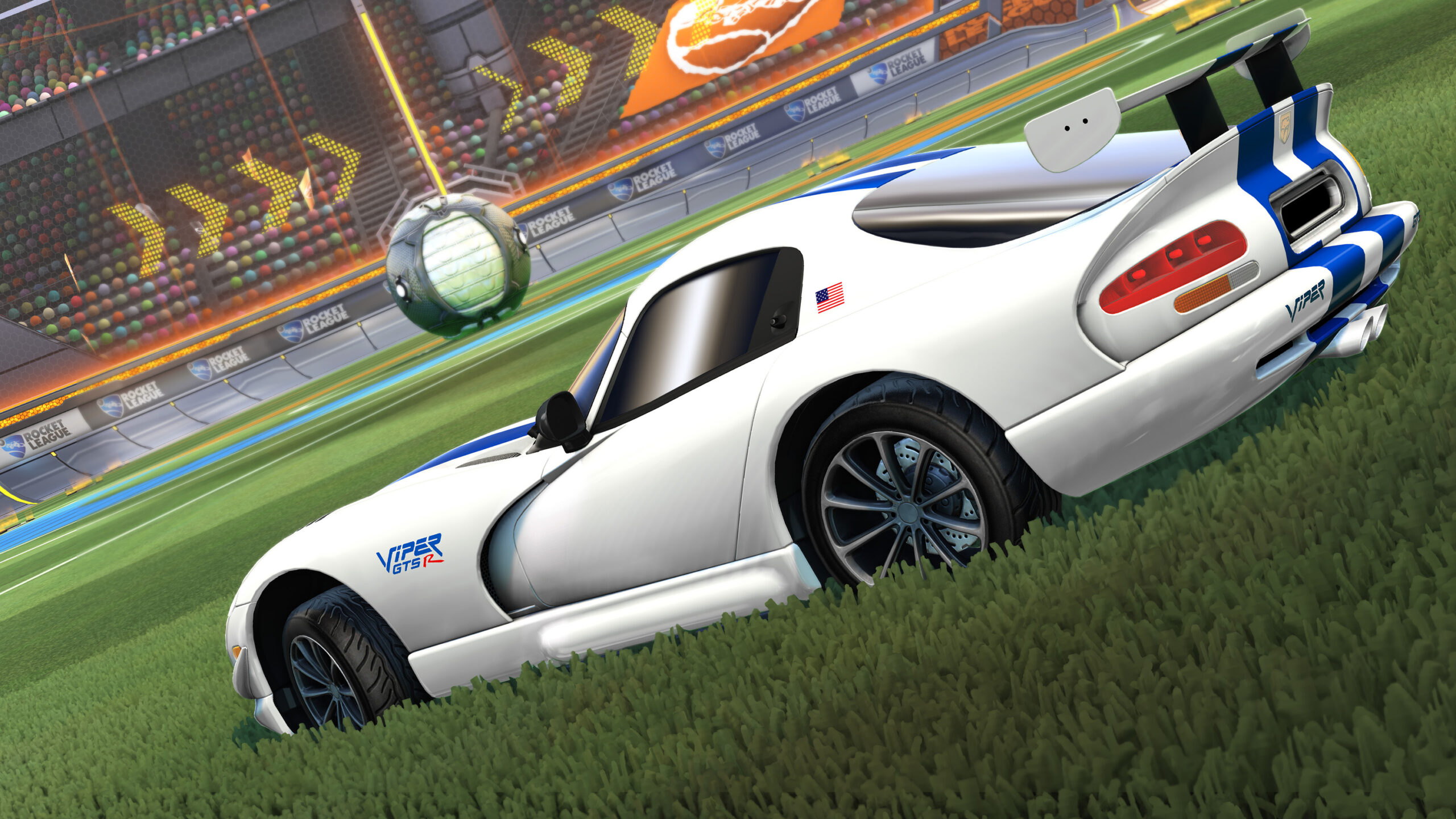
Starting July 2 at 8 p.m. EST and running through July 12, Dodge is dropping the Viper GTS-R into Fortnite and Rocket League as a driveable, customizable in-game car with its own limited-time bundles. Dodge CEO Matt McAlear framed it as a way to connect “Dodge’s performance heritage with a whole new generation of enthusiasts.” That’s the press-release version. The more interesting version is what this says about a company that hasn’t built a Viper in almost a decade and, as of right now, has no plan to build another one.
Here’s what most people don’t know about the car Dodge is virtually resurrecting. The Viper GTS-R wasn’t a sticker package. It debuted at Pebble Beach in 1995 as a factory-built race car spun off the road-going GTS, and it went on to win five international GT championships, including the FIA GT title three years running from 1997 to 1999. In 2000, a GTS-R took the overall win at the Rolex 24 at Daytona, the first time a production-based American car had ever won that race outright. Between 1998 and 2000, Vipers finished one-two in the GTS class at Le Mans three consecutive years. This was a snake that actually bit.
None of that racing pedigree changed the fact that the real Viper died quietly in August 2017. The commonly cited reason is regulatory, not commercial: federal side-curtain airbag requirements that took effect that year would have forced a redesign of the Viper’s aluminum spaceframe, and Chrysler decided a low-volume halo car wasn’t worth the engineering spend to comply. No successor has been announced since, even as the rest of the Dodge lineup has been reengineered around twin-turbo inline-sixes and, in the Charger Daytona, a fully electric drivetrain.
That’s the real story hiding in this announcement. Dodge doesn’t have a new Viper to sell, and building one that meets 2026 crash and emissions standards would be an expensive, low-volume vanity project for a brand that’s already spending its engineering budget on the Hurricane six-cylinder and the electric Charger. What it does have is a name with enormous nostalgic equity and functionally zero cost to deploy inside somebody else’s game engine. A ten-day Fortnite and Rocket League tie-in requires no crash testing, no emissions certification, no dealer floor plan financing, and no assembly line. It just requires a licensing deal and some 3D modeling.
It’s also worth noticing who Dodge is actually marketing to. A meaningful share of the Fortnite and Rocket League player base isn’t old enough to hold a driver’s license, let alone buy a Durango SRT Hellcat. That’s not a flaw in the strategy, it’s the strategy. This is the same long-game brand imprinting that made NASCAR paint schemes and Hot Wheels castings so effective for automakers decades ago: you plant the badge in a kid’s head years before they’re anywhere near a dealership, and you let nostalgia do the selling later. Dodge is simply doing it in Fortnite’s item shop instead of on a toy aisle endcap.
Dodge isn’t even first through this door. Real automotive metal has been showing up in live-service games for years, DeLoreans, Nissans, Astons, and McLarens have all made cameo appearances as branded content in games built around cars that never touch a public road. What makes the Viper move notable isn’t the format, it’s the subtext. When a brand puts its current products in a game, that’s promotion. When a brand puts a discontinued model with no announced successor into a game, that’s curation of a legacy it’s not currently able to fund in metal.
The scarcity mechanics matter too. Ten days, limited-time bundles, exclusive customization, that’s straight out of the live-service playbook, the same artificial-urgency trick dealers have used for decades with “limited edition” trim packages. Stellantis’ marketing team clearly understands battle-pass psychology as well as it understands its own showroom floor.
None of this means Dodge is planning a real Viper revival. There’s no evidence of that here, and nothing in the release suggests otherwise. What it does mean is that the Viper name is now being managed the way studios manage a dormant film franchise, kept alive through spinoffs and crossovers while the “main series” sits on the shelf, waiting for a business case that hasn’t materialized yet. The GTS-R earned its legend on real racetracks. For now, the only track it’s allowed back on is the one made of code.
Image Via Stellantis
About the Author