There’s something almost unsettling about an engine this serious just sitting around. No miles, no scars, no story yet. Just raw potential waiting for someone to make a questionable decision with a very large right foot.
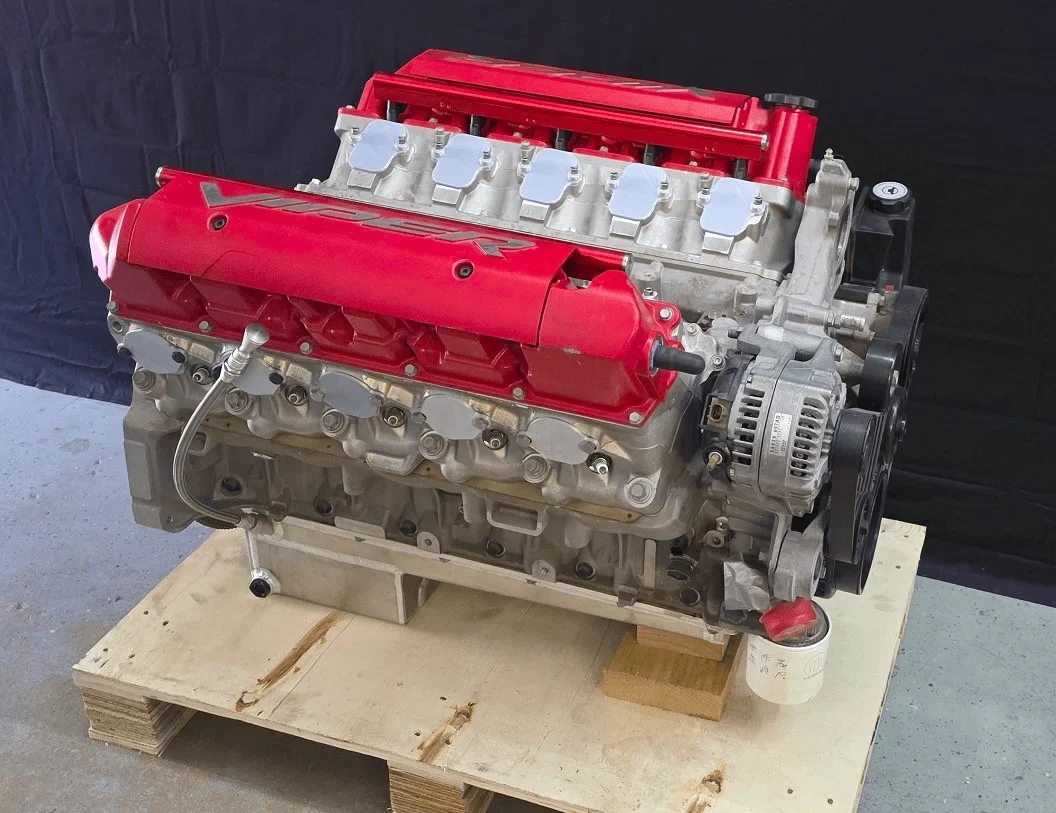
What’s up for grabs here isn’t just any Viper engine. It’s a fully rebuilt, heavily modified 9.0 liter V10 built by Arrow Racing, a name that carries real weight in Chrysler performance circles. And it’s pushing more than 800 brake horsepower based on dyno testing. That’s not theoretical. That’s already proven. And somehow, it never made it into a car.
Built in 2013, Dyno-Proven, and Never Installed
That’s where things start to get interesting. The engine was completed back in late 2013. It was built as a fourth generation Dodge Viper SRT-10 unit, then taken far beyond factory specs. Arrow stretched it to 9.0 liters using a stroker crankshaft along with forged internals including Mahle pistons and Callies H-beam rods. This isn’t a mild upgrade. It’s the kind of build that assumes the driver knows exactly what they’re getting into.
And yet, after all that work, it never got installed. No additional run time. No street miles. No track abuse. Just one round of dyno pulls at Arrow Racing, where it cleared the 800 horsepower mark, and then nothing. That’s the part that feels almost wrong.
Arrow Racing’s Roots Go Back to Chrysler’s Race Program
Arrow Racing itself isn’t some random shop throwing parts together. The company traces back to 1979, founded by Bill Hancock after his time inside Chrysler’s racing operations. When Chrysler shut down its race group during financial trouble, Hancock didn’t walk away from performance engineering. He doubled down on it.
Arrow quickly became a key external partner for Chrysler, especially when it came to high-performance engine development. By the late 1980s, the company was directly involved in the Dodge Viper program from its earliest stages. That means design input, development work, and actual engine builds. Not just tuning. Not just support. Core involvement.
From there, Arrow became the official warranty center for Viper engines, which says a lot about how much trust Chrysler placed in them. They also built race engines for Viper competition programs that went on to win major endurance events, including Daytona and Nürburgring overall victories. So when Arrow builds a 9.0 liter V10, it’s not guesswork. It’s experience layered on top of decades of results.
A Serious Build That’s Still Missing Key Parts
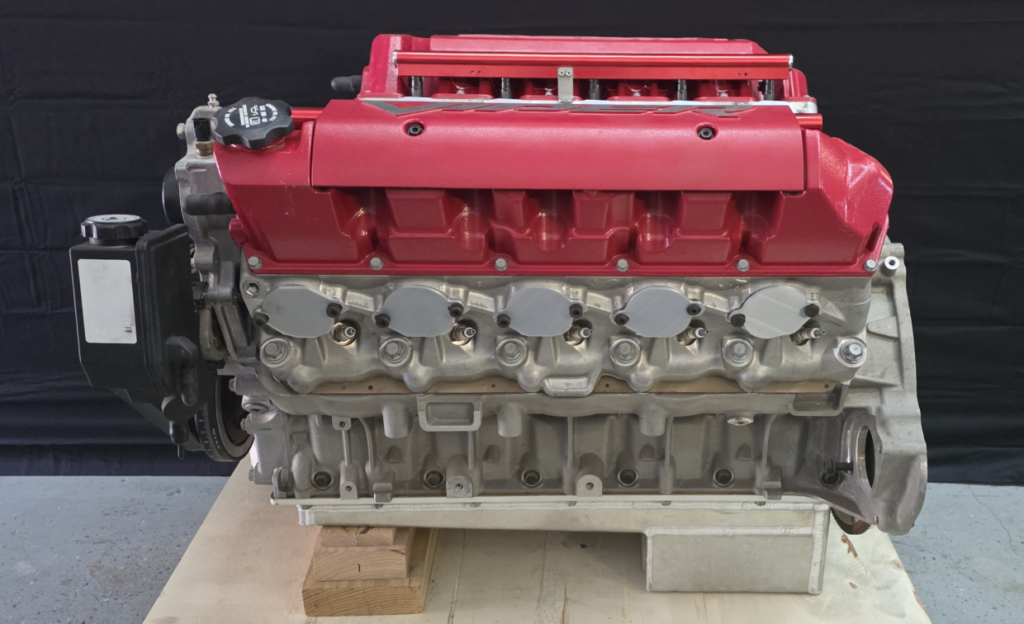
And that’s where it gets complicated. Because this engine is both incredibly serious and slightly unfinished at the same time. The core build is complete and aggressive. The cylinder heads are CNC ported. It has dual valve springs and titanium retainers. The factory variable valve timing system is gone, replaced with a fixed camshaft setup. It also includes upgraded pushrods and an ATI Racing harmonic balancer with ARP hardware holding everything together. All of that points to a build focused on strength and high output, not comfort or drivability.
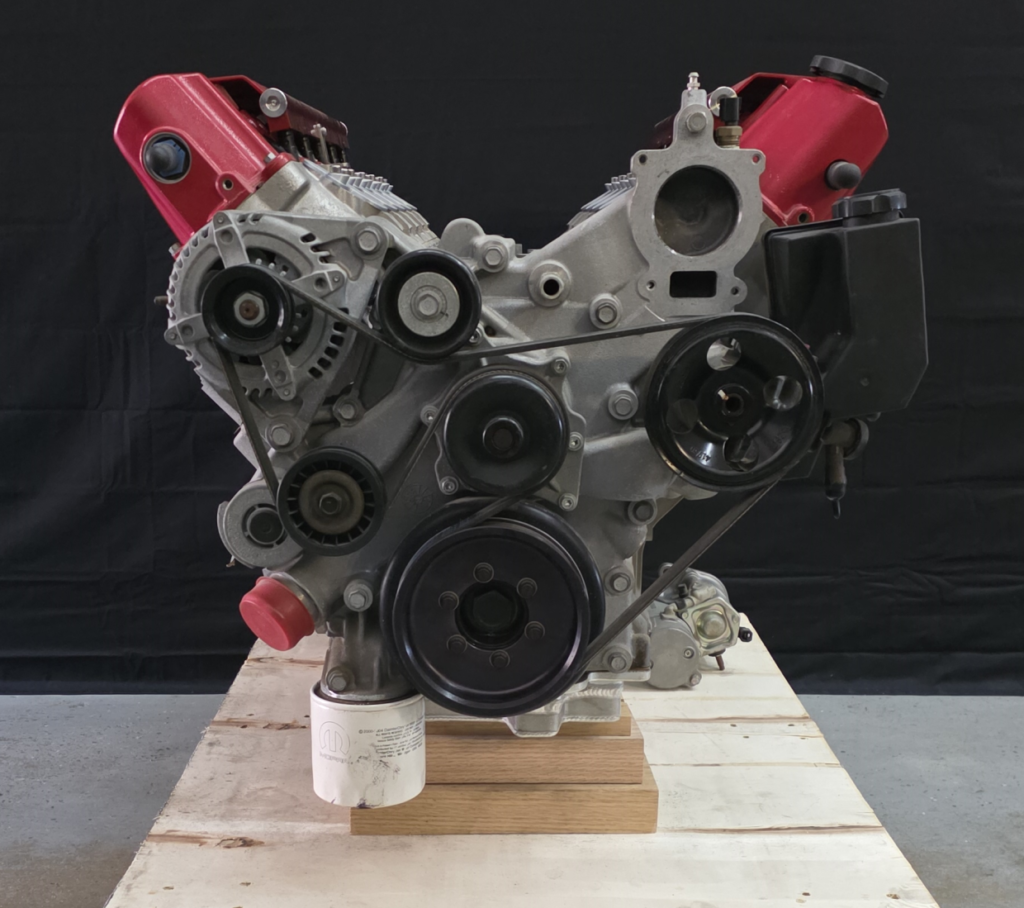
But it doesn’t come with everything. There’s no intake manifold. No exhaust manifolds. No throttle bodies. No ECU. Anyone buying this engine will need to source those components separately. That’s not a minor detail. It means this isn’t a plug and play situation. It’s a project. A serious one.
On the other hand, it does include some key supporting parts like larger fuel injectors, billet fuel rails, an accessory drive system, wiring harness, and an aluminum flywheel designed for a TR-6060 transmission. So it’s not bare. Just not complete. And that kind of setup says something about the buyer this engine is waiting for.
Not for Casual Browsers
This isn’t for someone casually browsing parts. It’s for someone who already has a plan, or at least thinks they do. Maybe it ends up in a Viper. Maybe it goes into something completely unexpected. That’s part of the appeal. With over 800 horsepower on tap, the possibilities are wide open, but none of them are subtle.
A Snapshot of an Era That’s Fading Fast
There’s also a bigger picture here. Engines like this don’t really get built anymore in the same way. The industry is shifting toward smaller displacement, forced induction, and electrification. Big naturally aspirated monsters like this V10 are becoming rare, especially ones that have been engineered to this level and never used.
So in a strange way, this engine isn’t just a performance part. It’s a snapshot of a different era. One where the solution to going faster was simply making everything bigger, stronger, and louder.
No Reserve, Unpredictable Outcome
Now it’s sitting in Austin, Texas, waiting for the market to decide what happens next. It’s being offered with no reserve, which adds another layer of unpredictability to the whole thing.
Here’s the part that matters. This engine doesn’t need to exist. It was built for a project that never happened, and it could have easily disappeared into storage forever. But instead, it’s back on the market, still fresh, still capable, and still a little bit dangerous in the best possible way.
Whoever ends up with it isn’t just buying horsepower. They’re buying responsibility. Because once something like this is finally put into a car, there’s no pretending it’s normal. And honestly, that’s the whole point.
Source
About the Author