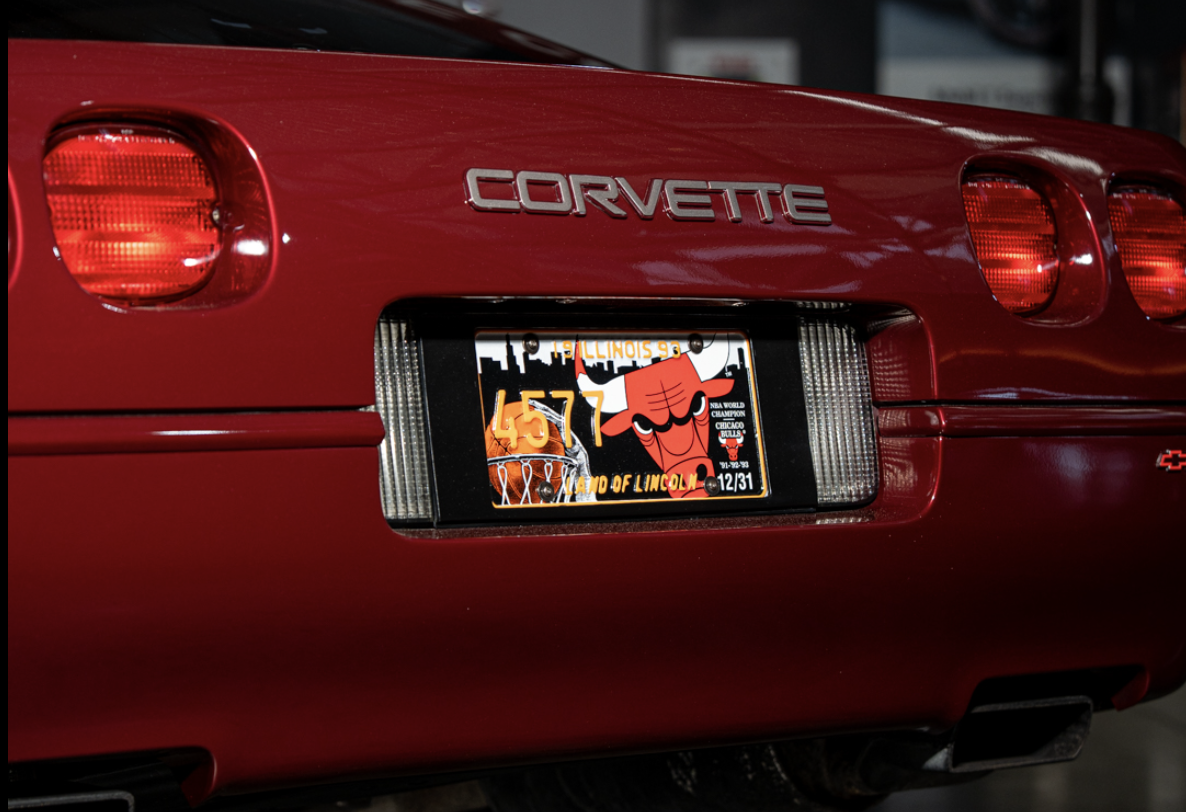
Michael Jordan’s return to the NBA is one of the most iconic moments in sports history. Three words changed basketball forever. But before the world saw the famous “I’m back” announcement, Jordan was seen stepping out of a Ruby Red 1993 Corvette ZR-1. Now that same car is sitting under the lights at the National Corvette Museum, turning a performance icon into a piece of American sports history.
Not Just Another Celebrity-Owned Corvette
This wasn’t just another celebrity-owned Corvette. The car became attached to one of the biggest comeback stories ever seen in professional sports, and decades later, people still remember the announcement, the media frenzy surrounding it, and the massive cultural impact that followed. The Corvette became part of that moment whether Chevrolet planned it or not.
The National Corvette Museum has now added Jordan’s ZR-1 to its “Pop Culture and Corvette: An American Love Affair” exhibition inside the Skydome, which connects Corvette history with music, movies, racing, and major cultural moments across America. Jordan’s car fits perfectly into that lineup because few athletes have ever carried the kind of influence he did in the 1990s.
A Genuine Performance Machine, Not Just a Prop
For Corvette fans, though, this story is about more than celebrity ownership. The 1993 ZR-1 represented one of the most aggressive performance pushes Chevrolet had ever attempted at the time. The car delivered 405 horsepower from the legendary LT5 engine, putting it at the top of the Corvette hierarchy during an era when American performance was fighting to prove itself against European competition. Back in the early 1990s, the ZR-1 wasn’t treated like an ordinary sports car — Chevrolet positioned it as a serious high-performance machine capable of competing with some of the world’s best, which mattered because American performance cars were still battling old stereotypes about refinement and engineering quality. The ZR-1 changed the conversation.
The LT5 engine became central to that reputation. Corvette enthusiasts still talk about it because the engine helped separate the ZR-1 from the standard C4 Corvette lineup — it was powerful, advanced for its time, and instantly recognizable among serious performance fans, and even now, decades later, the ZR-1 badge still carries weight among collectors. Plenty of rare Corvettes exist, and plenty of high-horsepower performance cars from the 1990s still survive, but very few vehicles become attached to a cultural moment that reaches far beyond the automotive world.
Why the Corvette Keeps Showing Up in Pop Culture
Chevrolet has spent decades positioning the Corvette as America’s sports car. That title gets debated among enthusiasts sometimes, especially as foreign performance brands dominate headlines and modern supercars push horsepower figures into absurd territory, but moments like this help explain why the Corvette remains so deeply rooted in American identity. The car has always existed beyond lap times and spec sheets — Corvettes show up in movies, racing history, celebrity garages, music videos, and cultural flashpoints because they represent something broader than transportation, carrying a certain image of American performance and confidence that few other domestic cars have matched consistently over generations. Jordan’s ZR-1 fits directly into that legacy.
The “Pop Culture and Corvette” exhibition appears designed to lean into exactly that idea. Instead of focusing only on engineering milestones or racing achievements, the exhibit highlights the Corvette’s role in shaping entertainment, celebrity culture, and public imagination, opening the door for stories that traditional automotive museums sometimes overlook. Enthusiasts usually appreciate that approach more than corporate-style displays full of sanitized history lessons — people connect with stories and moments, they remember where they were when major sports events happened, and they remember iconic athletes, unforgettable headlines, and the vehicles tied to those memories. Jordan’s Corvette taps directly into that emotional connection.
Riding a Wave of ’90s Nostalgia
The timing also works in Corvette’s favor. Nostalgia for 1990s performance cars has exploded in recent years, and collectors and enthusiasts who grew up watching Jordan dominate basketball are now revisiting the cars from that same era. The C4 generation, once dismissed by some enthusiasts compared to earlier Corvette generations, has started receiving more appreciation as younger collectors recognize its importance. That shift matters because the ZR-1 helped redefine what the Corvette could become moving forward — without performance leaps like the LT5-powered ZR-1, the Corvette’s later evolution into a world-class performance car becomes harder to imagine.
Now one of the most recognizable ZR-1s ever built is sitting in a museum attached to one of the biggest sports stories of all time, a combination that’s difficult to replicate. The exhibition runs through Spring 2027, giving Corvette fans, basketball fans, and pop culture historians plenty of time to see the car in person. But the bigger story here isn’t just about one Corvette sitting under museum lights — it’s about how certain cars stop being machines and become symbols. Michael Jordan’s Ruby Red ZR-1 crossed that line a long time ago.
About the Author