A luxury property listing in Long Island is grabbing attention for a reason that has nothing to do with granite countertops or waterfront views. The real attraction is sitting inside the garage. Forty-one classic and performance cars are included in the $3.5 million sale, transforming the property into something far beyond a normal high-end home listing.
For collectors, this is the kind of setup people spend decades trying to build. For everyone else, it’s almost hard to believe a private residence like this even exists. The collection stretches across multiple eras of automotive history, mixing American classics, European luxury cars, sports cars, and vintage cruisers under one roof. And unlike many collector garages that look more like storage warehouses, this one was clearly built by somebody who actually lived the enthusiast lifestyle.
That’s where this story changes from a luxury real estate listing into something much bigger.
The Long Island property includes a climate-controlled garage specifically designed to house the collection. Inside are vintage Bentleys, Cadillacs, Corvettes, MGs, a Studebaker, and a wood-paneled 1947 Chrysler Town & Country. Sitting alongside those classics is a twin-turbo Porsche 911, adding a completely different flavor to the lineup. The mix feels less like a carefully curated auction catalog and more like decades of genuine automotive passion packed into one property.
And it doesn’t stop with the cars themselves.
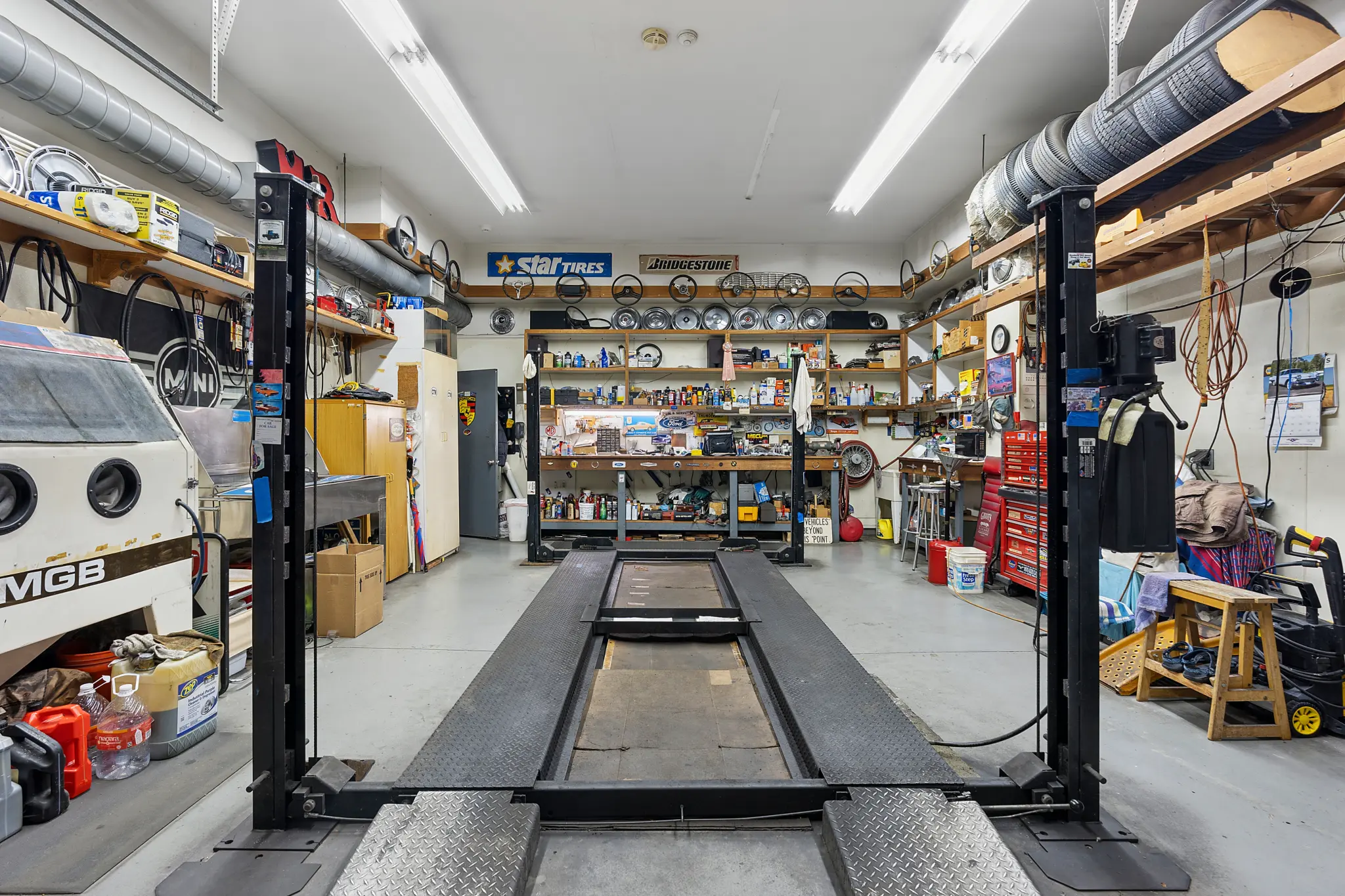
The garage also includes automotive memorabilia and even a vehicle lift for repairs, turning the space into a functioning enthusiast workshop instead of just a polished showroom. That detail matters. Plenty of wealthy collectors buy cars simply to park them under soft lighting and never touch them again. This setup suggests the owner actually used the space the way enthusiasts dream about using their own garages.
That’s part of what makes the listing stand out.
In today’s collector market, automotive real estate has become its own niche category. Wealthy buyers increasingly want dedicated storage space, restoration facilities, climate-controlled garages, and room for private collections. But even in that world, including 41 vehicles directly in the sale pushes this property into rare territory. Most high-end listings might throw in one collector car as a bonus. This one effectively includes an entire private museum.
The collection itself covers a broad range of automotive culture. The 1947 Chrysler Town & Country immediately jumps out because of its unmistakable wood-paneled design, a style that has become increasingly rare and expensive as surviving examples disappear into collections. Vintage Bentleys bring old-world luxury into the mix, while the Cadillacs and Corvettes represent classic American automotive identity from a time when chrome, V8 engines, and oversized styling ruled the road.
Then there’s the Porsche.
The twin-turbo 911 injects modern performance into a garage otherwise dominated by vintage metal. That combination says a lot about how enthusiast tastes have evolved. Many collectors no longer stick to one era or one country. Modern high-performance cars now live side-by-side with pre-war classics and mid-century cruisers because enthusiasts increasingly appreciate the entire spectrum of automotive history.
Here’s the part that matters for collectors and enthusiasts watching this listing closely.
A property like this highlights how serious car collections have become intertwined with real estate value itself. The garage is no longer secondary. In some cases, it becomes the centerpiece of the property. Enthusiasts used to dream about owning a detached three-car garage. Now ultra-wealthy collectors are building climate-controlled automotive compounds capable of housing museum-level inventories.
That shift says a lot about where the collector market currently stands.
Classic cars remain one of the few enthusiast hobbies where passion, nostalgia, investment potential, and lifestyle branding all collide at once. A rare home with dozens of included vehicles doesn’t just appeal to car people. It appeals to buyers looking for exclusivity and identity. Owning a property like this becomes part of the image itself.
And that’s where things get complicated.
The broader collector market has become increasingly expensive and difficult for average enthusiasts to enter. Prices for desirable classics, vintage luxury cars, and even analog-era sports cars have climbed dramatically over the past several years. High-profile collections attached to multimillion-dollar properties only reinforce the growing divide between average enthusiasts and top-tier collectors.
Still, there’s another side to this story.
Unlike sealed-off collections hidden in underground vaults, this garage appears designed around actual enthusiasm for the machines. The repair lift, memorabilia, and wide variety of vehicles suggest the collection evolved naturally over time instead of being assembled purely as an investment portfolio. For many enthusiasts, that authenticity matters far more than the dollar amount attached to the property.
This listing also taps into something deeper within automotive culture itself. Cars are emotional objects. They connect generations, preserve design eras, and represent changing ideas about freedom, craftsmanship, and performance. Seeing dozens of vehicles from completely different periods sharing one space creates a rolling timeline of automotive history.
That’s probably why this property is drawing so much attention online.
People aren’t just reacting to a wealthy homeowner showing off expensive toys. They’re reacting to the fantasy of having the space, tools, and freedom to build a collection without compromise. For countless enthusiasts stuck fighting HOA restrictions, shrinking garage space, rising storage costs, and increasingly hostile regulations toward older vehicles, a property like this feels almost unreal.
And maybe that’s the real story behind the listing.
This Long Island estate isn’t simply selling a house or even a collection of cars. It’s selling an entire enthusiast lifestyle at a time when preserving that lifestyle feels harder than ever. The buyer won’t just acquire square footage and classic vehicles. They’ll inherit a fully built automotive world that most drivers only get to imagine from behind a phone screen.
The question now is whether properties like this represent the future of elite car culture or a growing separation between ordinary enthusiasts and the ultra-wealthy collectors dominating the top of the market. Either way, this Long Island garage proves one thing very clearly: for serious car people, the garage has officially become just as important as the house attached to it.
Via Corcoran
About the Author