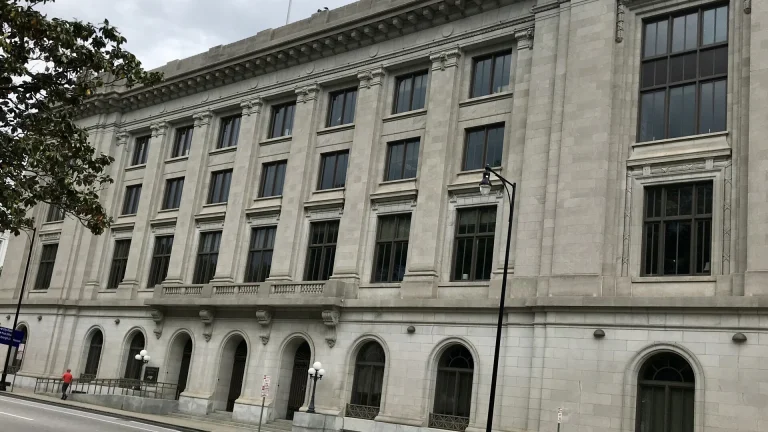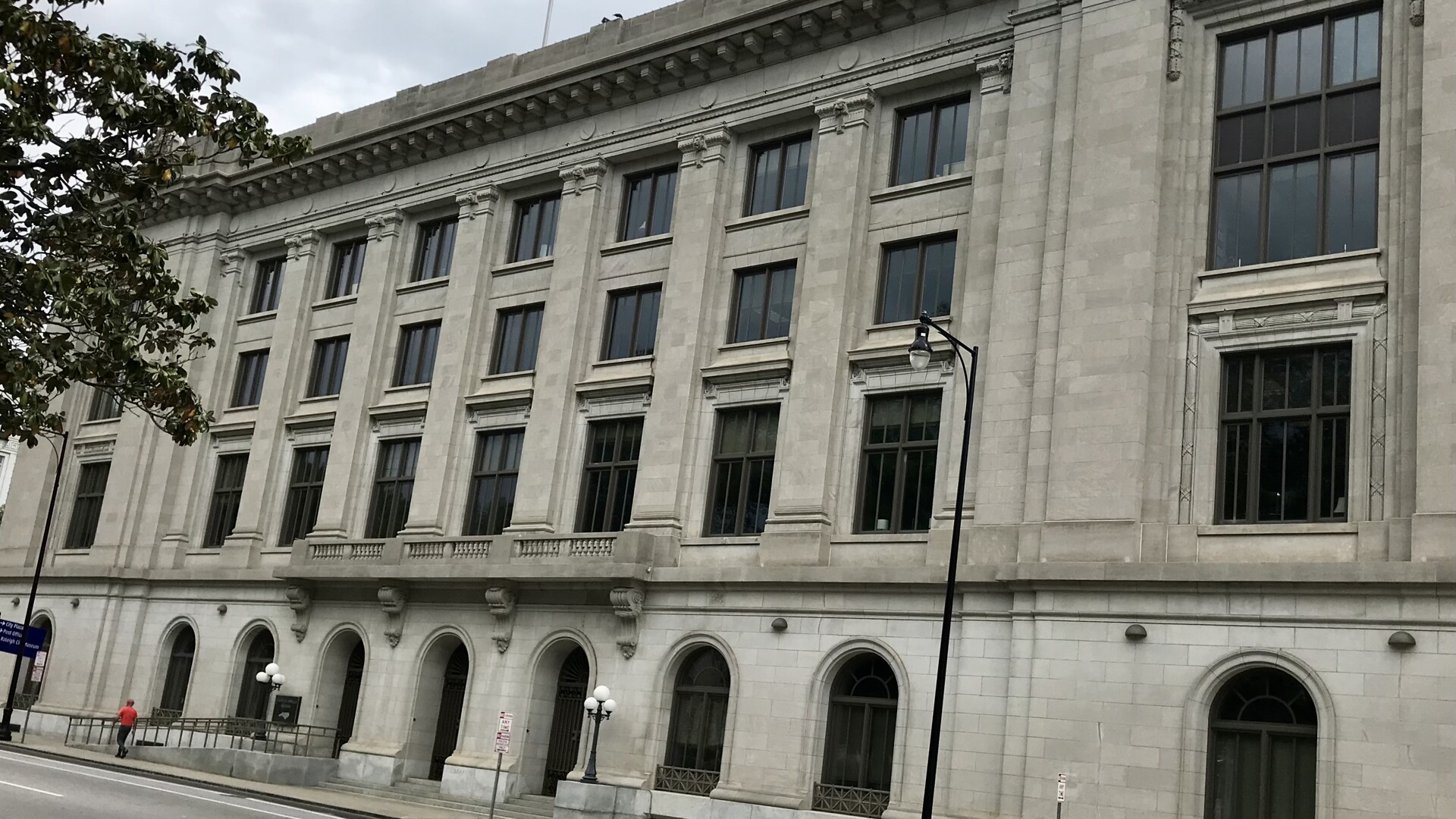
The North Carolina Court of Appeals building in downtown Raleigh. Photo: Indy beetle / Wikimedia Commons (CC0)
The North Carolina Court of Appeals ruled on Oct. 7 that Randy Hembree, a former employee of Charlotte-based Hendrick Automotive Group, can keep suing his supervisor, Eric William Wright, over allegations that Wright struck subordinates in the head and neck to motivate them. The allegations are unproven, and the ruling does not decide them. It decides where the fight happens: a superior court, not the state’s workers’ compensation agency.
Wright had moved to dismiss on the ground that the Industrial Commission, which handles workers’ compensation claims, has exclusive jurisdiction. The trial court denied his motion. Judge Julee Flood wrote the opinion affirming that order, with Judges Arrowood and Gore concurring. Hembree filed his complaint on May 15, 2025, so the question of which forum hears the case has taken more than 16 months to answer.
What Hembree’s complaint alleges
As the opinion describes the complaint, Hembree worked under Wright between 2015 and January 2025. It alleges Wright struck subordinates, Hembree among them, in the head and neck as a form of motivation, and kept at it after he knew Hembree had neck surgery in 2015. The conduct allegedly escalated through 2022. Hembree alleges vertigo, dizziness, blurred vision, numbness and fatigue, a severe cervical spinal condition, and total disability.
The complaint pleads three theories. Against Wright, it alleges willful, wanton, and reckless negligence. Against the Hendrick defendants, it alleges intentional misconduct substantially certain to cause injury. Against Hendrick Corporation and Hendrick Management, it alleges negligence and gross negligence. The case reached the appeals court on a motion to dismiss, where a court takes the complaint’s allegations as true for the purpose of the motion. No court has found any of them proven.
Why a workplace injury case can leave workers’ comp
North Carolina’s Workers’ Compensation Act is a trade. Under G.S. 97-9, employers must secure payment of compensation, and in return their liability to an injured worker stays within what the Act provides. G.S. 97-10.1 makes the Act’s remedies replace other claims against a covered employer for the same injury.
State courts have carved two exceptions, and they apply to different defendants. The Woodson exception applies to employers, and the Court of Appeals said it did not govern the claims against Wright, who is sued as a co-employee. His claim runs through the second exception, from the North Carolina Supreme Court’s 1985 decision in Pleasant v. Johnson: the Act does not shield a co-employee from common-law liability for willful, wanton, and reckless negligence.
The court’s test: intent to make contact
The court distinguished a case with very different facts, Pender v. Lambert. There, a Wal-Mart loss-prevention associate chasing a shoplifter collided with a store greeter who was fatally injured, and the Court of Appeals affirmed summary judgment for the associate because the evidence showed an accidental collision. Judge Flood gave two reasons Pender did not control. It was decided on summary judgment, with evidence, while this appeal comes from a motion to dismiss. And Pender’s defendant never meant to touch anyone, while Wright is alleged to have meant to.
For intentional torts, the court held, the intent that counts is the intent to make the contact, whether or not the person intended the harm that followed. In the court’s words, “it was his intent to make the unwanted contact that supplied the requisite intent.” The court also said that calling a claim negligence does not take it outside Pleasant. A worker in Hembree’s position therefore has to allege that the supervisor meant to make the contact, and not that he meant to cause a spinal injury.
One procedural point explains the timing. Rulings on Industrial Commission jurisdiction affect a substantial right, so they can be appealed before trial. That is how a complaint filed in May 2025 produced an appellate opinion before any witness has testified.
What happens next for Hendrick and Wright
The case returns to superior court. The three corporate defendants, Hendrick Automotive Group, Hendrick Corporation and Hendrick Management, had their own motion to dismiss pending when Wright appealed, and the opinion does not rule on it. The claim against them, that the conduct was substantially certain to cause injury, is separate from the one the court just let stand.
Hendrick’s own website lists 103 dealership locations, 141 franchises and more than 11,000 employees across 13 states. The opinion does not say where Hembree and Wright worked or what titles either held. Wright’s appellate lawyer, Jeffrey B. Kuykendal of McAngus Goudelock & Courie, is listed in the opinion; Hembree is represented by O’Malley Tunstall and The Sumwalt Group. Workers’ compensation exclusivity rules differ by state, and this ruling is North Carolina law.
If your supervisor hit you in the head to “motivate” you, would a workers’ comp check feel like justice?
About the Author