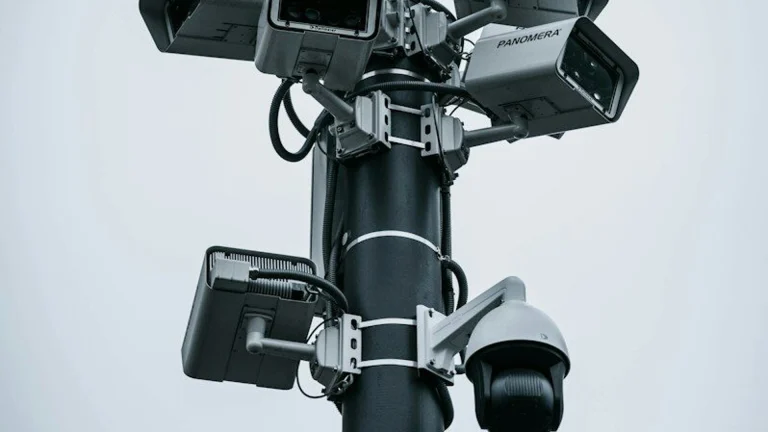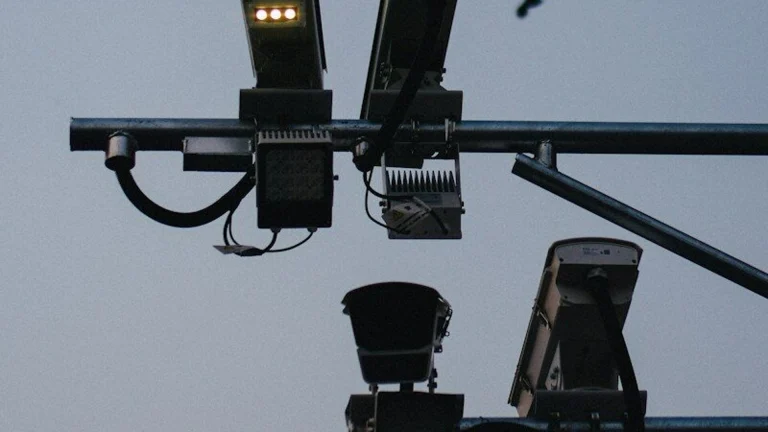
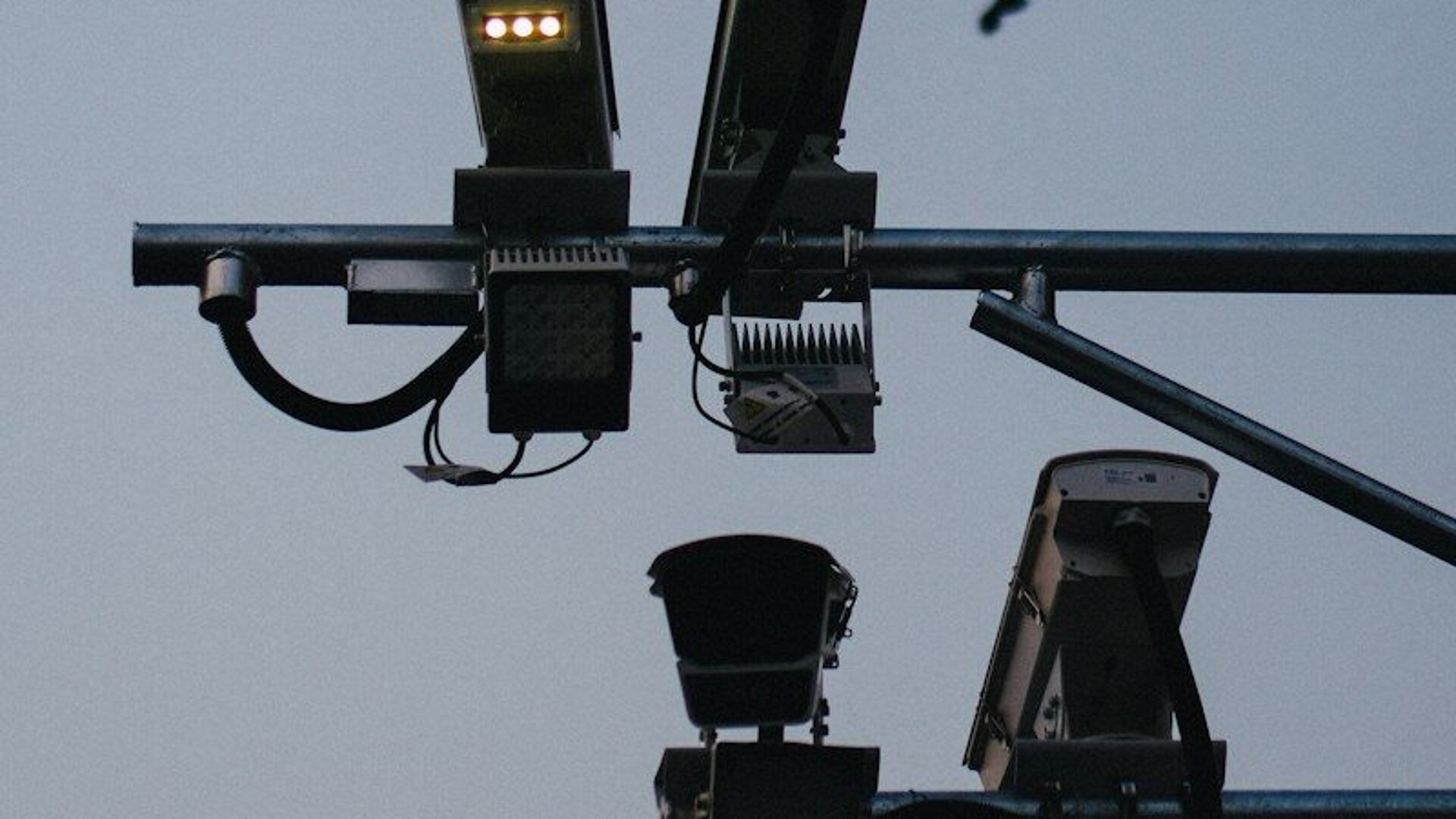
Phoenix police never bought a Flock camera. They still ran more than 100,000 searches of Flock’s national plate database, under a deal a former chief signed that never went to the City Council. Phoenix had company. Other Arizona departments got the part worth having, a searchable record of passing cars nationwide, without mounting a camera or paying anything.
An AZCIR investigation found that Arizona agencies ran more than 110,000 searches of Flock Safety’s license plate reader database without buying Flock cameras or holding paid contracts. At least eight agencies got in through no-cost deals or through other agencies’ accounts. The newsroom counted the searches using about four years of Flock audit logs obtained through public records requests, and says the total is probably an undercount because the logs cover only some agencies. azcir
Phoenix did most of the searching
Nearly all of those searches came from one city. Phoenix police ran more than 100,000 searches, with an estimated 200-plus officers able to log in. Then-Chief Jeri Williams signed a memorandum of understanding with Flock on June 21, 2021, and it never went to the City Council. azcir
Related Articles
- A Slidell, La., I-10 Merge Killed a 1968 Camaro Driver, and the Ram 2500 Driver Who Hit Him Got Cited for Careless Operation
- $20,000 Buys Both of These Engineless 1968 and 1970 Dodge Chargers Near Fort Leonard Wood
Phoenix already had Motorola Solutions plate cameras and access to Vigilant’s national lookup tool. So the city was searching two separate national plate networks, and only one of them had gone through any public approval process. Phoenix let the Flock agreement lapse this summer, but officers kept searching for months after it expired because Flock was slow to cut off access. The city says that access is now shut off. azcir
Other agencies show up in the logs too. The Pima County Sheriff’s Office ran at least 4,000 searches, the Yavapai County Sheriff’s Office more than 2,000, and Pinetop-Lakeside police “hundreds” between September 2023 and April 2025. In Yavapai’s case, the Board of Supervisors approved a free, five-year agreement in 2022 on its consent agenda, with no public discussion. Pima County never signed anything: it got free database access without an agreement after turning down Flock’s offer to put cameras at intersections, and its detectives kept using it. azcir
Why a camera company gives access away
A plate network gets more valuable with every agency plugged into it, so each free login makes the paid ones worth a little more. Giving access away is a sales strategy. Flock’s own product page lists a “National LPR Network” next to its camera hardware. Agency officials told AZCIR that Flock sometimes approached departments directly and offered free access. Flock did not respond to repeated requests for comment. azcir
The Pinetop-Lakeside case shows how far the network extends. In 2022, Flock told the department that a private subdivision had installed its cameras. With the subdivision’s approval, police got access to those cameras and to the national database. Flock later cut off the national lookup because of a policy against non-paying customers, but the department can still search the subdivision’s cameras. azcir
For drivers, this means a camera an HOA paid for can become a police camera with nothing more than the HOA’s approval. Flock’s network includes more than 120,000 cameras, some owned by private businesses and community groups. azcir
What the system logs
A plate reader doesn’t stop at the plate. Flock says its cameras record “key vehicle characteristics, such as make, color, and body type,” and that searches can run on partial and temporary plates. A national lookup turns those sightings into a travel history. That includes a weekend at a track day, a trip to look at a project car three states away, or a buyer’s drive home from an out-of-state auction. www.flocksafety.com
None of that requires a warrant to search. Marana and Globe police say their searches require a case number and a legitimate law enforcement purpose, and that they found no misuse. Those are department rules. When an agency gets in through someone else’s account, as Marana and Globe did, the account holder’s audit log is often the only record of what was searched. azcir
Regulators are now looking
On August 27, Attorney General Kris Mayes announced a review of Flock and similar systems. It will look at how the technology has been used, how it affects privacy, and whether it infringes Fourth Amendment rights, and her office will send a report to the Legislature and the governor. “We need a statewide approach to this issue,” Mayes said. azag
Related Articles
- Mississippi Deputies Pull a 2005 Jaguar Stolen in 2010 From the Drought-Shrunk Big Black River, Then Trace Its VIN to a Hinds County Owner
- Stolen Accord Chase Ends in Bloomington Dance After Gas Runs Out
At least 11 Arizona agencies have canceled their Flock contracts, and Tempe went further, becoming the first Arizona city to ban plate reader cameras. Canceling a contract doesn’t settle the issue AZCIR found, though, since several of these agencies never had a contract to begin with. azcir
Takeaways for drivers
- A city council vote is no guarantee. Some agencies got access through a chief’s signature or a consent agenda item no one debated.
- Private cameras can feed police searches. If your HOA is considering plate readers, ask who will be allowed to search them.
- Ask for audit logs. Public records requests are what exposed these searches, and they’re still the best way to find out who has been searching.
The cameras hang on poles in plain sight. The logins went out on a chief’s signature and a consent-agenda vote nobody debated. If your HOA put plate readers to a vote, would anyone in the room think to ask which police departments get a login?
About the Author