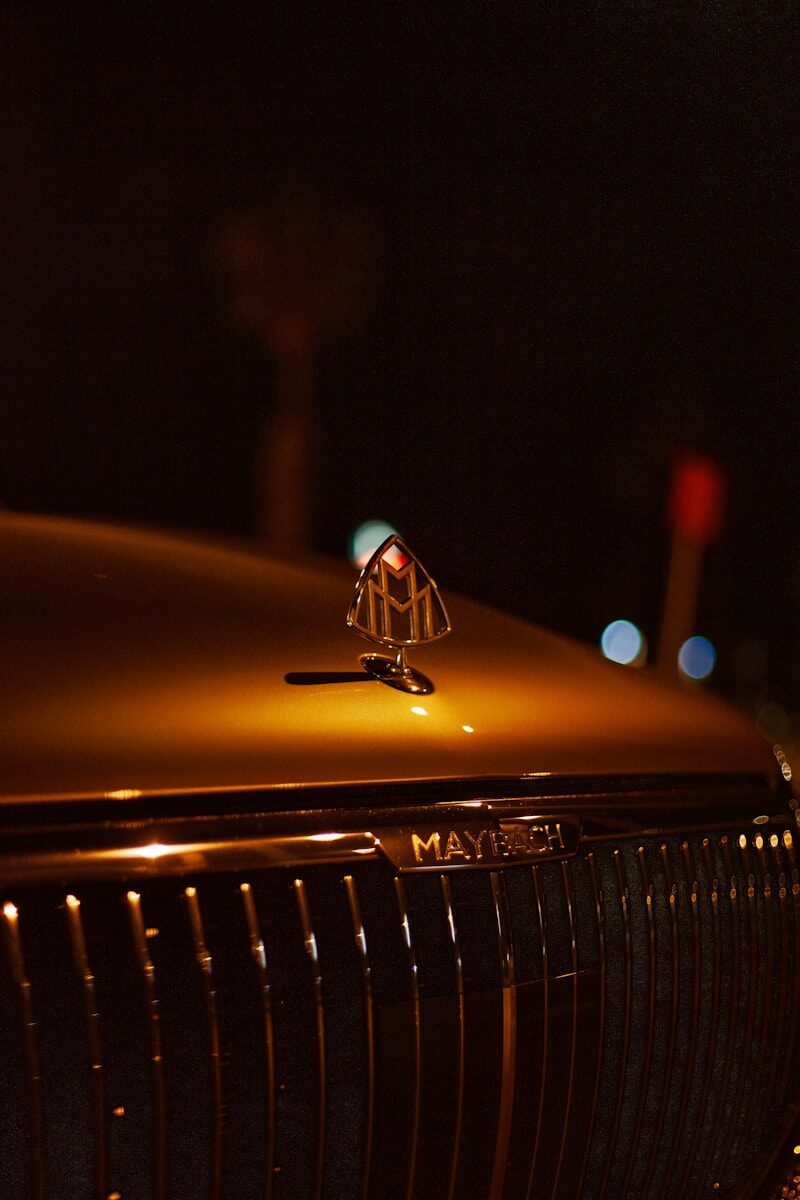
A Maybach Landed In Lekki And Nobody Will Say Which One — Here’s Why That Matters
The confirmed facts here are thin enough to fit on a business card. On 20 July, Lagos dealership Polanco Exotic Cars posted about delivering a Mercedes-Maybach, credited the buyer only as “Mr X,” and Asake put images of the car on his own Instagram feed and story the same day. No model designation. No price. No spec sheet. Just a very expensive silhouette and a comment section doing the arithmetic.
Normally that’s where a celebrity-car story ends. But “which Maybach” is a genuinely consequential question in Nigeria right now, for reasons that have nothing to do with clout and everything to do with a customs circular that took effect three weeks before the car appeared.
Maybach isn’t one car, and the lineup just moved
Mercedes-Maybach is a sub-brand, not a model, and in 2026 it spans a wider price and body-style range than most people assume. At the top sits the S 680, which Mercedes-Benz USA specifies with a handcrafted 6.0-litre V12 biturbo making 621 hp and 664 lb-ft. At the other end is the SL 680 Monogram Series, the brand’s first two-seat roadster, which Mercedes-Benz USA priced from $224,900 with a 4.0-litre V8 biturbo, 577 hp and 4MATIC+. Between them sit the SUVs — and that’s where the lineup just shifted, because Mercedes-Benz has now replaced the long-running GLS 600 with the new GLS 680, carrying a more powerful electrified eight-cylinder and reaching US dealers later this year.
Related Articles
- This Carbon-Bodied ‘1968 Charger’ Is Actually a 2023 Hellcat—And It Just Proved How Fast Custom Mopar Money Evaporates
- This $22,000 eBay ‘Cuda Calls Itself a Hemi Clone Because Chrysler Never Built the Real Thing
If you already own a GLS 600, that generational changeover is exactly the sort of thing that sends you shopping. Not a claim about what happened here — just the market mechanic that governs the top of the luxury SUV segment, where the previous flagship becomes conspicuously previous the moment its successor is announced.
The channel question nobody asks
Here’s the part that actually affects the owner. Mercedes-Benz in Nigeria runs through Weststar Associates as the authorised general distributor, with a defined dealer network — Barbedos, M-B Automobile Services, Skymit, Sunny Motors, Tetralog and Weststar’s own Lagos and Abuja outlets. Polanco is not among them. It’s an independent luxury importer, which is a legitimate and very common way to buy a car in Lagos, but it is a different transaction with different consequences.
Look at what the official Nigerian model range actually lists under Maybach: the S-Class and the GLS. That’s it. No SL 680 Monogram Series. No EQS 680 SUV. Which means that if the car in those photos is anything other than a Maybach S-Class or GLS, it arrived through a parallel import channel by definition.
That distinction shows up in four places. Factory warranty terms are written by market, and a car sourced for one region and registered in another frequently falls outside the distributor’s obligation to honour them. Diagnostic access and software updates are gated through the manufacturer’s system, and independent importers don’t get the same hooks. Parts move at the speed of air freight rather than off a local shelf. And regional specification differences — cooling packages, fuel-quality tolerances, telematics modules tied to networks that may not exist locally — are real, not marketing.
None of that makes a grey-import Maybach a bad car. It makes it a car with a different support model than the badge implies, and the sort of thing a buyer should be asking about before the wire transfer, not after the first fault code.
The 18-cubic-centimetre difference
Now the timing, which is the genuinely interesting bit. On 1 July 2026, Nigeria Customs began implementing the Green Tax Surcharge under the 2026 Fiscal Policy Measures while simultaneously cutting the import levy on brand-new vehicles from 20 percent to 10 percent and on used vehicles from 15 percent to 5 percent. The surcharge is banded by engine displacement: vehicles under 2,000cc are exempt, 2,000cc to 3,999cc attract 2 percent, and anything at 4,000cc or above attracts 4 percent. Electric vehicles and locally assembled vehicles are exempt entirely.
Read those bands against Mercedes’ own engine specifications and something quietly absurd emerges. The V8 in the Maybach GLS is described by Mercedes-Benz as having a displacement of 3,982cc — eighteen cubic centimetres under the 4,000cc threshold. It sits in the 2 percent band. The S 680’s 6.0-litre V12 does not; it sits squarely in the 4 percent band. Two cars from the same sub-brand, sold in the same showroom, separated at the port by a rounding error in the engine catalogue.
That’s not a loophole anyone engineered on purpose — the 4.0 V8’s displacement predates Nigeria’s circular by a decade — but it’s a live example of why displacement-banded taxation produces strange cliff edges. It also means the net effect of July’s changes on a big Mercedes is closer to neutral than the headlines suggested: the levy cut gives back roughly ten points, the surcharge takes two or four, and the assessed value Customs uses is its own, not your invoice.
Living with it
Practically, the Lagos ownership picture for any car in this class comes down to suspension and rubber. Maybach models run AIRMATIC air suspension with E-ACTIVE BODY CONTROL, which is superb at isolating a rear passenger from a bad surface and expensive when a strut or compressor gives up. Wheel sizes of 21 to 23 inches mean very short tyre sidewalls, and short sidewalls plus unmarked speed bumps equals bent rims. Paint protection film is not vanity on a two-tone Maybach finish; it’s the cheapest insurance available.
Related Articles
- Aston Martin’s V12 SUV Is Real, Sort Of: Inside the Call of Duty Dreadnought
- Stolen Before It Reached a Dealer, This 1985 Camaro Z28 Just Sold for $21,000 After 20 Years in Storage
Speaking of which — the actual insurance problem for a parallel-imported ultra-luxury car isn’t the premium, it’s the valuation. Comprehensive cover settles on an agreed or market value, and there’s no local market for a car the official distributor doesn’t stock. Get the sum insured documented at purchase, with the import paperwork attached, or discover at claim time that the underwriter’s idea of the car’s worth and yours are separated by a great deal of money.
Asake, meanwhile, opens the North American leg of the In God We Trust tour at Chicago’s Credit Union 1 Arena on 20 August, per Ticketmaster listings, before Toronto, Brooklyn and eventually Paris in October. The car, presumably, stays home.
About the Author