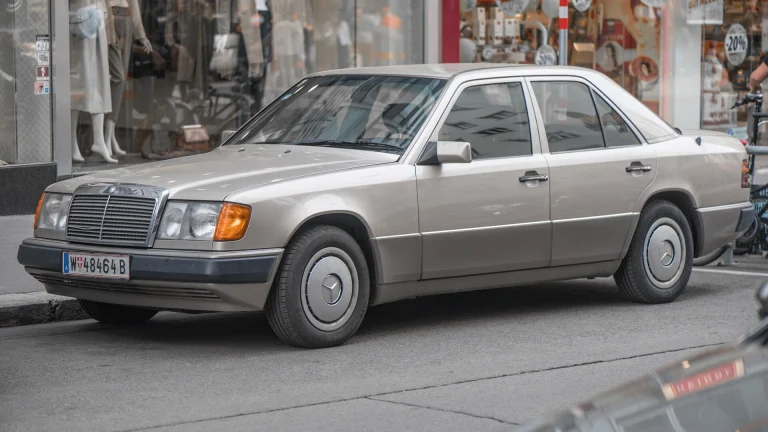
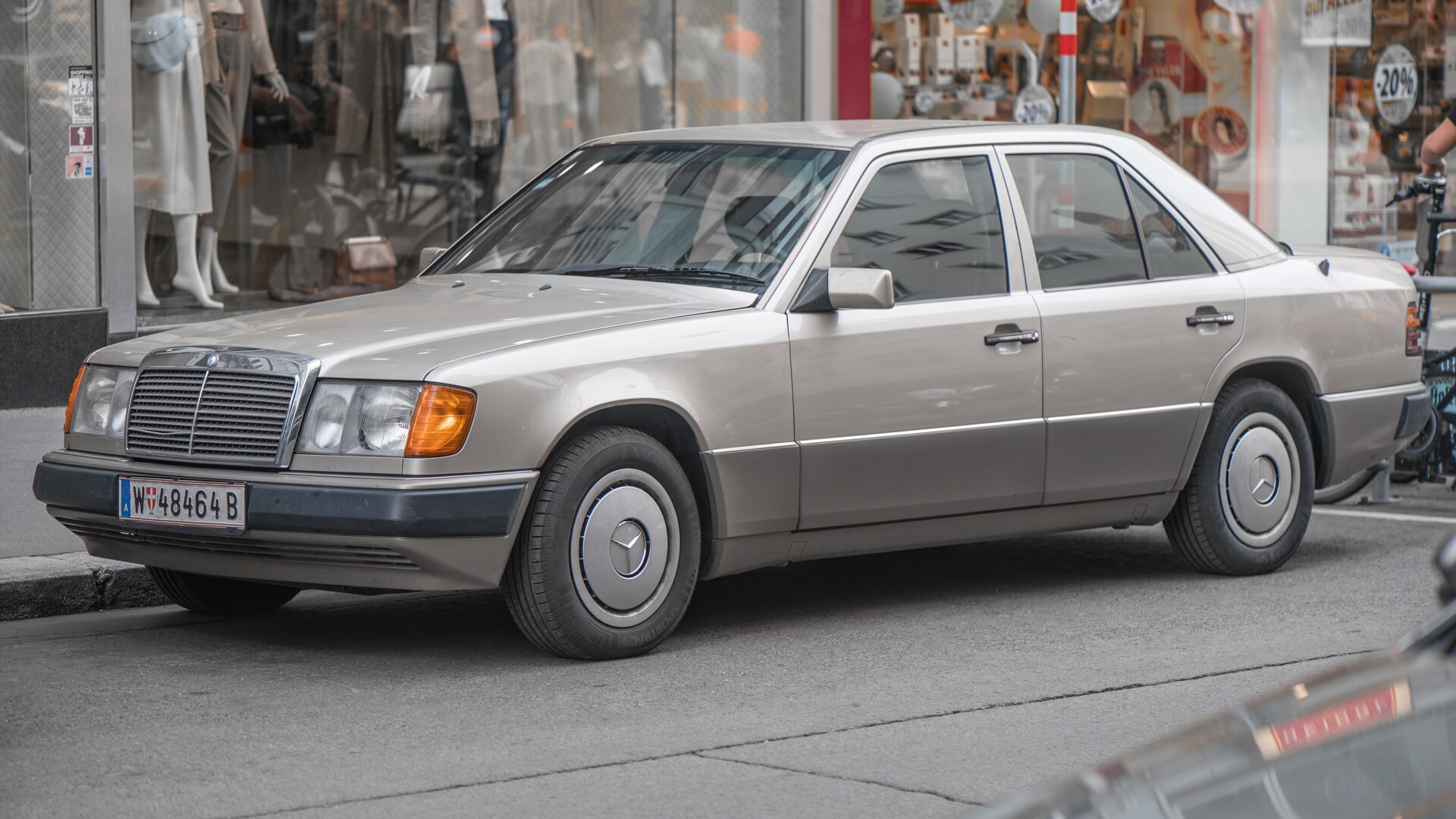
File photo of a Mercedes-Benz W124 300 D, the same generation as the stolen car; it is not the vehicle in this report. Photo: Johannes Maximilian via Wikimedia Commons, CC BY-SA 4.0
A South Florida woman who signed her stolen 1992 Mercedes 300 Diesel over to her insurance company more than 30 years ago found a tow lien on her record this year when she went to renew her tags, WSVN 7News reported. The car had spent part of those decades at the bottom of a canal.
She told the station she’d owned the Mercedes for about two years when it disappeared from her driveway overnight. It was never found. She filed a claim, handed the title to her insurer and took the check. In 2025, a sheriff’s office called to tell her the car had been located in a canal. Her answer, as she described it to WSVN, was that the car wasn’t hers anymore.
The company that pulled it out of the water disagreed, at least on paper. Months after the call, the tag office told her a lien had been placed against her by that tow company, and she couldn’t renew until it was cleared.
WSVN consumer reporter Howard Finkelstein told viewers the insurer owed the tow bill, because it declared the car a total loss, paid her and became the owner. After the station contacted the insurer, it sent the tow company a check the same week, the tow company lifted the lien and she renewed her tags. WSVN did not name the insurer, the tow company or the sheriff’s office, did not say which county the canal is in and did not report how much the lien was for. Backfire News could not confirm those details elsewhere.
Florida’s tow-lien notice goes to the name in the state’s file
Section 713.78 gives a tow operator a lien on a vehicle it removes at the direction of a law enforcement agency, among other situations, and requires the operator to send certified-mail notice to the registered owner and the insurer within five business days of storing it. Registered owner means whoever the state’s records list. If an insurer collected the paper title decades ago but the ownership change never reached the state’s file, the notice and the bill would go to the old owner. WSVN did not report what the state record showed in this case, but a lien that reached her tag renewal suggests the file still had her name on it.
The same statute lets an owner, insurer or lienholder challenge the charges in court or post a bond to release the vehicle, and lets a judge award fees and costs to the side that wins. None of that came into play here, because the reporter’s phone call did the job first.
How an unpaid tow bill can freeze a registration
Florida has a second mechanism for vehicles an agency removes as abandoned. Under section 705.103, a person who neglects or refuses to pay the removal and storage costs “is not entitled to be issued a certificate of registration” for that vehicle “or any other” until the costs are paid. That’s the clause that turns an old car’s tow bill into a problem with the car you drive today. WSVN did not say which provision the tow company or the sheriff’s office relied on, so this describes what Florida law allows, not a finding about her case.
What a theft payout requires the insurer to file
Under section 319.30, a car is a total loss when an insurer pays the owner after a theft. As the statute reads today, the insurer must obtain the title, report the vehicle to the National Motor Vehicle Title Information System and, within 72 hours of receiving the title, send it to the state for processing. Those are current rules. WSVN did not report what applied in the early 1990s or whether the insurer ever filed.
Finkelstein’s advice to viewers was to ask the insurer for proof that it notified the state of the ownership change after a total loss. The check arrives at the kitchen table. The filing that takes the owner’s name off the record happens in the insurer’s back office, where the owner can’t see it, and nothing tells her it failed until a tow company bills her.
Tow bills that land on people who say they shouldn’t owe them are a running theme: Backfire News has covered a Missouri suburb sued over towing more than 150 cars from driveways and backyards without a warrant.
The lien is gone, and the amount is still unknown
WSVN reported no court filing, so there’s no hearing or deadline ahead. The insurer paid, the tow company released the lien, and the registration went through. Nobody has said what the canal recovery cost.
If you’ve ever taken a total-loss payout, did your insurer send proof the title actually reached the state, or would you find out the way she did, at the tag counter 30 years later?
About the Author