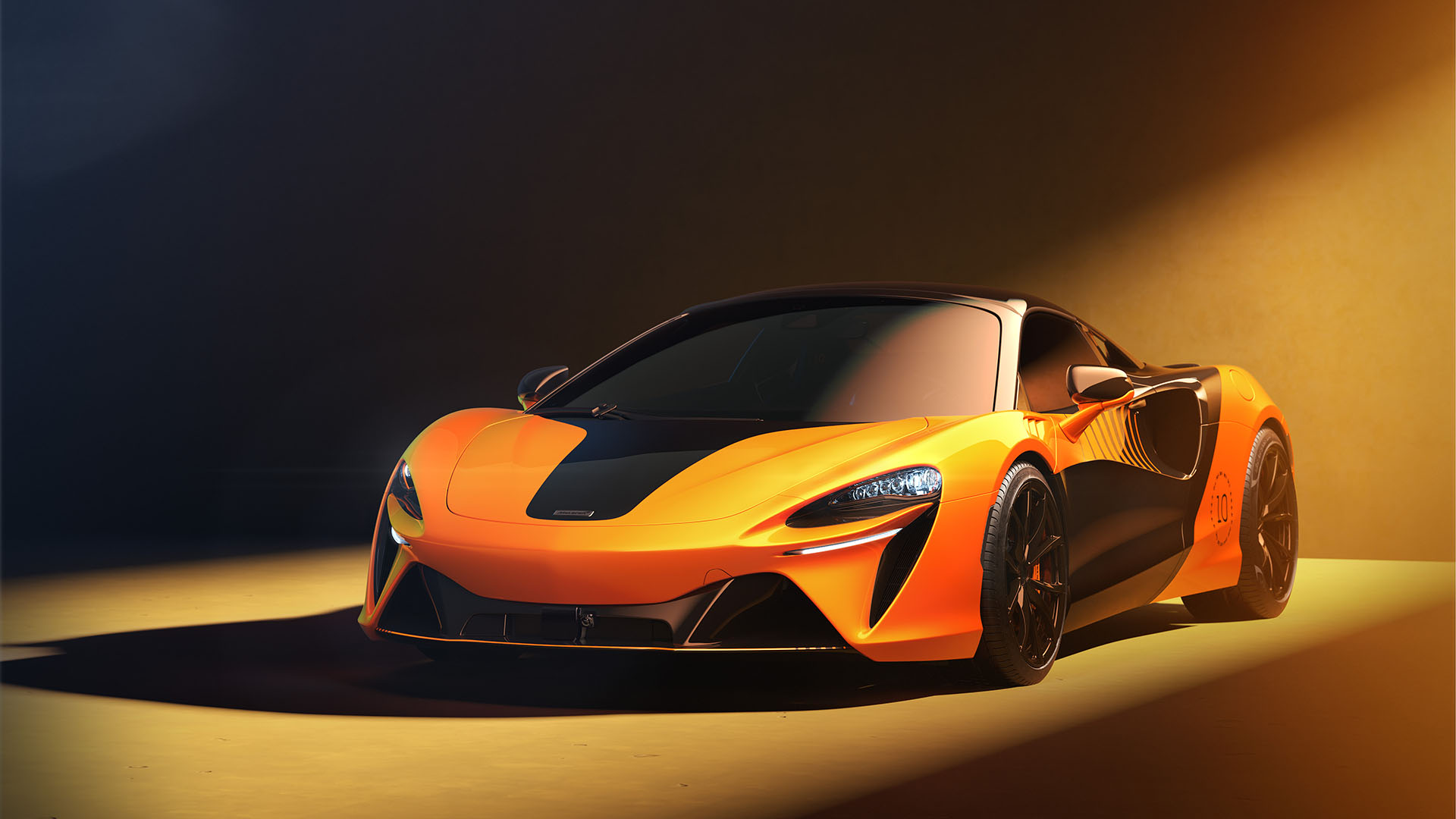
Photo: McLaren Automotive
Somewhere outside a banqueting hall in Sparkbrook, Birmingham, three men in hoods spent roughly ten seconds throwing homemade incendiary devices at a curbside lineup of six-figure machinery, then climbed into a Volkswagen Golf and drove off like they were leaving a petrol station. That is the actual scale of what happened on Highgate Road on the evening of August 19: a wedding reception with an estimated 500 guests inside, two supercars on fire outside, and a getaway plan that would not intimidate a traffic warden.
West Midlands Police say officers were called to the Royal Shalimar banqueting suite at around 8:30 p.m. after multiple petrol bombs were thrown at a row of parked cars. Three men were seen running down nearby Mole Street before getting into the Golf and disappearing into the evening traffic. West Midlands Fire and Rescue sent an engine from the Highgate station, made one of the burning cars safe, and cleared the scene by 9:07 p.m. No one was injured, which, given footage showing guests standing just feet from the blast and one man reportedly kicking a device away before it could roll under a parked car, is closer to lucky than expected.
The venue’s own statement, posted to its Instagram account, said its “immediate priority was the safety of our guests” and confirmed the Grand Hall is open for business with every existing booking unaffected. That is a business trying to get ahead of a story already spreading across social media, and it is the right instinct: nobody wants to be known as the wedding venue that got firebombed for longer than absolutely necessary.
Here’s the detail that should needle anyone who actually knows these cars: nobody covering this story agrees on what burned. The Telegraph, the Daily Mail, and Channel 5 all identified the two torched cars as a McLaren and a Ferrari. The Times, The National, and GB News all say it was a McLaren and a Lamborghini. Police and fire statements do not specify makes at all, they simply describe “two vehicles.” Frame-by-frame review of the CCTV clip does not fully settle it either. The second car’s silhouette, long hood, folding fabric roof, sharp beltline, could plausibly belong to a Ferrari grand tourer or a Huracán Spyder, and grainy security footage shot through smoke and firelight was never going to be the format exotic-car identification was built for. Treat “confirmed” details about cars you cannot identify by badge or exhaust note as provisional until someone produces a clean photo or a title record.
What is not in dispute is the legal exposure. Throwing an incendiary device at a car parked a few feet from wedding guests, including, by one attendee’s account, a small child, does not get charged in the UK as simple criminal damage. Section 1(2) of the Criminal Damage Act 1971 covers arson committed with intent to endanger life or with recklessness as to whether life is endangered, and it carries a maximum sentence of life imprisonment. That statute turns a torched car into one of the most serious property offenses on the books, well above what most Americans would assume arson tops out at. If West Midlands Police make arrests, and clear CCTV plus a traceable getaway car gives them a real shot, prosecutors will almost certainly reach for that section rather than treat this as a routine car fire.
Then there is the money, which nobody official has addressed yet. A modern McLaren fire is nothing like a house fire with a garden-hose fix. The bonded carbon-fiber tub that makes these cars stiff and light does not behave like sheet steel under flame: the resin binding the fibers chars and delaminates, and once heat compromises that structure, insurers total the car rather than attempt a structural repair, regardless of how the surface panels look once the smoke clears. Whatever the second car turns out to be, if it is a Ferrari built around a bonded aluminum spaceframe or a Lamborghini with its own carbon-tub construction, the calculus lands in a similar place: these manufacturers engineer their cars to survive a 150-mph off, not sustained fire exposure, and insurers know it. Expect total-loss settlements rather than repair estimates once adjusters get a look, though a well-funded owner willing to chase a factory-level rebuild does have precedent to point to.
There is also a wrinkle worth knowing if you have never attended a British Asian wedding: supercar convoys parked outside banqueting halls like the Royal Shalimar are common enough that entire hire businesses exist to supply them for a groom’s arrival procession, sometimes called a baraat. Whether the cars torched on Highgate Road belonged to guests or came from a rental fleet has not been confirmed by anyone with authority to say so, but it is worth knowing that “why were six-figure cars parked outside a restaurant in Sparkbrook” has a mundane, well-established answer that has nothing to do with the attack itself.
West Midlands Police had not announced an arrest as of this writing, and the motive remains formally unconfirmed. What is confirmed: a getaway plan built around a Golf, a venue insisting it is open for business, and at least one insurance adjuster somewhere about to write a very large check.
About the Author