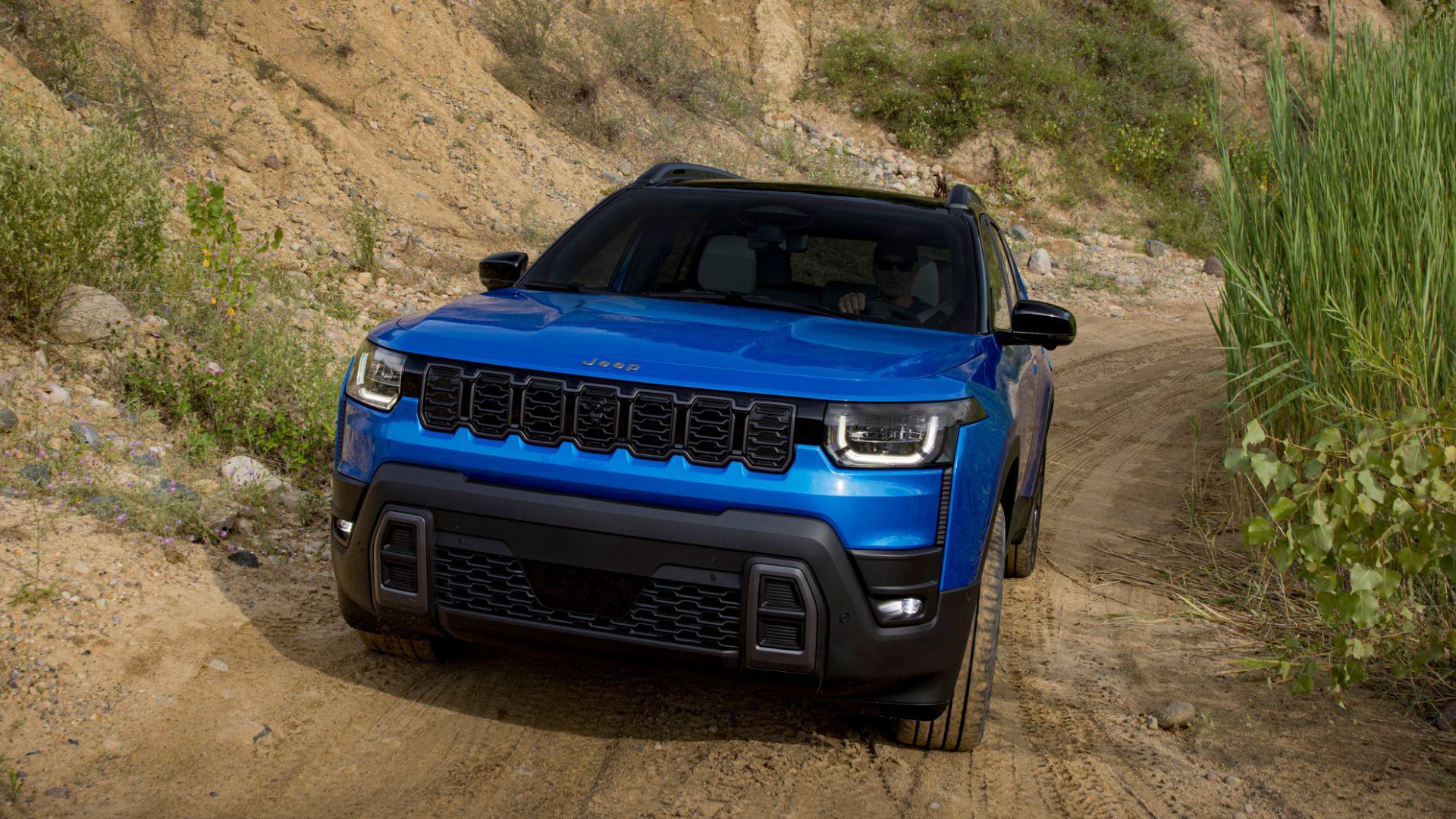
Image via Stellantis
Jeep dealers are still sorting out allocations for the revived 2026 Cherokee, and Stellantis has already told investors and the state of Illinois what comes after it. The company has committed to a next-generation Cherokee targeted for the second half of 2029, arriving as roughly a 2030 model, built at Belvidere Assembly in Illinois on an entirely new global architecture called STLA One. Do the math and that is about four years between an American comeback and a full ground-up redesign, one of the shortest lifespans a Jeep nameplate has ever been given, and it tells you far more about Stellantis’s balance sheet than it does about the Cherokee.
A Comeback Nameplate That Barely Got Comfortable
The Cherokee only returned to Jeep’s American lineup for the 2026 model year after sitting out a few years, riding on the STLA Large platform and built in Mexico rather than the United States. It is not a stripped-down placeholder, either. Jeep’s own configurator lists a turbocharged four-cylinder hybrid making 210 horsepower, an EPA-rated 37 mpg combined, more than 500 miles of range on a tank, and a 3,500-pound tow rating, with pricing starting at $35,000 for a Laredo 4×4. That is a genuinely competitive midsize package, which makes the four-year expiration date sting a little more.
There is an odd wrinkle in the timeline worth noting for anyone tracking where their Jeep actually comes from. Stellantis’s own $13 billion U.S. investment plan, announced in October 2025, earmarked more than $600 million to reopen Belvidere Assembly specifically to build the current Cherokee and Compass for the U.S. market, with initial production not expected until 2027. In other words, Belvidere will barely finish tooling up to build the Cherokee America already has before it starts preparing to build the one that replaces it.
STLA One Is the Real Story Here, Not the Badge
The platform matters more than the model year. Stellantis unveiled STLA One in May 2026 as part of FaSTLAne 2030, a five-year, 60 billion euro strategic plan the company presented to investors in Auburn Hills. The pitch is architectural consolidation: by 2030, half of Stellantis’s global vehicle volume is supposed to run on just three global platforms, with STLA One built from the ground up to carry combustion, hybrid, plug-in hybrid, and fully electric powertrains on the same basic structure. Stellantis is putting more than 24 billion euro, roughly 40 percent of its total R&D and capital spending through the plan period, into global platforms, powertrains, and technology like this.
For owners, platform-sharing on this scale is a mixed bag dressed up as pure efficiency. One well-engineered structure spread across dozens of vehicles means faster development cycles, deeper parts bins, and lower repair costs down the line because body-in-white components, suspension hardpoints, and electrical architecture get reused instead of reinvented for every nameplate. Stellantis says it wants to cut vehicle development time from up to 40 months down to 24. The flip side is concentration risk: a design flaw or supplier problem on a platform feeding 30-plus vehicles through 2035 does not stay contained to one model the way it might have on a bespoke architecture. Jeep is simply first in line in the United States, with STLA One’s first European vehicles arriving in 2027.
Belvidere Gets a Second Product Commitment Before Finishing the First
Belvidere Assembly is not a neutral piece of real estate in this story. The plant went idle in 2023 and became a central grievance in that year’s United Auto Workers strike against Detroit’s automakers, a symbol of the union’s argument that manufacturers were offshoring product while asking workers for concessions at home. Stellantis’s answer, formalized in the October 2025 investment plan, was to commit over $600 million and roughly 3,300 new jobs to restart it. Layering a next-generation, STLA One-based Cherokee on top of that reopening within roughly two years of the plant coming back online is an aggressive bet that Belvidere’s ramp-up goes smoothly the first time, because there is very little runway built in if it does not.
Why Now: North America Is Carrying the Whole Company
Stellantis’s second-quarter 2026 results, reported July 30, show exactly why a domestically built, tariff-shielded Cherokee is worth rushing. Group net revenue rose 13 percent year over year to 43.5 billion euro, but North America did the heavy lifting with a 32 percent revenue jump and its fourth straight quarter of year-over-year sales growth, while Enlarged Europe posted a negative 0.6 percent adjusted operating income margin. Stellantis is also guiding to a net tariff headwind of roughly 1.0 to 1.2 billion euro for the full year. Building the next Cherokee in Illinois instead of Mexico does two things for the spreadsheet at once: it shields the vehicle from import tariffs, and it spreads STLA One’s development cost across a much larger family of vehicles than any single-platform Cherokee ever could. Stellantis has suggested that math could make the next Cherokee easier to price than the current $35,000 starting point, though no specific figure, powertrain lineup, or even confirmation that the Cherokee name survives the switch has been released.
What This Actually Means If You Own or Want a 2026 Cherokee
Do not panic-trade your Cherokee over this. Automakers routinely sell a current generation for years after a successor is locked in, and Belvidere’s confirmed 2027 production run is still slated for the current Cherokee and Compass, not the STLA One replacement, so Mexican and eventually Illinois-built examples of this generation should keep rolling off lines well into the back half of the decade. Warranty coverage and parts support are not affected by a platform announcement three-plus years out. What buyers should actually watch for is a pattern Jeep has run before, most recently with the Grand Cherokee Trailhawk’s return, where a nameplate revival gets followed fairly quickly by trim shuffles and incentive changes as the next generation’s timeline firms up. Expect similar treatment here as 2028 approaches, particularly on trim levels and lease pricing rather than anything mechanical.
It is also worth watching how Stellantis handles the powertrain question, since STLA One is explicitly built to run gas, hybrid, and electric variants off the same bones. The company has walked back plenty of electrification promises over the past year, including retooling the hybrid hardware behind the Ram 1500’s own muscle-truck variants, so betting on a straightforward gas or hybrid Cherokee surviving the transition is not unreasonable.
The Bottom Line
Confirming a replacement before the current model has finished a single model year usually signals a company managing investor perception as much as product planning, and Stellantis fits that description right now. Collapsing five platforms into one is a legitimate engineering win rather than a marketing line, and Belvidere’s workforce finally getting sustained investment matters well beyond the balance sheet. The catch is that Stellantis is asking Cherokee buyers who signed up in good faith for the 2026 revival to accept, in hindsight, that they bought a four-year placeholder. That is a fair trade only if Belvidere’s second act actually lands on schedule in 2029, because this company’s recent history with promised timelines has not exactly been spotless.
About the Author