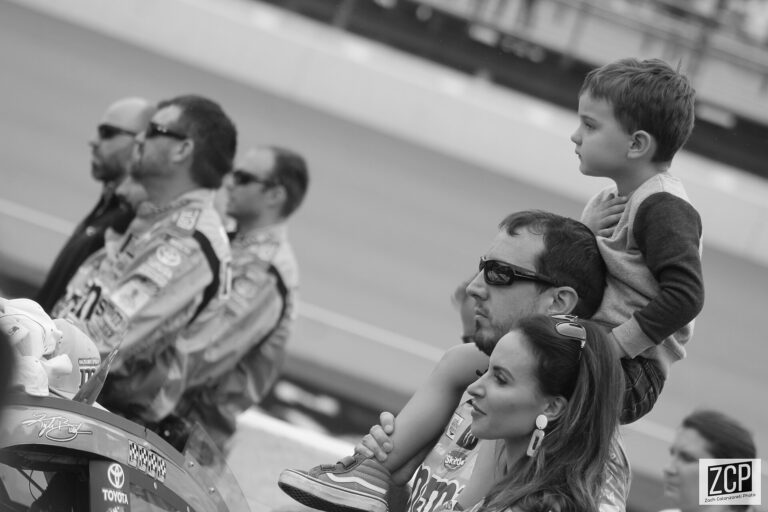
Natalie Decker’s emotional NASCAR meltdown at Dover was already one of the most controversial moments of the season. Now Kevin Harvick has stepped directly into the conversation, and he didn’t hold back.
Harvick Didn’t Sugarcoat Anything
During a discussion on SPEED alongside Will Buxton, the former NASCAR Cup Series champion criticized Decker’s behavior following her radio outburst and mid-race exit the previous weekend, making clear he has little sympathy for how the situation unfolded and believes moments like this damage the credibility of women fighting to earn respect inside the sport. “I’m in the zero sympathy category,” Harvick said during the discussion, a comment that grabbed attention immediately. He argued that racing at NASCAR’s national level demands preparation, toughness, and performance regardless of gender, and openly criticized what he viewed as Decker making a spectacle out of the situation. His strongest line came when he said he did not like seeing “a mockery made out of what our sport is,” a comment that spread through NASCAR circles almost instantly.
The Dover Meltdown That Started It All
The controversy exploded after Decker suffered an emotional breakdown over team radio during the race at Dover. After multiple penalties and eventually being black-flagged for failing to maintain minimum speed, Decker could be heard crying openly while expressing frustration with NASCAR officials, her situation, and the pressure surrounding her performance. Eventually, she parked the truck and later said she no longer planned to continue in the Truck Series. The radio traffic shocked even longtime NASCAR fans because it sounded far more personal and emotionally overwhelmed than the typical anger drivers vent during races — instead of sounding furious, Decker sounded defeated, and that distinction matters to how the moment has been received.
Harvick Says Drivers Cannot Skip the Process
One of the central points Harvick kept returning to was preparation. According to Harvick, drivers cannot shortcut development regardless of how much attention or opportunity they receive, arguing that NASCAR’s upper levels demand experience and emotional control because drivers reaching national competition become responsible not only for themselves but for everyone else sharing the track. He suggested Decker sounded both frightened and unprepared during the race, which he believes creates real danger at tracks where speeds can exceed 150 mph — in his view, a driver who feels overwhelmed mentally at that level becomes a potential risk to competitors around them, and he made clear he believes the responsibility ultimately falls on the driver to know whether they’re ready.
Will Buxton Saw Something Different
While Harvick delivered a blunt assessment, Will Buxton took a more cautious approach during the conversation. Buxton said Decker sounded genuinely scared during the radio exchanges, which raised concerns about whether she’d been pushed into a situation she wasn’t fully equipped to handle, and he questioned whether the sport sometimes rushes drivers upward before they’re truly ready for the pressure and competition involved. That added another layer to the debate, since NASCAR development has become increasingly complicated in recent years — drivers climb through ARCA, Trucks, Xfinity, dirt racing, late models, and developmental programs while balancing sponsorship demands, social media attention, and enormous financial pressure, and not everyone handles that transition the same way.
Harvick Says Women Drivers Deserve Better Representation
One of Harvick’s biggest frustrations centered on how this moment could affect other female drivers trying to establish themselves in NASCAR. He specifically referenced rising talents like Jade Avedisian and Isabella Robusto, while also mentioning veterans such as Danica Patrick and Katherine Legge, saying many women in motorsports are working through the traditional development ladder carefully and professionally, which he believes makes public meltdowns like this especially damaging. Harvick argued that incidents like Dover reinforce negative stereotypes female drivers already fight inside motorsports, creating what he views as another unnecessary obstacle for women trying to earn respect through performance and preparation alone. Others see his comments as lacking empathy entirely — supporters of Decker argue the emotional and mental pressure surrounding modern motorsports has become overwhelming, especially for highly visible female drivers operating under intense public scrutiny, and that the situation exposed larger issues involving driver development and online abuse rather than simply personal weakness. Both sides are digging in hard.
The Statistics Fuel the Debate
Part of the controversy comes from Decker’s actual NASCAR results. She has made 34 starts in the Truck Series and reportedly failed to finish nearly half of those races. While she did earn a fifth-place finish at Daytona in 2020, consistency and competitiveness have remained major struggles throughout her national-series career, a record that’s impossible to ignore in conversations like this. Critics point directly to those numbers as evidence supporting Harvick’s argument about preparation and competitiveness, while supporters counter that development in motorsports is rarely linear, pointing to numerous male drivers who also struggled heavily before finding stability or rebuilding careers elsewhere.
That tension now sits at the center of a broader conversation about driver development, mental pressure, social media backlash, gender expectations, and what NASCAR should demand emotionally from drivers competing at its highest levels. Harvick’s comments only intensified that conversation — when a former Cup Series champion publicly says he believes someone made a “mockery” of the sport, fans aren’t going to quietly move on from it anytime soon.
About the Author