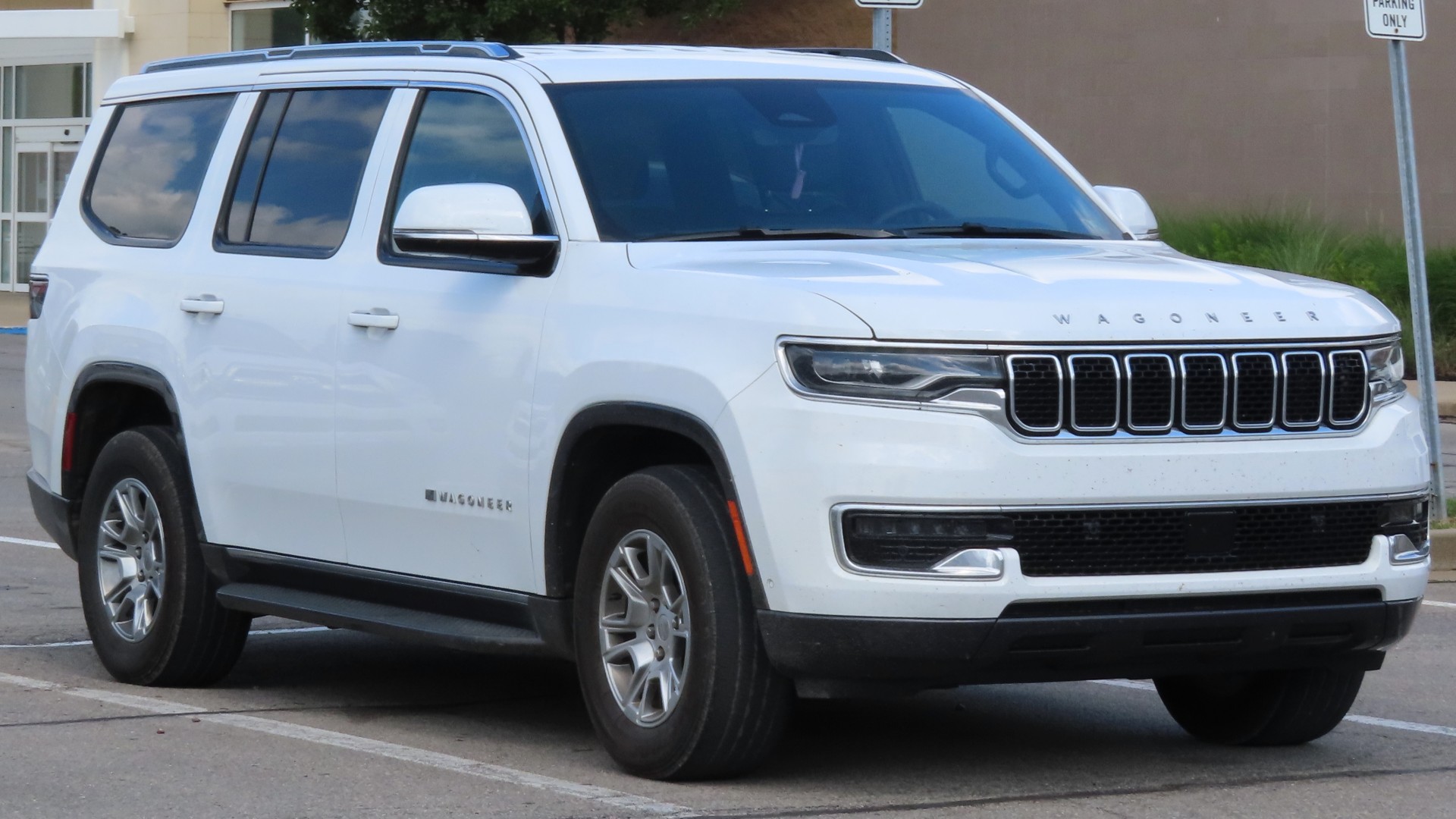
A 2022 Jeep Wagoneer Series I. Photo: MercurySable99 / Wikimedia Commons, CC BY-SA 4.0
Jeep’s flagship has a new problem, and it’s on the roof. FCA US told federal regulators on Sept. 10 that the pivot bolts holding the roof crossbars on 97,349 Wagoneers and Grand Wagoneers may never have been tightened to spec, and that “a crossbar with insufficient torque on the pivot bolt may detach from the vehicle.” The filing’s estimate of how many trucks have the defect is not a number you often see on a recall report: 100 percent.
The population covers 54,249 Wagoneers from the 2022 through 2025 model years, 11,606 Wagoneer Ls from 2023 through 2025, 22,144 Grand Wagoneers from 2022 through 2026 and 9,350 Grand Wagoneer Ls from 2023 through 2026, all built between Feb. 24, 2021 and Oct. 30, 2025. NHTSA logged it as recall 26V584. FCA’s internal number is 81D.
What a bar leaving the roof at highway speed does
FCA’s own safety-risk statement, in its Part 573 report to NHTSA, doesn’t mince words: “Crossbars which detach from a vehicle may create a road hazard to operators and occupants of other vehicles, and can cause such vehicles to crash without prior warning.” Note who is at risk in that sentence. The Wagoneer driver probably hears a clunk. The car behind gets a crossbar through the windshield or under the tires at 70 mph.
The engineering is unglamorous. A bolt does its job by being stretched: torque it to spec and it clamps the joint with a preload that vibration can’t overcome. Leave it short of spec and the clamp is weaker, the joint can move, and every expansion-joint thump and crosswind works the bolt looser. A pivot joint on a crossbar is exactly the kind of connection that sees that load cycle all day. FCA’s filing says the remedy bolts “are a different design,” which suggests the fix is more than a torque wrench.
The warning signs, per FCA: a rattling noise, a crossbar missing a bolt, or a crossbar that has come apart at the pivot joint.
How Jeep found it, and what it knows
FCA’s Technical Safety and Regulatory Compliance group opened an investigation on June 25, spent the summer meeting with engineering and manufacturing, and by Aug. 31 had counted 15 warranty claims potentially related to the issue and no customer assistance records or field reports. It knows of no crashes or injuries. On Sept. 3 it declared a safety defect, and a week later it filed with NHTSA. The bolts came from a supplier the report names as MINTH – Plastic Trim International of East Tawas, Michigan.
Fifteen warranty claims across 97,349 vehicles is a tiny number, and the 100 percent estimate sits right next to it in the same document. Read together, they say something specific. FCA isn’t claiming most of these crossbars are about to fall off. It’s saying it can’t tell which bolts were torqued correctly, so it is treating all of them as wrong. That is why the remedy is “replace,” not “inspect.”
The fix isn’t here yet
Dealers were notified Sept. 17. Owners get letters starting Oct. 8, but those are interim letters that warn of the risk. A second letter comes when the replacement bolts are available, and neither NHTSA’s summary nor FCA’s report puts a date on that. Owners are being told about a bar that may fall off their roof, with no appointment to book.
Third “may detach” recall in 13 months
If this feels familiar to Wagoneer owners, it should. NHTSA’s database lists 17 recalls on the Wagoneer and Grand Wagoneer since the trucks arrived as 2022 models, and three in the last 13 months are for pieces that can detach from the truck: door trim on 163,735 vehicles in September 2025 (recall 25V593), quarter-window trim on 123,396 vehicles the same month (25V642), and now the crossbars. Go back to August 2023 and there’s a fourth trim recall, 44,708 trucks whose upper B-pillar trim wasn’t fully seated and could interfere with the side curtain airbags (23V545).
Stellantis has spent the year fielding complaints across the lineup, from Ram 1500s that owners say stall at highway speed to the SRT relaunch it is counting on to change the conversation. It isn’t alone in learning things after the trucks left the plant; GM’s first answer to a failing V8 was thicker oil. But four “it might come off” recalls on one platform is a build-quality story, not a bad-batch story.
What to do if you own one
Run the VIN through NHTSA’s recall lookup or Mopar’s, and ask the dealer specifically about recall 81D and when parts arrive. Until then, look at each crossbar’s pivot. If a bolt is missing or the joint has separated, don’t drive with the bar up there; have the dealer take it off. Don’t load the rack. If a new rattle shows up from the roof, that is FCA’s own symptom list talking.
If you have already paid to replace a crossbar or a pivot bolt, keep the receipt and ask about reimbursement when the remedy letter arrives. Recall reimbursement plans generally cover qualifying repairs made before the recall was announced, and the paperwork is easier with an invoice in hand.
One more practical point. If a crossbar leaves your roof and takes out someone’s windshield, the claim comes to your liability coverage first, recall or no recall. That is the everyday meaning of FCA’s “road hazard to other vehicles” line, and it is a good reason not to wait for the letter before looking up.
Would a third detach recall in a year change whether you’d put a Wagoneer in your driveway, or is this what the first few years of any new flagship look like once you actually read the recall database?
Sources
- FCA US LLC, Part 573 Safety Recall Report 26V584 (roof crossbar pivot bolts), filed Sept. 10, 2026
- NHTSA recall records 26V584, 25V593, 25V642 and 23V545, and recalls-by-vehicle data for 2022–2026 Jeep Wagoneer and Grand Wagoneer
Images Via: Wikimedia Commons (MercurySable99, CC BY-SA 4.0; Charles from Port Chester, New York, CC BY 2.0)
About the Author