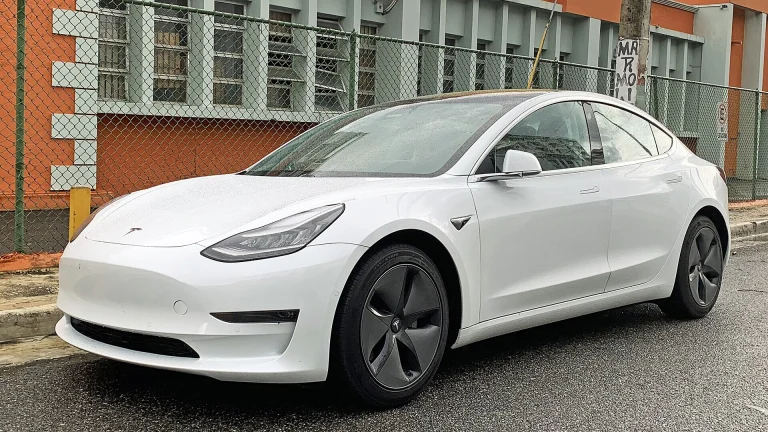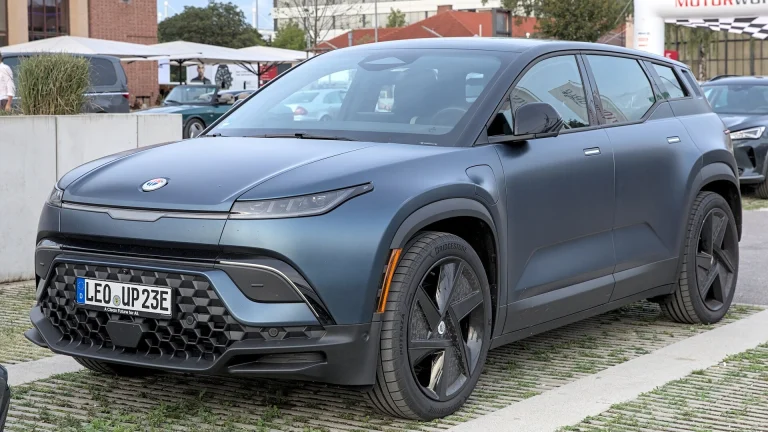
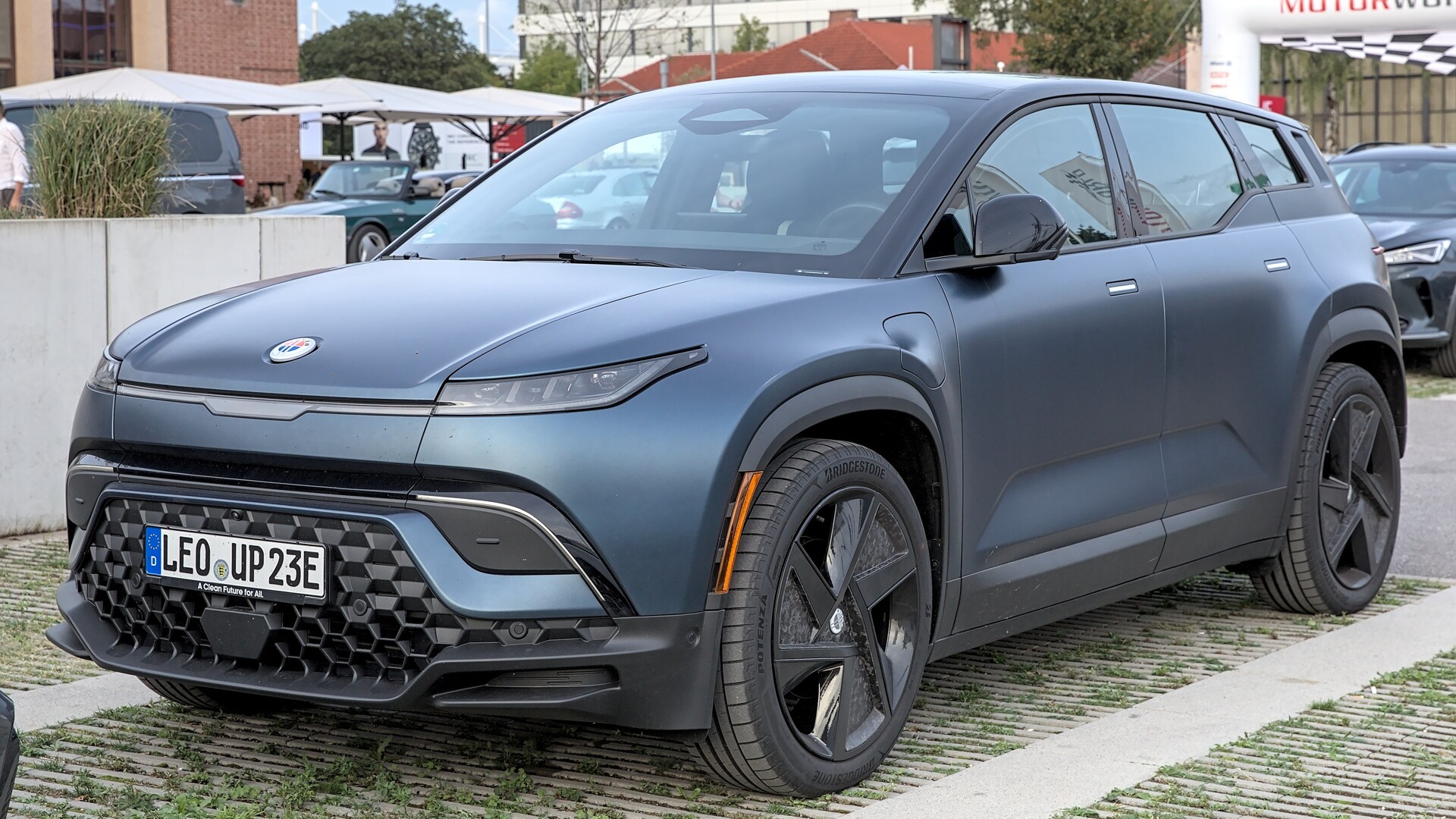
A Fisker Ocean on display at Motorworld Munich in September 2023. Photo: Alexander Migl (Alexander-93) via Wikimedia Commons, CC BY-SA 4.0
Henrik Fisker’s house in the Bird Streets above the Sunset Strip in Los Angeles, California, goes to auction next month, about two and a half years after his electric-car company filed for bankruptcy and left Fisker Ocean owners arguing over who would pay for recall repairs. Concierge Auctions said in a Nov. 4 release that online bidding on the 11,800-square-foot house opens Dec. 4 and ends at a live sale at The Dominick in New York City on Dec. 16, with Tessa and Barron Hilton of Compass as the listing agents.
The release lists the house at $29.9 million and refers to the sellers only as the current owners. Mansion Global reported on Nov. 23 that the house is Fisker’s. The asking price has been falling for a while. Fisker paid $21.75 million for it in 2021 and tried to resell it two months later for $29.5 million, The Real Deal reported, citing Realtor.com. In June 2024 it went on the market at $35 million. That same month, Fisker Inc. and its U.S. subsidiaries filed for Chapter 11 in Delaware, Reuters reported.
The auction shows where the line runs in a carmaker’s bankruptcy. The founder’s house was never on the creditors’ side of it. Ocean owners got their recall labor covered only after federal safety law and the Justice Department pushed it into the company’s plan.
Why Fisker’s house stayed out of Fisker Inc.’s bankruptcy
The debtor in Case No. 24-11390 (TMH) in U.S. Bankruptcy Court in Wilmington, Delaware, was the company, not the man whose name is on it. Under section 541 of the Bankruptcy Code, a bankruptcy estate holds the debtor’s property. For Fisker Inc., that meant about 3,300 unsold Oceans, which went to American Lease LLC for up to $46.5 million, plus intellectual property and legal claims, according to Davis Polk, the company’s bankruptcy counsel. A founder’s personal real estate isn’t in that pool unless a creditor wins a claim against the founder personally.
A personal bankruptcy works the other way. When a person files, his own property goes into the estate, which is how a Detroit broadcaster’s ‘Rain Man’ Buick ended up in doubt after a $62.2 million jury verdict and a bankruptcy filing. The same limited liability that shields a company’s shareholders, its founders included, keeps the company’s debts from following them home.
What Fisker Ocean owners had to fight for in Delaware
For the people driving the cars, the bankruptcy went differently. Fisker’s liquidation plan, as drafted in the fall of 2024, would have had Ocean owners pay the labor on two recall repairs, one for door handles and one for electric water pumps, and seek repayment later through the Fisker Owners Association, according to the objection the Justice Department filed on Oct. 7, 2024 on behalf of the National Highway Traffic Safety Administration. The plan limited the liquidating trustee’s recall spending to $750,000. The company said that covered the parts for those two recalls but not the labor, and indicated the full cost could run close to twice that.
DOJ pointed to 49 U.S.C. § 30120(a), which requires a manufacturer to remedy a safety defect “without charge” when the owner brings the vehicle in. The government argued the statute draws no line between parts and labor. The law puts that duty on the manufacturer, and a manufacturer in liquidation has a fixed pot of money, so every recall dollar comes out of what creditors would otherwise split. With the $750,000 ceiling, owners’ recall labor would have depended on what the trust could recover later.
Judge Thomas M. Horan ruled on Oct. 11, 2024, that he would confirm the plan, and it took effect Oct. 17. After negotiations with NHTSA, the confirmed plan keeps recall remediation going past the effective date, Davis Polk said. American Lease also agreed to fund and run the Fisker cloud, which the Oceans depend on for software, for five years starting Jan. 1, 2025. That deal runs through the end of 2029. The NHTSA page for the 2023 Ocean lists the model’s recalls, and owners can check a specific vehicle by VIN there.
The fees and transfer taxes on top of the winning bid
Whoever wins on Dec. 16 pays more than the hammer price. Concierge Auctions says its buyer’s premium runs 12% to 15% of the winning bid. At the $29.9 million list price, 12% comes to $3,588,000.
The Bird Streets are inside the city of Los Angeles, which means Measure ULA, the transfer tax voters approved in 2022. For sales closing after June 30, 2026, the city Office of Finance sets ULA at 5.5% of the full price on sales of $10.9 million or more, on top of the city’s base transfer tax of 0.45%. Los Angeles County adds $0.55 per $500. By Backfire News’s math, a $29.9 million sale would carry $1,644,500 in ULA, $134,550 in city base tax and $32,890 in county tax, a little over $1.81 million in all. The city’s FAQ doesn’t say whether the buyer or the seller pays it; the purchase contract decides that.
ULA took effect April 1, 2023, so it didn’t exist when Fisker bought the house. At this year’s rate, ULA alone on his $21.75 million purchase price would be $1,196,250.
The $29.9 million figure is not a floor, either. Concierge describes its sales as reserve auctions with a reserve set before bidding opens, based on the highest starting bid, and the release gives no starting bid. A long listing is common at this price. Jamie McMurray’s Lake Norman estate took 420 days to close at $9.2 million. Fisker’s house has been on and off the market for about 29 months.
What comes next for the house and for Ocean owners
Online bidding opens Dec. 4, and the live sale is Dec. 16 in New York. If it sells, the price will be the first market reading on the house since the 2021 purchase. For Ocean owners, the dates to watch are the cloud agreement’s end in 2029 and any new recall, since the company that owes the free remedy now exists as a liquidating trust. For any driver whose car’s maker is in bankruptcy, the free-remedy requirement in section 30120 still applies, and NHTSA can and did object in court when a plan fell short of it.
When a carmaker goes bankrupt, should federal law put owners’ recall repairs ahead of what the company’s lenders and investors collect, or should owners wait in line with every other creditor?
About the Author