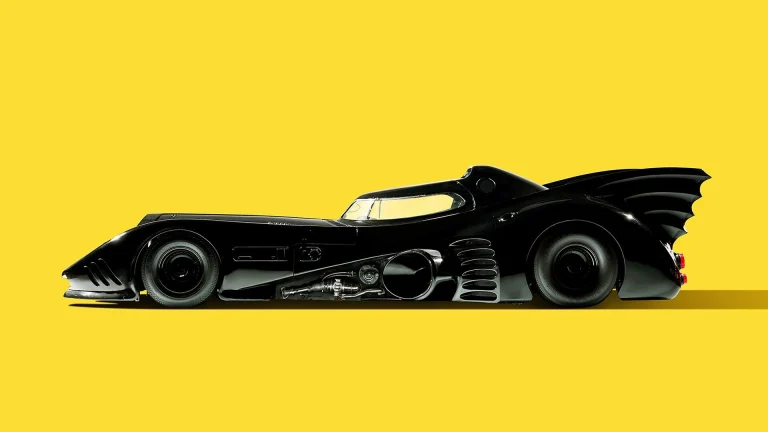
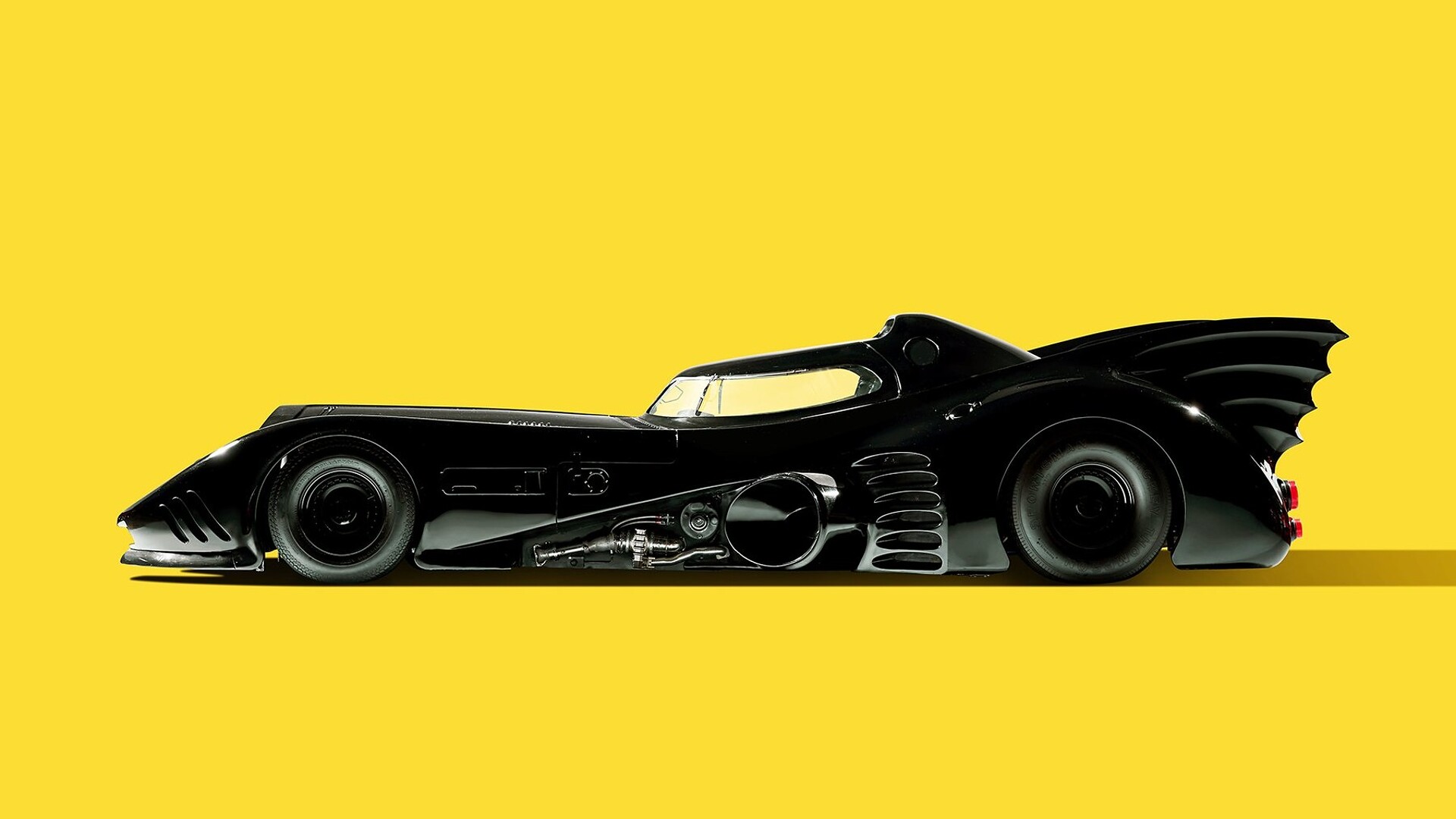
The Batman Returns hero car went unsold at Julien’s in Gardena, California, on Nov. 23, 2026. Photo: Julien’s Auctions
The hero Batmobile from Tim Burton’s 1992 Batman Returns crossed the block at Julien’s Auctions in Gardena, California, on Monday, Nov. 23, carrying the $5 million to $7 million estimate Julien’s announced in September. Bidding stopped at $3.25 million, the Associated Press reported, below the seller’s reserve, and the car went unsold.
The AP reported that the seller wants to stay anonymous. The top bid came in at 65% of Julien’s low estimate, and the auction’s own paperwork helps explain the gap. The car isn’t street legal, and under an agreement with Warner Bros., its next owner has to keep it stationary whenever it is shown to the public.
Two Impala Frames, a Flaming Exhaust and a Record Target
In its Oct. 28 sale announcement, Julien’s said the car measures roughly 19 feet, 8 inches and was built by custom-car builder Carl Casper from designs by production designer Anton Furst and concept illustrator Julian Caldow. Underneath the fiberglass body are two Chevrolet Impala chassis joined together, plus a radio-controlled flaming exhaust and the original glossy black paint. The AP reported that it still has its Chevrolet V-8, that it is one of three Batmobiles built for the film, and that it spent years on display at the Marconi Automotive Museum in Tustin, California.
Julien’s Trent Kalscheur told FOX Local that this was the first of the three cars delivered to the production and the one used for most of the movie’s driving scenes. Julien’s auction notes call it the “Number One Hero car.”
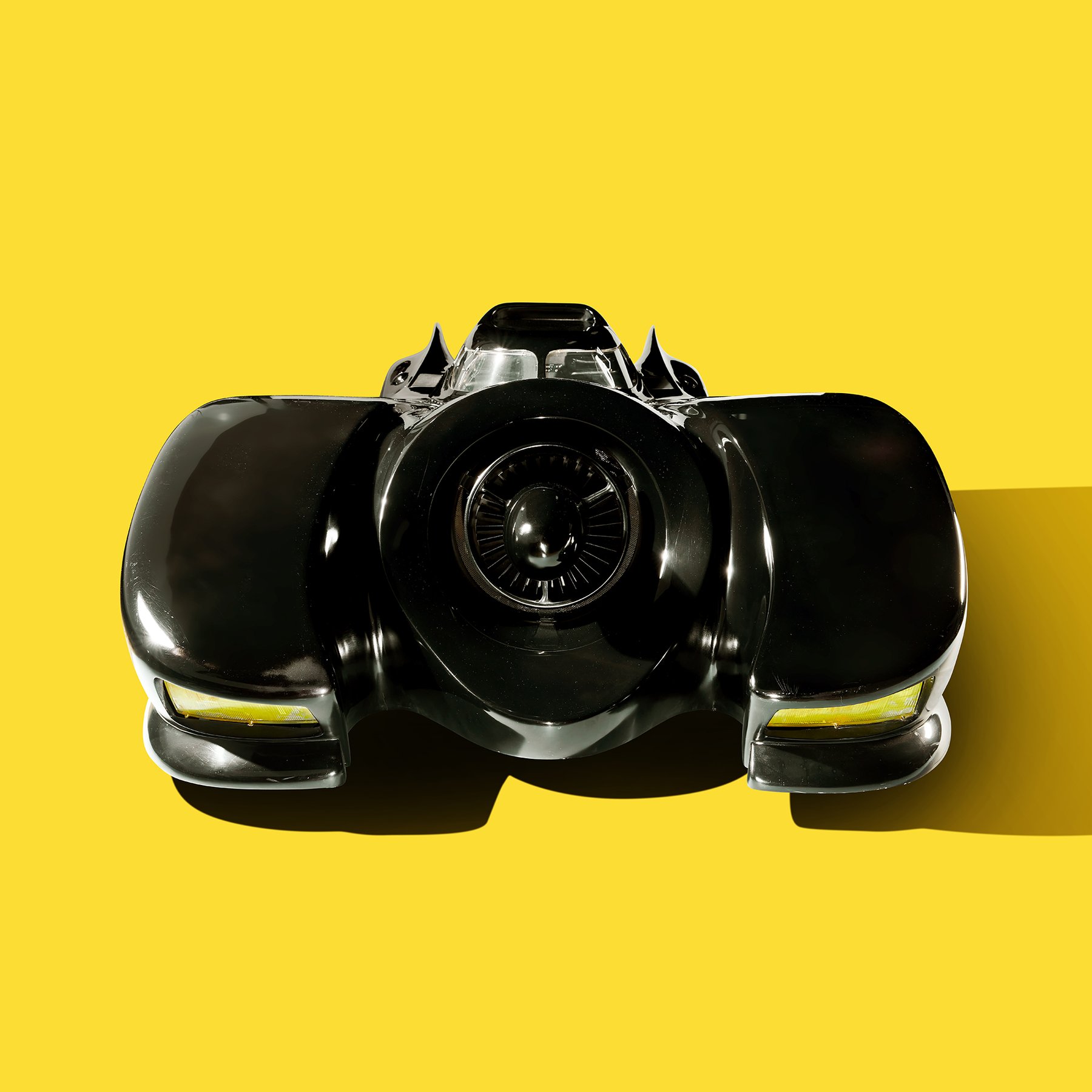
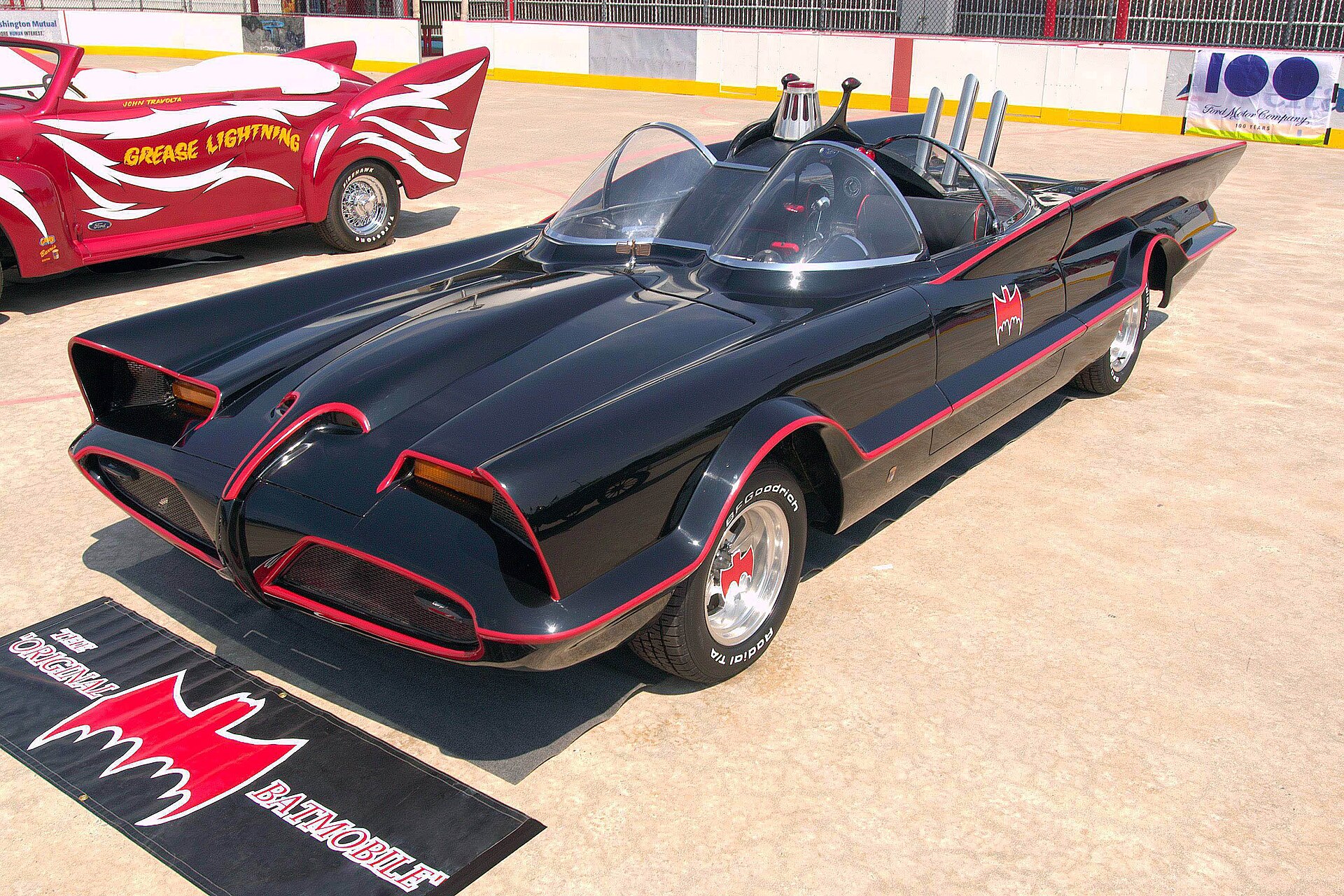
Julien’s put the goal in writing. The announcement said the car was poised to challenge the Batmobile auction record set in 2013 by George Barris’s 1966 TV car at $4.6 million. That expectation had already gotten ahead of the calendar once, when Anthony Scaramucci posted that the car had “sold for $7 million” three weeks before the sale.
How the $3.25 Million Bid Compares With the 2013 Record After Fees
The record and Monday’s bid are not measured the same way. Barrett-Jackson’s Jan. 29, 2013, release lists the Barris car at $4,620,000 from its Jan. 19 sale in Scottsdale, Arizona. The AP’s report that night said $4.2 million. The gap is the buyer’s premium, the fee the winning bidder pays the auction house on top of the hammer price. In that sale it worked out to 10%, since $4.2 million times 1.10 is $4.62 million.
Julien’s terms and conditions also put a buyer’s premium on every winning bid. On the results page for this sale, the sold prices I checked all equal a round hammer bid plus 28%. Michael Keaton’s Batman Returns cowl and chest emblem, for example, shows $19,200, which is a $15,000 bid times 1.28. If the same rate had applied to the car, the $3.25 million bid would have cost the buyer about $4.16 million, still roughly $460,000 under the Barris car. Julien’s $5 million low estimate would have meant $6.4 million out the door. That’s Backfire News’s math from Julien’s posted prices, not a figure Julien’s published for this lot.
The same terms describe the reserve as a “confidential minimum price acceptable to the Consignor,” and they let the auctioneer open a lot and bid on the consignor’s behalf up to that amount. On an unsold lot, the last number called does not by itself prove an outside buyer was willing to pay it. Nothing public says whether that happened on Monday.
A 2015 Court Ruling Gives DC Control of the Batmobile’s Look
Julien’s lot notes, as the AP quoted them, say the car is not street legal and “must remain stationary when exhibited to the public.” The buyer also needs approval before showing it at special events. Those conditions come from an agreement with Warner Bros. Consumer Products, which the AP said handles DC Comics’ intellectual property.
A studio can set rules for a car somebody else paid for because of a federal appeals case from Southern California. In DC Comics v. Towle, No. 13-55484, decided Sept. 23, 2015, the U.S. Court of Appeals for the Ninth Circuit ruled against Mark Towle, who ran a shop called Garage Gotham and built replicas of the Batmobiles from the 1966 TV series and the 1989 film. The opinion says he sold them for approximately $90,000. Judge Sandra Ikuta wrote that the Batmobile “is a character that qualifies for copyright protection,” and the court held that the character belongs to DC, even though DC had licensed it out for the show and the movie.
That ruling covers the 1989 design, and Julien’s describes this car as built on Furst’s designs for that era. Owning the car means owning fiberglass, two Impala frames and a Chevrolet V-8. The shape that makes those parts worth millions belongs to DC, and the Warner agreement travels with the car. A collector can put it in a private garage. A buyer who wanted to drive it in a parade, run it at a car show or build a paid attraction around it would need the rights holder’s sign-off first, and even then the notes say it stays put in front of the public. That is a smaller pool of buyers than a $5 million estimate assumes.
The Memorabilia Beat Its Estimates While the Car Fell Short
The bidders in Gardena had money to spend. Julien’s results page shows the Batman Returns Keaton cowl at $19,200 against a $10,000 to $15,000 estimate, an original Batmobile wheel center cap at $1,920 against $800 to $1,000, and a production-made art department Batmobile model from the 1989 film at $5,760 against $3,000 to $5,000. Bidders paid over estimate for a wheel cap and a scale model, then stopped well short on the car itself.
It is the second time this fall that a car at Julien’s has stalled under its estimate. In October, bids on Cheap Trick guitarist Rick Nielsen’s 1955 Thunderbird reached $40,000, still $20,000 shy of the low end. Robert Thompson, a professor of television and popular culture at Syracuse University, told the AP that the superhero franchise has spread into so many versions that it “might dilute the exclusivity” of any one piece, though he added that a $3.25 million bid shows Batmobiles still carry real value.
What Happens to the Unsold Batmobile Now
Julien’s terms say the house is not obligated to sell a lot unless the reserve is met, so the car stays with its consignor. No public statement says whether a private sale is in the works, and the AP said Julien’s did not respond to its request for comment. Whenever the car does sell, the buyer will take on the same Warner Bros. conditions, and Monday’s bidding is the first public read on what a car carrying them is worth.
The Towle ruling reaches past seven-figure movie cars. It binds federal courts in California and the eight other Western states of the Ninth Circuit, which means a shop there that builds and sells Batmobile replicas without DC’s permission faces the same claims Towle lost.
Should a studio’s license get to decide whether the owner of a multimillion-dollar car can drive it in public, or is that a fair price for owning a piece of someone else’s character?
About the Author