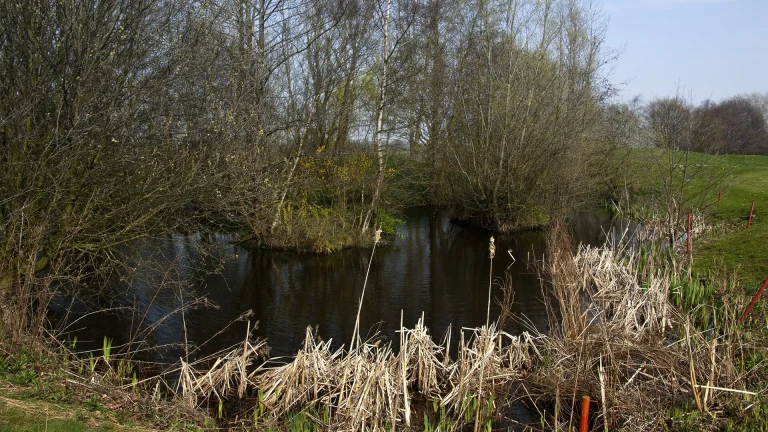
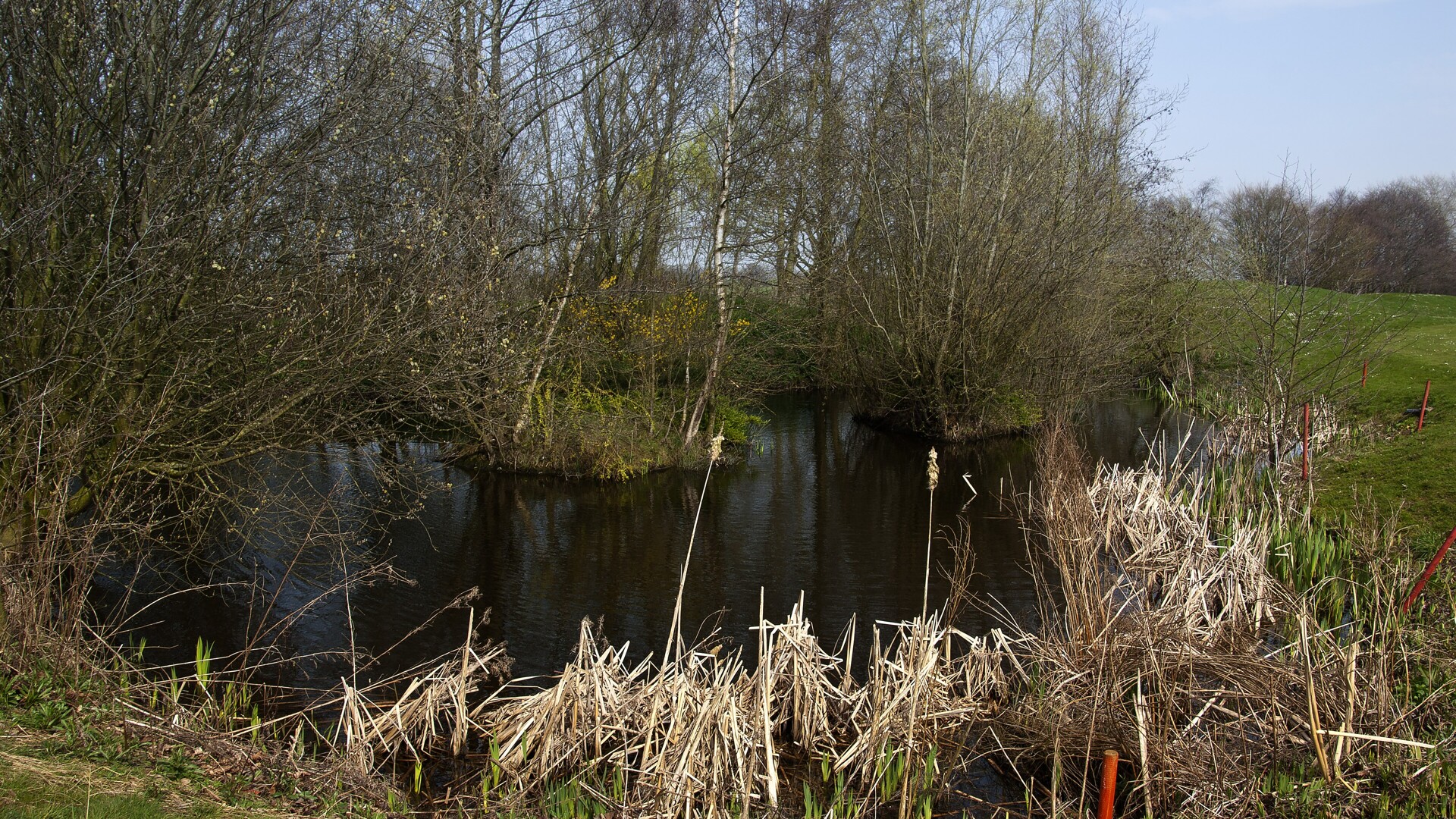
File photo of a golf course water hazard in England, not The Meadows Golf Course in Moorhead. Photo: Ian Greig via Geograph/Wikimedia Commons, CC BY-SA 2.0
Moorhead, Minnesota, police officers twice declined to chase a stolen car on May 5, and by the department’s account the driver ended the night anyway, cutting through a field at the edge of town, crossing The Meadows Golf Course and rolling into a pond while an officer watched.
After a short foot chase, police had the driver in custody: a juvenile runaway they suspected in a string of car thefts and fleeing cases. Nobody was hurt. Twelve years earlier, Moorhead officers made the opposite call and followed a pickup across the city’s other golf course, and the department ended up investigating its own officers. Put the two nights next to each other and the May decision looks like the better police work.
Moorhead officers let the stolen car go twice on May 5
According to the Moorhead Police Department’s account, officers had spent the week investigating incidents involving two stolen cars tied to the same juvenile, who police said had already fled from other agencies. That afternoon, Officer Binyad Brifki found one of the cars in the 600 block of 12th Avenue South and called for backup. The driver saw the squad and left. When Brifki found it again and turned on his lights and siren, the driver took off at high speed, and police said Brifki decided not to pursue because of the risk to the public.
That evening, Officer Cam Schlichting saw the second stolen car being driven recklessly on 20th Street South, at more than 70 mph by the department’s account. Officer Dalton Knapper found it at Center Avenue and 14th Street and tried to stop it. It ran again. Officers did not follow, police said. They searched the area instead, with help from the Minnesota State Patrol, the Clay County Sheriff’s Office and the Dilworth Police Department, and the pond did the rest.
The car went to the city impound lot. The juvenile went to West Central Juvenile Detention on suspicion of fleeing a peace officer in a motor vehicle, possession of stolen property, fleeing on foot, obstructing legal process and reckless driving. Those are booking allegations, not findings, and police did not release the juvenile’s name.
The 2014 chase across Village Green Golf Course
At about 7 p.m. on June 17, 2014, North Dakota Bureau of Criminal Investigation agents told Moorhead police that a 33-year-old Bismarck man wanted on Walsh County, N.D., felony warrants was in town. When officers tried to stop his pickup, he drove across Village Green Golf Course, which the city also runs. Forum News Service reported that three squad cars followed him onto the course while a helicopter tracked him from above.
A man on the driving range with his 5-year-old son told Forum News Service the truck “was coming straight at us,” and that he grabbed the boy and ran toward the clubhouse. He estimated the pickup was going 40 or 50 mph across the course. That night, a Moorhead police sergeant said officers had not pursued onto the course. A bystander’s video showed three squad cars chasing the truck around a water hazard, and the department’s spokesman said the sergeant may not have had all the information.
Police said the chase was called off on the course, picked up again on Interstate 94 and stopped a second time for construction workers in Fargo, whose police department declined to join. The man was found in a trash bin after slipping out of the West Acres mall, according to the news service. After a routine review, Moorhead assigned a lieutenant to investigate whether officers broke policy, and a Bismarck Tribune headline later reported that four officers were disciplined. The type of discipline is not confirmed.
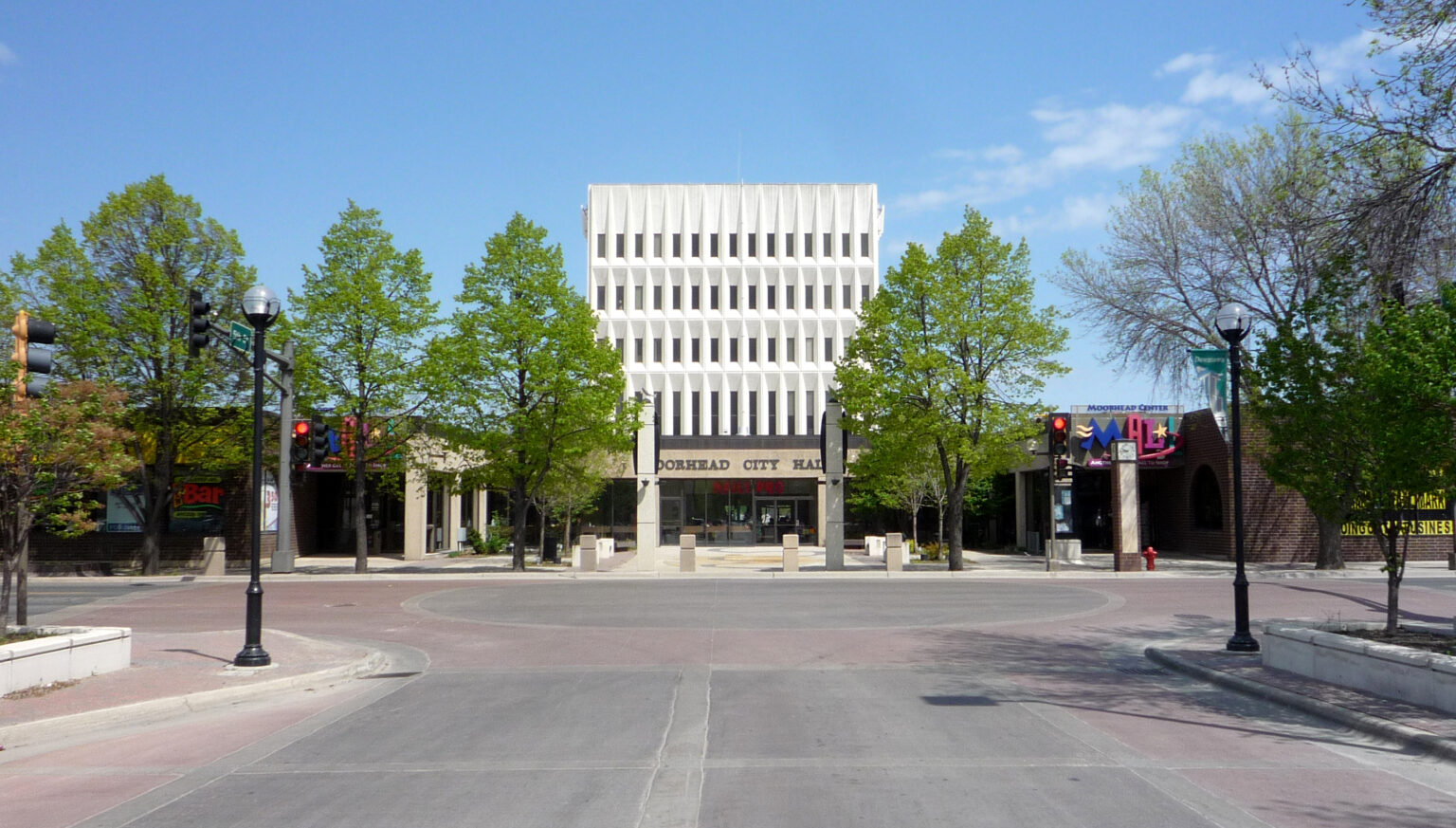
Moorhead’s own 2014 policy listed three reasons to stop
The department’s pursuit policy at the time, as Forum News Service quoted it, listed “hazards to uninvolved bystanders or motorists” as a reason to end a chase. It told officers to weigh whether they knew who they were chasing and whether “the need for immediate capture outweighs the risks associated with continuing the pursuit.” And when a helicopter had the car in sight, it told them to consider whether a ground chase was needed at all.
All three applied on June 17, 2014. Police had a name from the BCI agents. They had a helicopter overhead. And the truck was pointed at a driving range with a father and child on it. The squad cars on the fairways added risk and bought nothing the helicopter wasn’t already giving them.
Minnesota now writes that reasoning into law for every department. Minn. Stat. § 626.8458 requires each agency to have a written pursuit policy and certify every year that it meets the model policy set by the state Peace Officer Standards and Training Board. The current model, approved July 25, 2024, as adopted by the Minnesota Lake Police Department, lists conditions under which officers and supervisors must consider ending a chase, including when “the suspect is known and could be apprehended later, and delaying apprehension does not create a substantial known risk of injury or death to another.”
Fleeing is a felony in Minnesota whether or not police follow
A no-chase decision doesn’t let the driver off. Under Minn. Stat. § 609.487, fleeing a peace officer in a motor vehicle is a felony punishable by up to three years and one day in prison and a $5,000 fine, rising to 40 years and $80,000 if someone dies. A conviction also means the court has the state revoke the driver’s license. The statute covers fleeing or trying to flee. It doesn’t require the officer to give chase.
Declining to chase doesn’t mean losing the car, either. In May, Moorhead police knew which cars they wanted and whom they suspected, and three other agencies were helping look. The officer who saw the car go into the pond wasn’t chasing it.
The State Patrol’s numbers show fewer chases and far more tire spikes
The Minnesota State Patrol’s use-of-force and pursuits dashboard shows troopers ran 608 pursuits in 2023, 563 in 2024 and 514 in 2025. In 2025, troopers ended 206 chases on their own judgment and supervisors called off 56 more. Troopers used stop sticks or another tire-deflation device 61 times in 2024 and 418 times in 2025. The dashboard doesn’t explain the jump, and spikes carry their own risk.
Minnesota counts chases, but not the ones that didn’t happen. Minn. Stat. § 626.5532 requires a department head to report each pursuit to the public safety commissioner within 30 days, including the reason, distance, outcome, charges, injuries and damage. The trigger is an officer pursuing. When an officer declines, no report is required, so the state has no count of how often letting a car go still ends with the driver in custody. That’s the number that would settle the argument.
When police already know who is driving and nobody’s life is in danger yet, should Minnesota make letting the car go the default instead of an option?
About the Author