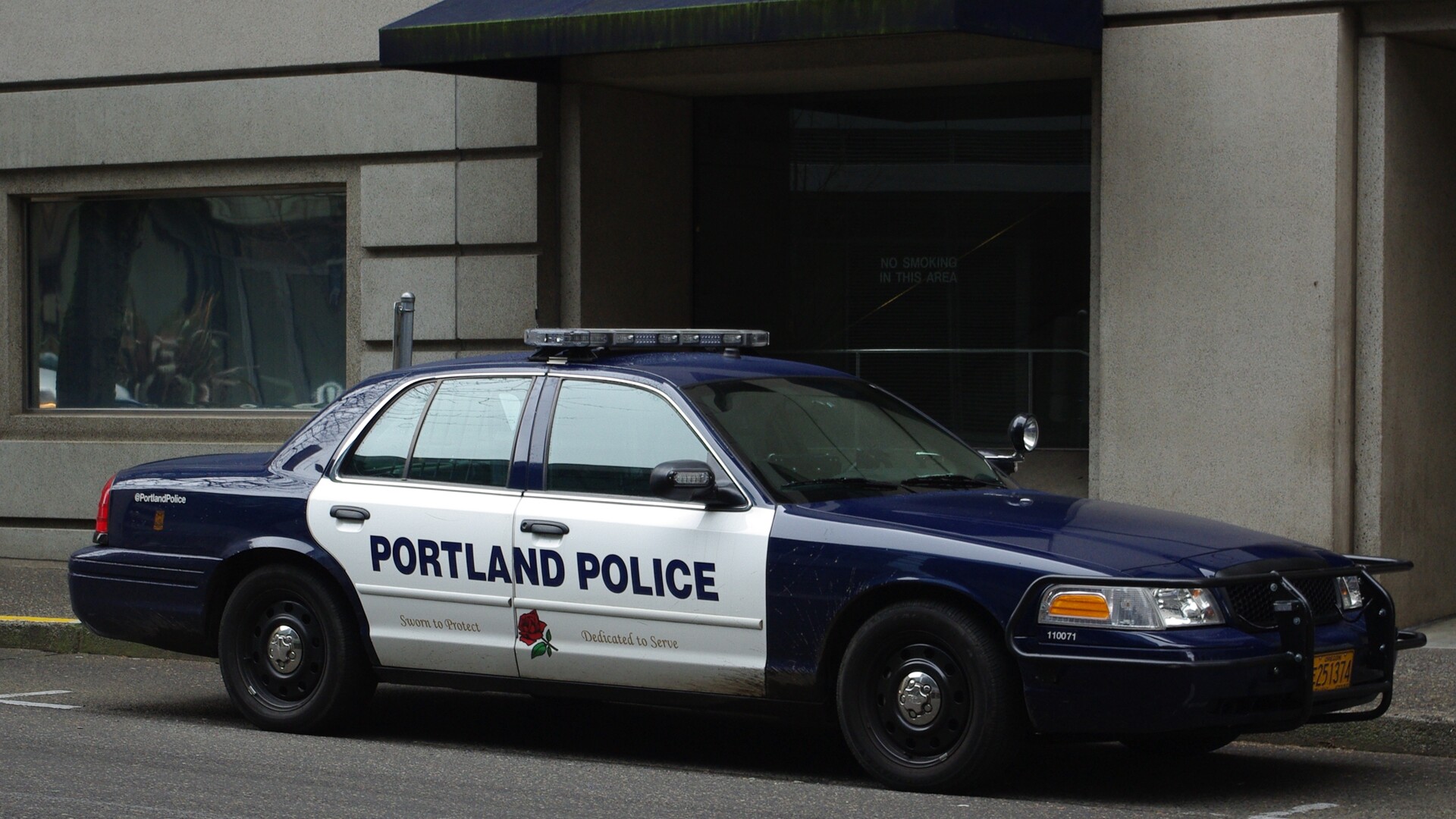
Photo: M.O. Stevens via Wikimedia Commons, CC BY-SA 3.0
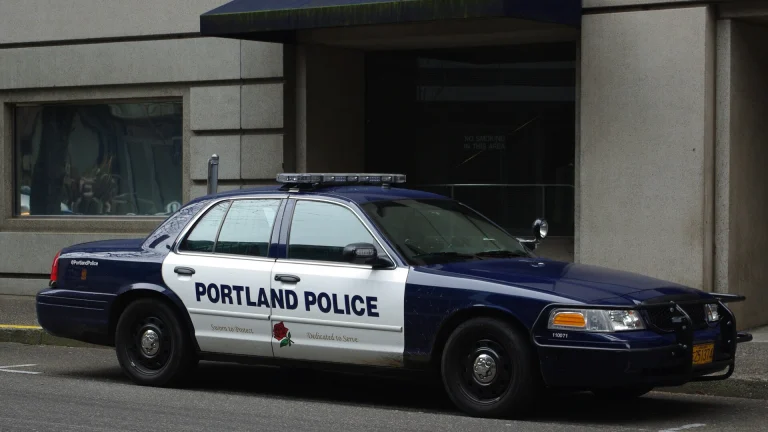
At about 9:15 a.m. on Monday, Nov. 23, East Precinct officers in Portland, Oregon, found a stolen car parked behind a business near Northeast 119th Avenue and Northeast Halsey Street in the Hazelwood neighborhood. According to the Portland Police Bureau, they boxed the car in with their vehicles and confirmed nobody was inside. Moments later, a man walked out of the business, and there was an exchange of gunfire. An officer and the man, whom police describe as a vehicle theft suspect, were both hit and taken to a hospital with injuries the bureau called non-life-threatening.
The officer was treated for a gunshot wound and released Monday evening. Police say they recovered a handgun at the scene, and they posted a photo of it lying on the ground. Two officers who fired at the man have been placed on administrative leave, which the bureau calls standard after a use of deadly force. The bureau’s update describes those two officers as having returned fire. As of Tuesday morning, PPB had not named the man, announced charges, or identified the stolen car.
Chief Bob Day counted the officer as the bureau’s third member hit by gunfire in 2026. “This is our third member injured in the course of gunfire this year. I find that totally unacceptable,” he said in the bureau’s statement. Multnomah County District Attorney Nathan Vasquez, who went to the scene, told KOIN it was “a huge tragedy, certainly for Portland police, but also really for East County.”
Portland has built an award-winning stolen-car program around finding cars like this one and pinning them in place before anyone can drive off. Monday showed the limit of that approach. Boxing in a parked car takes the car out of the fight. It does nothing about the person who comes back for it, and the bureau’s own numbers say that person is often carrying a gun.
How PPB’s rulebook defines a box-in
PPB’s use-of-force directive, 1010.00, defines boxing in as a coordinated tactic of making contact between police vehicles and a subject vehicle to stop a pursuit or keep one from starting. It splits the tactic into two kinds. A dynamic box-in is done on a moving car. A static box-in is done on a car that isn’t moving and isn’t reasonably likely to cause injury or significant damage. A parked, empty car fits the second definition, the lower-risk of the two.
The reason police pin the car first is that the car is both the getaway and a potential weapon. PPB’s vehicle interventions and pursuits directive, 630.05, lists boxing in among the strategies meant to cut the risk a fleeing car poses to the public, the suspect, and officers. On Christmas Eve 2020, officers checking a stolen pickup at Southeast 39th Avenue and Powell Boulevard reported that the truck rammed a patrol car and an officer before an officer opened fire. A car hemmed in by cruisers can’t do that, and it can’t start a chase through East Portland either. Chases that do start call for other tools, such as the Grappler bumper we covered earlier this year.
Once a car is pinned and empty, though, officers are waiting on whoever has the keys, and that person decides when to walk out and what he’s holding when he does. That is how Monday unfolded, according to PPB: the car was secured, and then a man came out of a building.
The bureau’s release also says the operation included Public Safety Support Specialists, or PS3s, along with TriMet’s Transit Police. Under PPB directive 630.26, PS3s are non-sworn staff who don’t meet Oregon’s statutory definition of police officers and may not use physical force unless they’re responding to active aggression. PPB has not said where the PS3s were when the shooting started. The internal review the bureau promised covers the initial response, the resources requested, and the tactics used, so their role should be part of it.
Portland’s stolen-car missions: 69 cars, 11 guns
PPB hasn’t said whether Monday’s stop was part of its Stolen Vehicle Operations, the East Precinct program that has become the bureau’s best-known answer to car theft. The ingredients match, though: East Precinct officers, partner agencies, and a parked stolen car pinned in place. The bureau’s December 2025 report on the program illustrates it with a photo of police vehicles surrounding a suspect car, captioned as a box-in.
That report is the best public record of what officers run into on these missions. In 2025, PPB ran 10 of them with nine outside agencies, from Gresham police to the FBI. They produced 75 arrests, 69 recovered stolen vehicles, and 11 illegally possessed guns. Drivers tried to elude police 37 times, and 12 of those turned into pursuits under the bureau’s policy. The bureau credits a partnership with biostatisticians at OHSU’s Knight Cancer Institute for helping it predict which plates belong to active stolen cars, and it gets tips from PDX Stolen Cars, a community group the bureau says has more than 30,000 participants.
The theft numbers have fallen hard. PPB counted 8,109 stolen-car reports from January through September 2022 and 2,835 over the same months of 2025, a decline of about 65%. The International Association of Chiefs of Police gave the program its 2025 award for preventing vehicle crimes.
Eleven guns across 69 recoveries works out to roughly one illegal gun for every six stolen cars recovered. That’s my math, not the bureau’s, and the report doesn’t say whether each gun came out of a car or off a person arrested, so treat it as a measure of what officers meet on these missions rather than a per-car rate. Either way, it describes an operation where officers should expect some of the people walking back to a stolen car to be armed.
Three PPB officers shot in 2026, and another hit by a patrol car
The first two of Chief Day’s three came on Jan. 19, when two officers answering a report of a man threatening someone with a knife near Lloyd Center were shot. OPB reported that PPB arrested a suspect a week later. That case had nothing to do with a car.
Monday’s did, and it was the second serious injury to an East Precinct officer this month that started with one. On Nov. 12, a driver failed to stop for a traffic stop near Southeast 141st Avenue and Stark Street and fled into an apartment complex. While officers set up a perimeter on foot, one of them was struck by another officer’s patrol vehicle, according to PPB. The three-year veteran was hospitalized with serious injuries. The driver was never found.
What Oregon charges for a stolen car, and what comes next in this case
In Oregon, driving or controlling someone else’s car without permission is unauthorized use of a vehicle under ORS 164.135, and possessing a car you know or have reason to believe is stolen is a separate crime under ORS 819.300. Both are Class C felonies, which Oregon law caps at five years in prison and a $125,000 fine. No charges in this case have been announced, and any decision belongs to Vasquez’s office.
The shooting itself is being investigated by the PPB Homicide Unit under case number 26-338663, following directive 1010.10. After the criminal side, the case goes to the Police Review Board, which includes community members, bureau members, and representatives of the city’s Independent Police Review Division. PPB says it will post the investigative files and any grand jury transcripts on its open data page once the legal process ends. In an October shooting this year, the bureau identified the officer and released video in a later update, so the next things to watch for here are the man’s name, his charges, the officers’ names, and any body camera footage.
If the stolen car is yours, Portland’s towing rules decide the bill
Somewhere in Portland, someone owns the car that was pinned behind that business on Monday, and PPB hasn’t said whether it’s being held as evidence. The bureau’s stolen vehicles directive, 630.61, sets the default for every theft victim in the city. When you report the theft, officers give you a form asking whether you want a recovered car towed at your own expense or left where it’s found. If you don’t sign, the car gets towed at your expense. If you chose the tow, officers have to try to reach you and wait at least 60 minutes before calling the truck, unless staffing or safety makes waiting impractical. The city’s towing FAQ says that when a car is towed because it matters to a police investigation, the agency will tell the owner when they can pay the towing fee and pick it up.
There is help with the bill, but it has a short clock. The Portland Bureau of Transportation runs a towing hardship fund that pays up to $300 in towing and storage fees for auto theft victims, funded by a $5 surcharge on city-contracted tows. You have to apply within five business days of the tow and before you retrieve the car, with a police report, current registration, a valid license, valid insurance, and no unpaid traffic or parking tickets. Miss any of that and the city says it can’t make exceptions. Theft victims can use it more than once, a break the program doesn’t give its low-income applicants, who are limited to once every two years.
The officer is out of the hospital, and the man wounded in the shooting is waiting to learn whether he’ll be charged and with what. The bureau’s review of the tactics, including the decision to pin an empty car and wait, comes later. Should Portland police keep boxing in parked stolen cars and waiting for the driver to come back, or hold off until someone is behind the wheel and the car can be stopped on the road?
About the Author