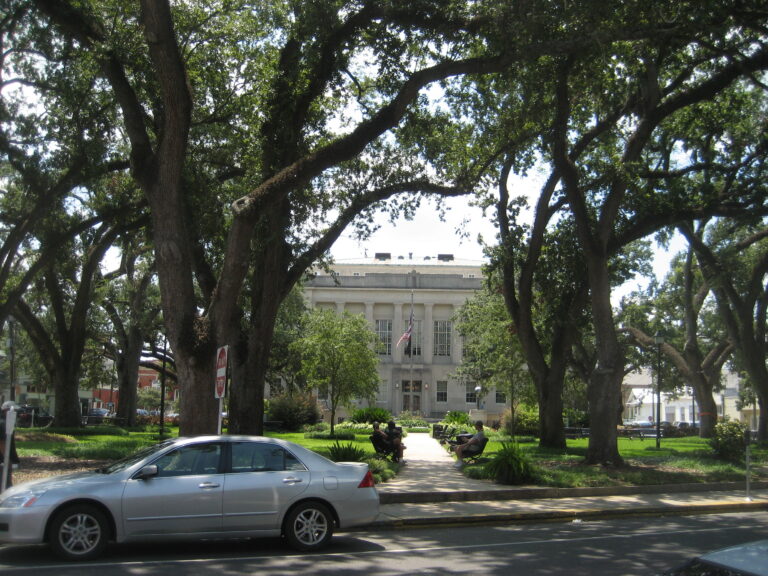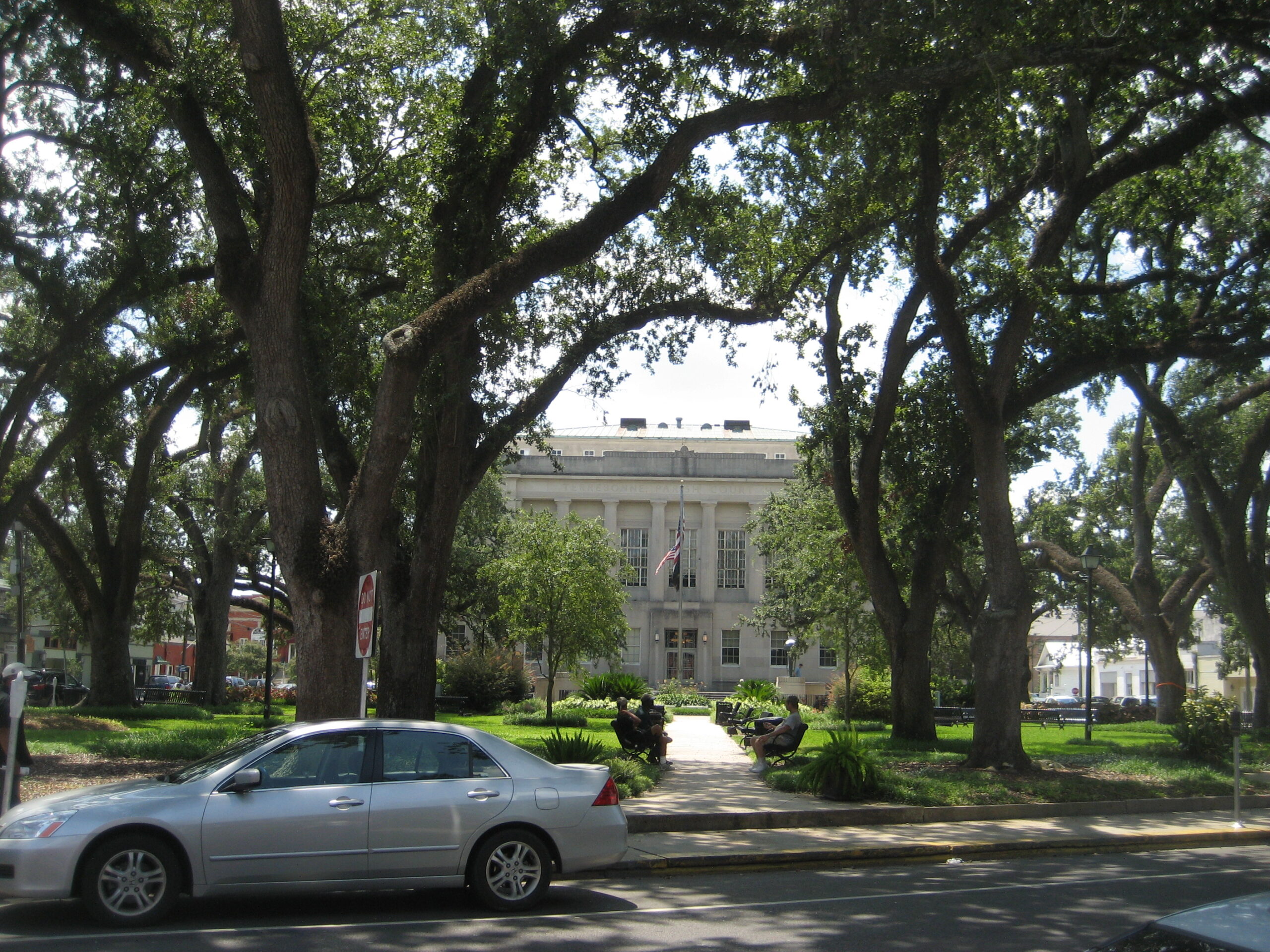
Main Street in front of the Terrebonne Parish Courthouse in Houma, Louisiana, in 2009. This location and vehicle are not connected to the Oct. 17 crash. Photo: Infrogmation of New Orleans via Wikimedia Commons, CC BY-SA 3.0
Most fender-benders never make it past an insurance claim number. The one at a Houma, Louisiana, intersection on Saturday, Oct. 17, was summarized by one of the drivers in 10 words on Facebook, and the last of those words was an acronym.
“2026 is wild. Just got sideswiped by Gypsy Rose. FML.”
As crash reports go, it covers the basics: what happened, who was involved, and how the person writing it felt about the matter. Louisiana State Police have since confirmed the main point. Troop C told TMZ that troopers investigated a minor crash involving Gypsy Rose Blanchard in Terrebonne Parish that day. Damage was limited to property. No one was hurt and no one was arrested.
What State Police have confirmed, and what they haven’t
The official record released so far is short. State Police confirmed four things: the date, the parish, that Blanchard was involved, and that the result was minor property damage with no injuries and no arrests. The agency’s confirmation was given to TMZ, which first reported the crash on Oct. 18. Backfire News did not find a public Louisiana State Police news release about it.
Troopers have not said publicly who caused the collision. No citation has been reported. The time of day, the intersection, the vehicles involved and the other driver’s name have not been released.
The other driver’s account is the Facebook post itself, which TMZ quoted without naming its author. According to the International Business Times, the post included a photo of a dented white door with scuff marks. “Sideswiped” is the poster’s word, not a finding by troopers.
The sun, according to a source
Blanchard has not commented publicly on the crash. The only explanation so far came from an unnamed source who told TMZ that the crash happened at an intersection in Houma, that the sun was in Blanchard’s eyes and was a factor, and that her car insurance was current. State Police have not confirmed either the glare or the insurance.
Sun glare is a real hazard, not just an excuse. A study led by Sunnybrook Health Sciences Centre physician Dr. Donald Redelmeier reviewed 6,962 people hospitalized after crashes over 20 years. It found the risk of a life-threatening crash was about 16 percent higher in bright sunlight, and the effect did not show up on cloudy days.
But glare can explain a crash without deciding who pays for it. Louisiana splits fault between drivers. Since Jan. 1, 2026, under the state’s revised comparative fault rule, a driver found 51 percent or more at fault for a crash recovers nothing from the other side. Before that date, a driver found mostly at fault could still recover a reduced share.
The insurance detail does more work in Louisiana than it might elsewhere. The state requires drivers to carry at least $15,000 per person and $30,000 per accident in bodily injury liability, plus $25,000 in property damage liability, according to the Louisiana Department of Insurance. That property damage coverage is what pays for a dented door if the driver who dented it is found at fault. Louisiana’s “No Pay, No Play” law also means an uninsured driver gives up the first $25,000 of a property damage claim and the first $15,000 of an injury claim, no matter who caused the crash.
Two weeks after a death in the family
The crash happened 16 days after Ken Urker, the father of Blanchard’s daughter, Aurora, was found dead at a home in Raceland, in neighboring Lafourche Parish. The Lafourche Parish Sheriff’s Office said deputies responded to a call there at 6:15 p.m. on Oct. 1 and that Urker was pronounced dead at the scene, according to reports. The sheriff’s office has said its investigation is ongoing.
Blanchard, 35, was released on parole in December 2023 after spending about eight years in custody in Missouri. She had pleaded guilty to second-degree murder in the 2015 killing of her mother, Dee Dee Blanchard, whose years of abuse, including faking illnesses on her daughter’s behalf, have since been the subject of documentaries and a television series.
None of that history matters to a minor crash investigation. An intersection, some sheet-metal damage and a trooper’s report look the same no matter who is driving. What’s different here is that the other driver didn’t need a last name to say who was behind the wheel.
What happens next
Probably not much, publicly. With no injuries and no arrests, a crash like this usually moves from the roadside to the insurers. Adjusters typically weigh the trooper’s report, the damage and both drivers’ accounts before deciding how to split the cost of a door.
State Police still haven’t said who caused the crash. The other driver, on the other hand, published a headline before anyone else did.
About the Author