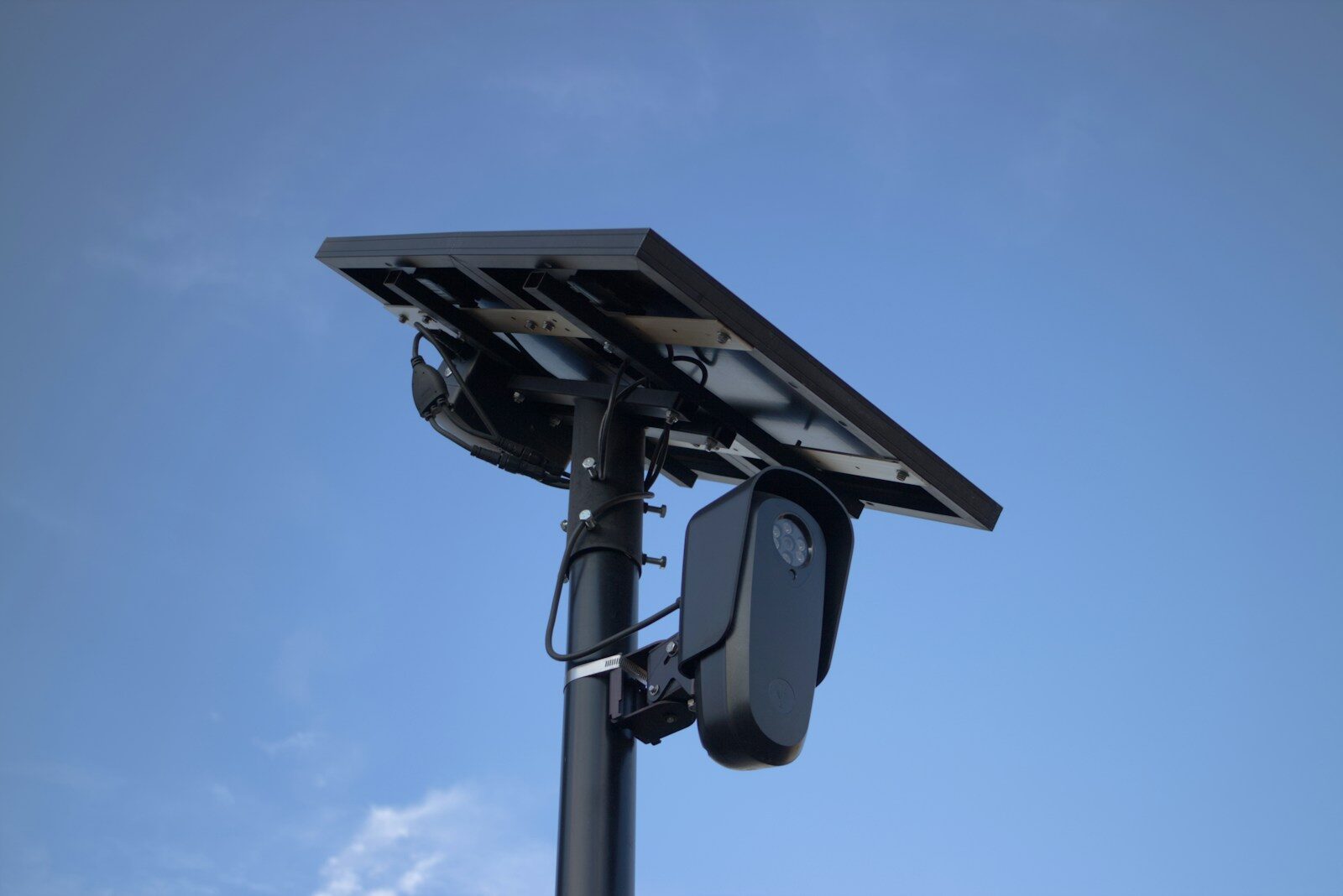
Durango’s police department is done cutting checks to Flock Safety. Chief Brice Current told the city council on September 1 that the department will not renew its Flock contract when it expires in 2027, and will instead move its automated license plate reader network to Axon, the company that already supplies Durango’s body cameras and in-car video. On paper, that’s a vendor swap. In practice, it’s a police department folding its plate-reading cameras into one company’s ecosystem and rewriting the rules on how long that data gets to exist.
For anyone who hasn’t had a run-in with one, ALPR cameras are fixed rigs bolted to poles, signs, or buildings that photograph every plate rolling past, run the read against hotlists for stolen vehicles, warrants, and Amber Alerts, and log the time, date, and location of the sighting whether or not there’s a hit. Durango credits the technology with real casework: in June, detectives used ALPR data to link a string of stolen-vehicle reports between Durango and Farmington after a possible kidnapping call at Sky Ute Casino turned out to be unfounded, a case that ended with a juvenile detained.
So this isn’t a department souring on plate-reading technology. Current was blunt about that in his statement: “This is not about Flock failing. Flock helped demonstrate the value of ALPR and has made significant improvements.” The department says it weighed everything from investigative effectiveness and cost to data governance and auditing, but the detail that mattered most is mundane: Axon already runs Durango’s body-worn cameras and in-car video, and folding ALPR into that same account means one login, one audit trail, and one company’s servers instead of two.
That consolidation is worth pausing on, because it has nothing to do with Flock specifically. Axon has spent the last couple of years building a product called Outpost: a solar-powered, pole-mountable camera that reads plates across multiple lanes and also flags a vehicle’s color, make, and body style even when the plate itself is unreadable, then feeds all of it into a company platform called Fusus that stitches together footage from cameras, drones, and other sensors into one dashboard. It is a more capable box than a standalone plate reader, and it is also a bigger single point of dependency for a department that now runs its fixed cameras, body cams, and cruiser video through the same vendor. Agencies gain convenience; the vendor gains leverage it never had spread across two contracts.
Durango isn’t alone in making this jump. Denver’s city council voted in March to hand Axon a roughly $150,000 contract for 50 cameras after letting its own Flock agreement lapse, half the camera count of its old system but, city officials argued, with tighter control over where the footage ends up. Flock’s bigger problem isn’t Durango or Denver, though. It’s Shively, Kentucky, where police arrested one of their own officers, Asad Zahir, after an audit found he ran more than 2,000 Flock searches between January and May of this year to track an ex-girlfriend who had nothing to do with any case he was working. That’s the scenario every ALPR vendor eventually has to answer for: the technology performs exactly as advertised, and the failure point is a person with a badge and a login, not the camera on the pole.
Which is why the more interesting part of Durango’s announcement isn’t the vendor name, it’s the new rulebook, and it applies no matter who builds the hardware. Every ALPR search now has to tie back to a specific case or investigation; browsing plates out of curiosity or personal interest is explicitly barred, and the department’s language isn’t subtle about it, warning that every search leaves a digital fingerprint. Routine lookups are limited to the previous seven days of data. Anything older requires an officer to document specific, articulable reasonable suspicion and get supervisor sign-off before touching it. Retention is capped at 21 days unless the footage becomes evidence, and Durango is careful to note that retention and access are two separate locks, not one: data existing on a server for three weeks doesn’t mean any officer can freely search all three weeks of it without justification.
It’s a reminder that not every roadside win in Colorado needs a camera network at all. When seven supercars ran a follow-the-leader pack on a Clear Creek County highway this summer, deputies didn’t need a single ALPR hit to catch them; they just parked at the finish line and waited. ALPR earns its keep on the cases that don’t announce themselves quite that loudly.
None of this changes what a Durango driver experiences on the road. The cameras will still photograph a plate every time it passes one, whether the housing says Flock or Axon. What actually changes is the paper trail behind that photograph: who can pull it up, how far back they can go without justifying it in writing, and how long it sits on a server before it’s supposed to disappear. For residents who’ve pushed back on plate-reader programs elsewhere, that audit trail is the entire fight. It’s already gotten personal in places like West Virginia, where a man who ripped a license plate camera off its post found out state law can treat that like sabotaging a fire truck, and it’s shown up in stranger forms too, like Cape Coral’s costly experiment mixing AI-equipped garbage trucks with a separate automaker data deal that ended up costing GM owners real money. Every one of these stories is really the same argument in a different outfit: cities keep buying rolling surveillance infrastructure faster than they write the rules for using it, and the rulebook always seems to show up after the cameras are already bolted to the pole.
Durango’s Chief Current framed the tradeoff about as honestly as a police chief is going to: “The easy choice is to choose public safety or privacy. The harder, and more responsible, choice is to insist on both.” Whether Axon’s version of ALPR actually delivers on that once the new cameras go live in 2027 is a separate question from whether the policy reads well today. For now, Durango has bought itself a new vendor, a tighter retention clock, and a paper trail nobody can pretend doesn’t exist. That’s a meaningfully better starting position than most cities running this technology are in, and it’s worth watching whether the follow-through matches the announcement.
About the Author