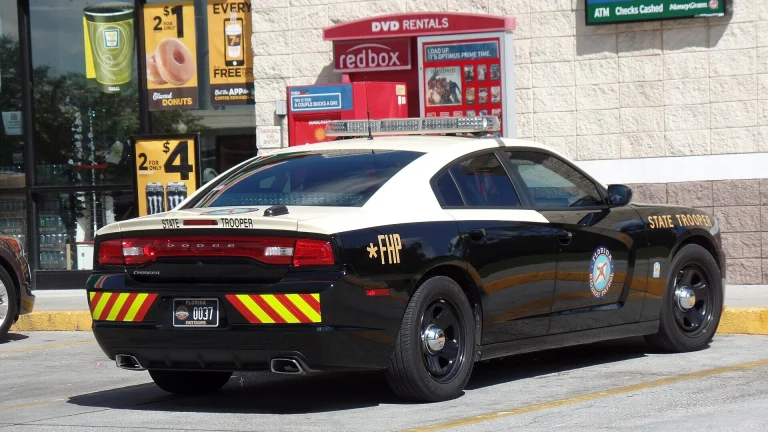
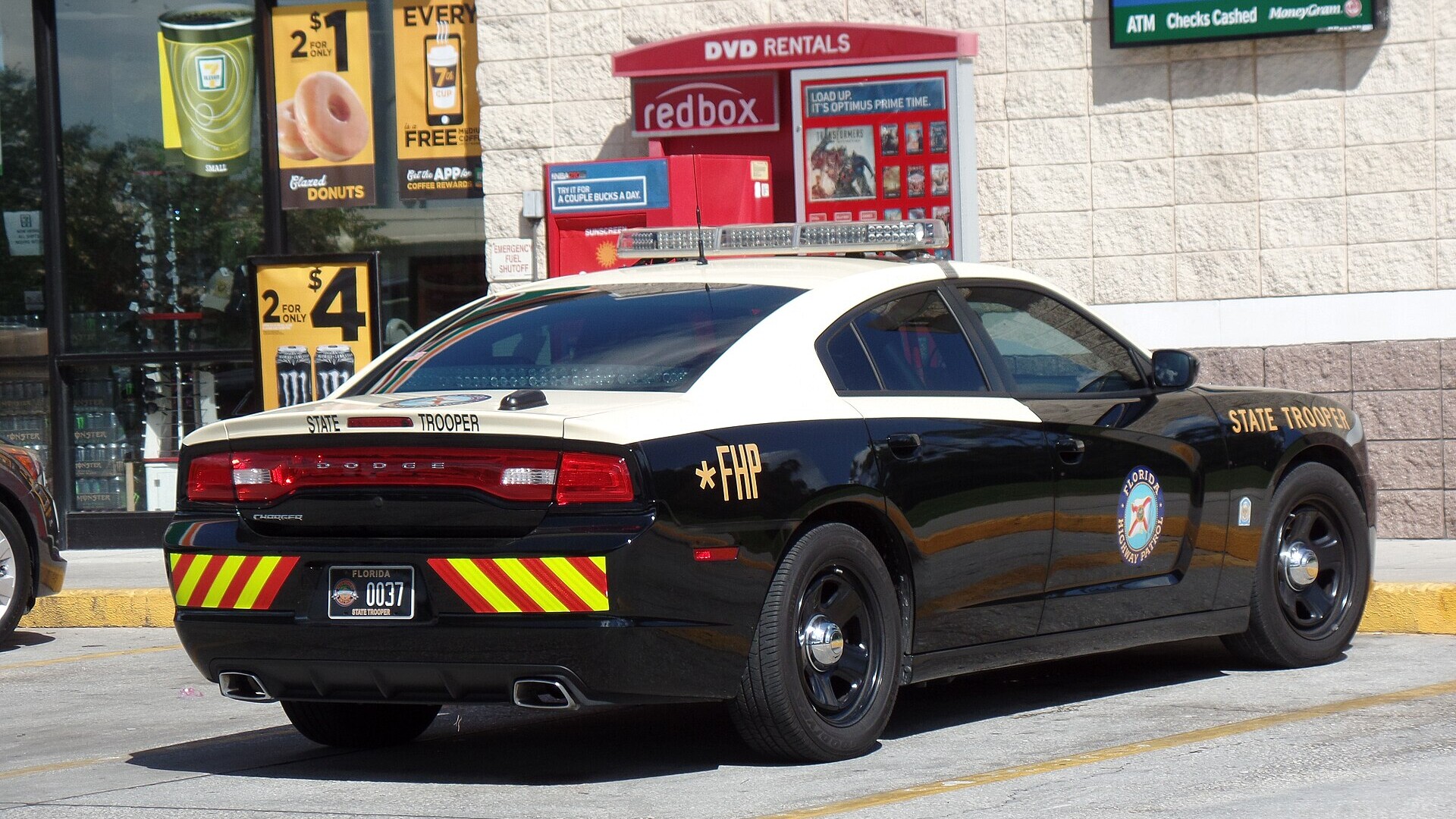
A Florida Highway Patrol Dodge Charger. Representative image; not a vehicle involved in the I-275 pursuit. Photo: Rich Menga via Wikimedia Commons, CC BY 2.0.
A black Chevrolet Corvette left Interstate 275 at the State Road 56 exit near Wesley Chapel at about 130 mph late Saturday, Oct. 10, according to the Florida Highway Patrol, with a trooper behind it and its lights off for much of the run north.
FHP identified the driver as Yaseen Algmaiee, 19, of Zephyrhills. He is charged with aggravated fleeing to elude and leaving the scene of a crash involving property damage. The details come from his FHP arrest affidavit as reported by Tampa stations WTVT, WFTS and WFLA, and from a 28-second dashcam clip the agency released. He is presumed innocent, and nothing FHP has released includes his account.
25 miles of I-275
The first trooper to try was in Pinellas County. WFLA reported that the trooper attempted to catch the northbound Corvette and lost sight of it near mile marker 34. On I-275, that is the Howard Frankland Bridge over Old Tampa Bay.
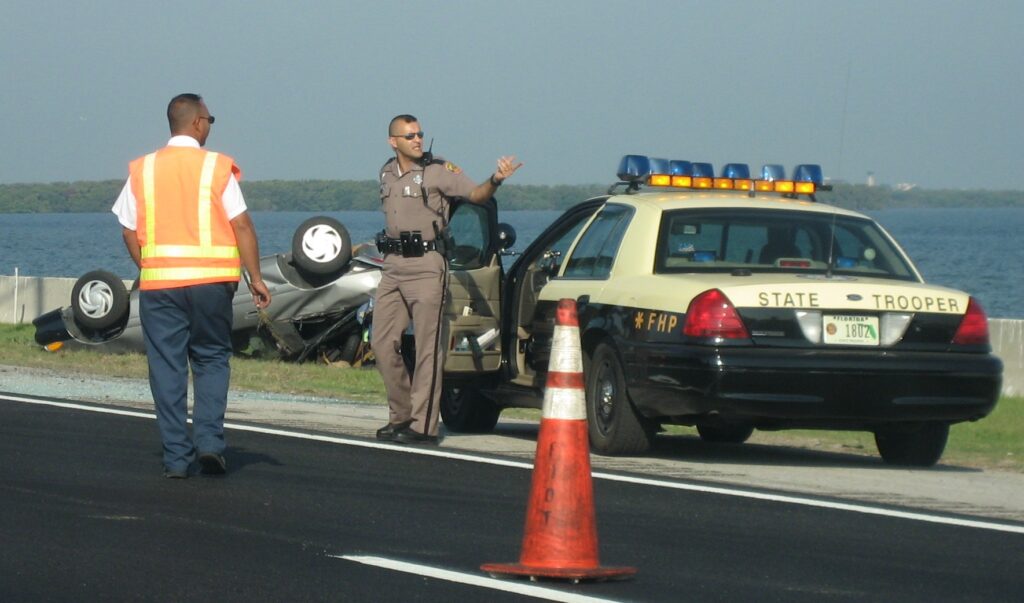
A Hillsborough County trooper heard about the pursuit, left a crash scene he was working, got back on I-275 from downtown Tampa and parked on the shoulder with his lights off, according to WFLA. The Corvette came past without taillights, cutting around traffic and flashing its headlights at drivers to clear the lane.
The trooper turned on his lights and siren near mile marker 47, by the Hillsborough Avenue exit. FHP says the Corvette accelerated. WFTS reported that the affidavit describes the driver passing on both the left and right shoulders with no lights on.
The 130 mph figure comes from mile marker 59, 12 miles later, on the ramp to SR 56. That is the last exit on northbound I-275. The interstate ends at I-75 about three-quarters of a mile farther on.
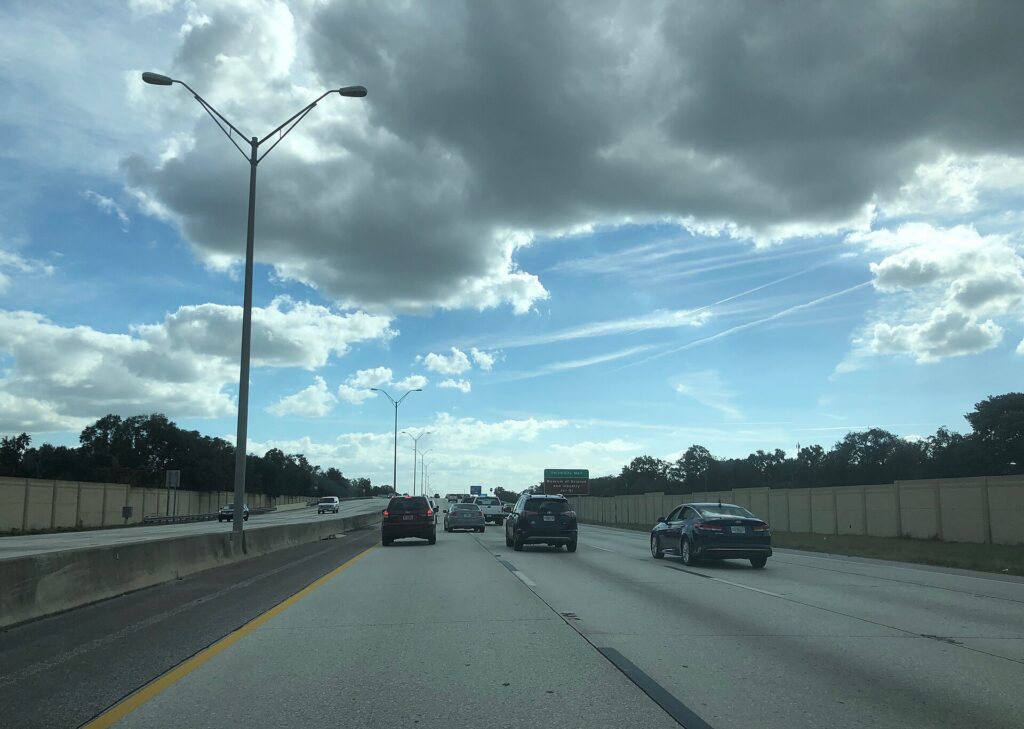
Two cars on SR 56
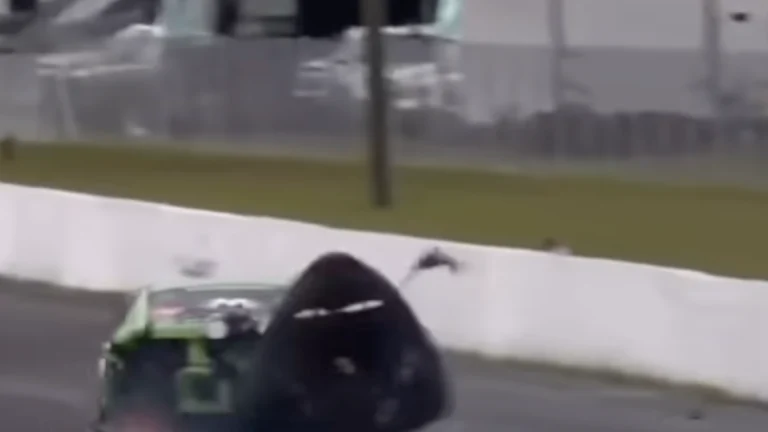
The Corvette went west on SR 56. While changing lanes, FHP says, the driver tried to fit between two vehicles, struck both and kept going. A trooper stopped it with a PIT maneuver shortly after midnight Sunday.
The FHP video ends with the Corvette sitting crosswise against the front of the patrol car at a signalized intersection, a hand raised inside the car. The clip has no speed overlay, so it doesn’t show how fast either car was moving at contact. Our look at a slow-speed PIT in Sandy Springs, Georgia covers how the maneuver is designed to work.
Troopers said Algmaiee was booked into the Hillsborough County jail “without incident.”
What the reports leave out
None of the accounts of the affidavit say whether anyone in the two struck cars was hurt, what those cars were or what the damage cost. They don’t give the Corvette’s model year or say who owns it. FHP also hasn’t said how it measured 130 mph, whether by radar or by pacing with a patrol car, or how fast the Corvette was going when the Pinellas trooper first saw it.
What the charges carry
Under Florida’s fleeing statute, section 316.1935, running from a marked patrol car with its lights and siren on is a second-degree felony when the driver goes at high speed or shows wanton disregard for safety. The aggravated version FHP charged sits in subsection (4): fleeing while unlawfully leaving a crash scene, and causing injury or property damage. It is also a second-degree felony, punishable by up to 15 years in prison and a $10,000 fine. Hitting the two cars changed which subsection applies, not the felony degree.
For a 19-year-old, two other provisions in that statute weigh more than the maximum sentence. A conviction requires the court to revoke his license for one to five years. And judges are barred from withholding adjudication, the Florida option that lets many first-time defendants finish a sentence without a formal conviction on their record. If the fleeing count sticks, it is a felony conviction.
Leaving the scene of a crash with property damage only is a second-degree misdemeanor in Florida, worth up to 60 days in jail and a $500 fine, and the court can order restitution for the damage.
One charge isn’t in any account of the arrest: dangerous excessive speeding, the offense Florida created in 2025 for driving 100 mph or more in a way that endangers people or property, or 50 mph over the limit. We covered it in a 137-mph Lamborghini stop in Orange County. A first conviction carries up to 30 days in jail and a $500 fine. The speed FHP describes clears the 100-mph line by 30.
What comes next
The next document is the State Attorney’s filing decision, which will either formally charge Algmaiee or decline to. When we followed up on the 140-mph Corvette Tempe police stopped with a Grappler net, the driver’s felony booking still hadn’t produced a Superior Court case a year later. None of the Tampa reports list a court date for Algmaiee.
Florida’s statute takes withholding of adjudication off the table for anyone convicted of fleeing, first offense or not. Should a 19-year-old’s first fleeing case carry the same mandatory felony record as a repeat offender’s, or should judges get that discretion back?
Sources: Florida Highway Patrol arrest affidavit and dashcam video as reported by WTVT, WFTS and WFLA; Florida Statutes 316.1935, 316.061 and 316.1922; I-275 exit mileage.
About the Author