Somewhere in the Silverstone stewards’ room on Sunday evening, five officials had to reach for the FIA International Sporting Code to justify a sanction most of the paddock has never seen applied. Not a time penalty. Not a grid drop. A penalty lap — an actual subtraction of one lap from a driver’s final result, handed to Carlos Sainz after a Safety Car procedure went sideways in a way that even his own team didn’t catch in real time.
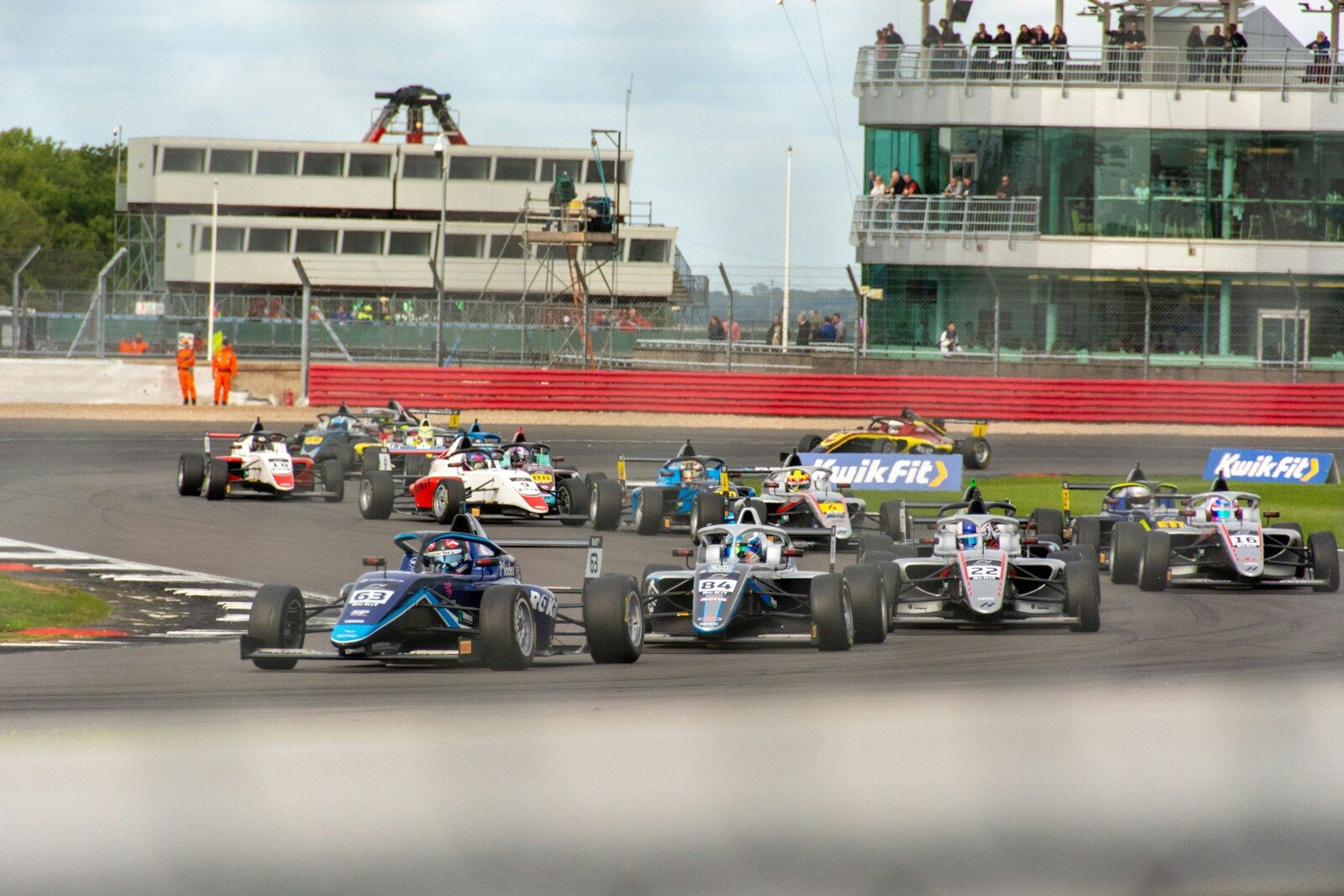
The setup was straightforward enough. Max Verstappen put his Red Bull in the gravel at Stowe late in the race, triggering a Safety Car that never came back in before the checkered flag. On the penultimate lap, Race Control opened the field back up, flashing the “lapped cars may now overtake” message so drivers a lap down could unlap themselves and slot in at the back of the queue. It is routine housekeeping at the end of a Safety Car period, and on a normal weekend it passes without comment.
Not this time. Sainz took the invitation to unlap himself, but the stewards determined afterward that he was not entitled to under Article B5.13.4c of the FIA Formula 1 Sporting Regulations. The reason has nothing to do with anyone cheating and everything to do with how Silverstone’s pit lane and timing loops are laid out relative to each other.
Here’s what made this genuinely strange rather than just a missed radio call. According to the stewards’ own written decision, Sainz’s car registered as lapped when it crossed Safety Car Line 1 on the way into the pit lane. But by the separate reference point that actually governs entitlement to unlap under Article B5.13.4c, that same car, on that same lap, no longer qualified as lapped. Same driver, same trip around the circuit, two different answers depending on which timing point you checked. The stewards conceded that “the exceptional track layout at this event” contributed to the mix-up, which is about as close as a stewards’ panel gets to admitting a circuit’s own blueprint nearly outsmarted the rulebook.
Williams did not dispute the underlying facts. The team representative told the stewards the squad had made two separate errors: failing to recognize that Sainz was not actually a lapped car at the relevant reference point, and failing to notice he had been left off the Race Control list of cars specifically authorized to unlap themselves. Both are exactly the kind of split-second, timing-screen calls that pit wall strategists make dozens of times over a Safety Car period, and Silverstone’s geometry turned one of them into a breach of the rules.
For the penalty itself, the stewards reached for Article 12.4.1.i of the FIA International Sporting Code, the provision that allows a penalty lap as a sanction. It is a mechanically different tool from the penalties fans see nearly every race weekend. A time penalty adds seconds to a driver’s total. A grid penalty pushes a driver back at a future race. A stop-go or drive-through costs time during the race itself. A penalty lap does none of that. It simply erases a lap from the final classification, which only makes sense as a punishment in a scenario exactly like this one, where the infringement itself is entirely about lap count. There is not much else in the current regulations where a lap deduction is the tool that actually fits the crime, which is precisely why the sanction gets dusted off so rarely.
The practical effect on Sunday: Sainz’s provisional result of 12th, running on the same lap as the points-scoring pack, turned into a final classification of 17th, one lap down. Five positions gone over a procedural mix-up covering maybe a few hundred meters of track. There is a genuine irony buried in that number, though. Neither 12th nor 17th earns championship points under a top-ten scoring system, so the penalty cost Sainz precisely zero points in the standings. What it cost him was his official race stats, his provisional result, and presumably a fairly awkward radio call with his race engineer once the stewards’ summons came through.
Williams retains the right to appeal certain stewards’ decisions under Article 15 of the FIA International Sporting Code, but given the team’s own representative admitted the errors directly to the panel, do not expect Grove to spend the money chasing it. The bigger takeaway for anyone trying to follow Safety Car restarts from home is that not every circuit’s pit lane and timing loops line up the same way, and Silverstone’s layout is unusual enough to flip a car’s lapped status twice within a single lap. It is a detail race engineers now have to double-check track by track, and one more reminder that Safety Car procedure remains one of the quietly most complicated parts of a modern Grand Prix weekend.
It capped off a chaotic weekend at Silverstone that had already delivered a record crowd and a wild finish up front. Charles Leclerc took the win after the Safety Car period Sainz got tangled up in, in a British Grand Prix that also saw Verstappen’s front wing fail him for the second race running before his Stowe crash brought out the yellow flags that started this whole mess.
About the Author