Walk the paddock at any Grand Prix these days and you’ll notice something that would’ve seemed strange a decade ago: the crowd doesn’t look like a garage anymore. It looks like a music festival. That shift isn’t a vibe or a marketing slogan — it’s a business decision Formula 1’s parent company has actually put in writing.
Liberty Media, the Colorado-based conglomerate that owns Formula 1, spells it out in its own annual report filed with the Securities and Exchange Commission this past February. Buried in the section describing how the sport develops talent, the filing describes the 2023 launch of F1 Academy as “a series aimed at developing and preparing young female drivers” built to progress toward higher levels of competition. That’s not a press release with a stock photo of a smiling driver. That’s language a publicly traded company uses when a strategy is material enough to disclose to shareholders.
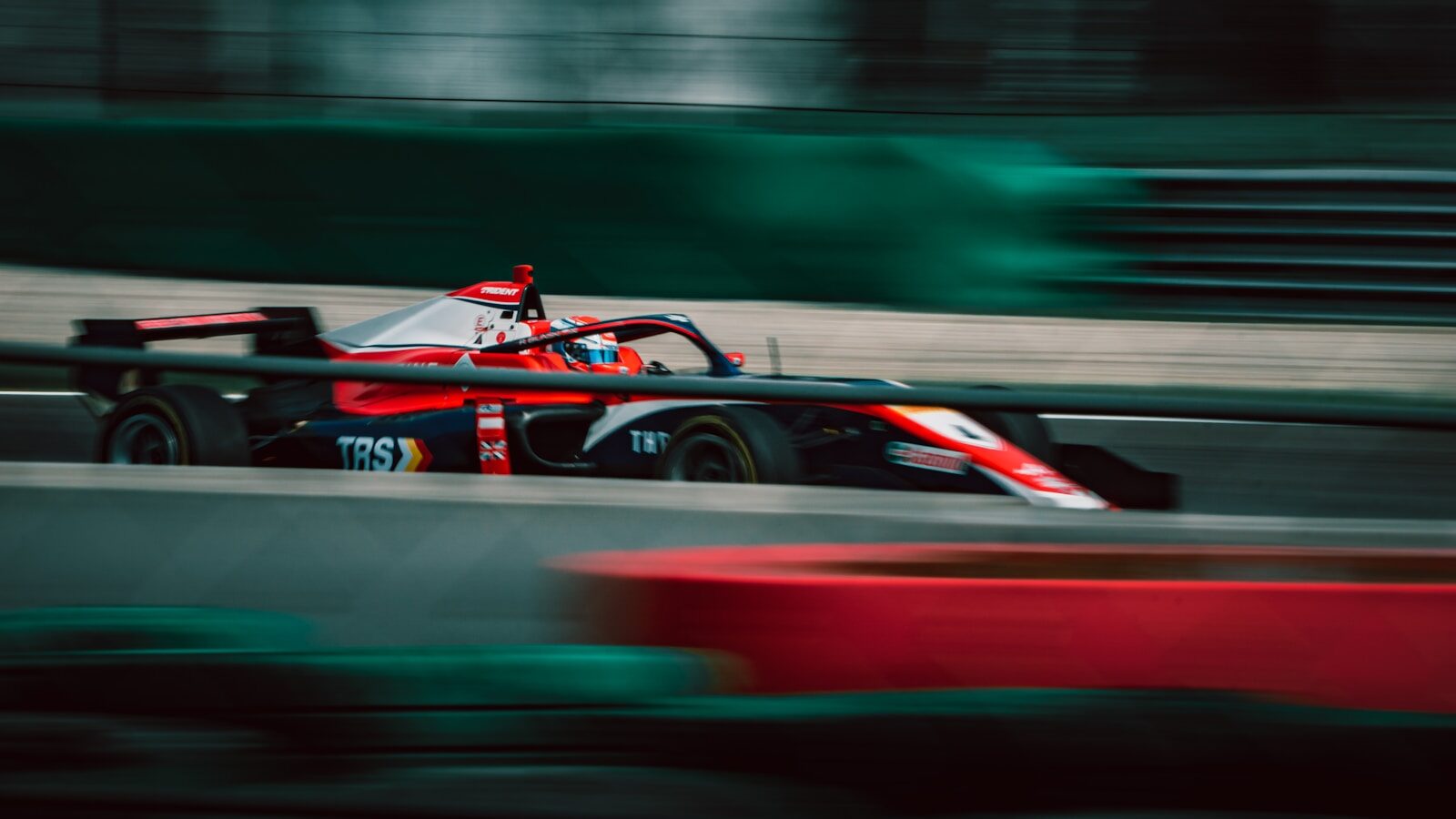
F1 Academy runs as a single-make series, meaning every car on the grid is functionally identical: the same spec chassis from Italian constructor Tatuus, the same tuning from Autotecnica Motori, the same tires from Pirelli. That’s not an accident. Spec racing strips out the budget arms race that decides outcomes in categories like Formula 2, where a well-funded chassis package can flatter a mediocre driver. When every car is identical, the only variable left is the person behind the wheel, which is the entire point of a development series meant to prove who’s actually quick enough to climb toward F3, F2, and eventually Formula 1 itself.
For 2026, the F1 Academy grid will race across six countries spanning three continents, appearing as a support series at six Formula 1 World Championship weekends — the same weekends where Lewis Hamilton and the rest of the main grid perform in front of a global broadcast audience. That support-race slot matters more than it sounds. It puts F1 Academy cars in front of the same paddock, the same broadcast infrastructure, and the same trackside crowd that shows up for the headline event, instead of burying them on some Tuesday test day nobody watches.
The more interesting numbers are happening lower down the ladder, in karting. F1 Academy’s grassroots initiative, Discover Your Drive, reports that girls it supports took 25 percent of all senior-category podiums in karting during 2025, and four of those drivers were signed into Formula 1 teams’ own junior driver programs — the pipeline that provides simulator time, engineering feedback, and funding to prospects a team wants to develop toward a future seat. A quarter of the podiums in a notoriously brutal, gatekept feeder category isn’t a token statistic. It’s the level where scouts actually decide who gets a contract.
2025 also brought F1 Academy’s first-ever Rookie Test, an evaluation session built specifically to let drivers outside the existing grid fight for a seat the following season. Standalone rookie tests are common further up the ladder in F2 and F3, but running one this early signals that F1 Academy is being built as permanent infrastructure rather than a one-off publicity exercise — a pattern that’s sunk earlier attempts at all-female racing categories within a season or two. It also lands against a backdrop where women in motorsport still draw outsized scrutiny for on-track incidents, as NASCAR’s Natalie Decker found out earlier this year, which is exactly why a funded, permanent pipeline matters more than a single headline.
The series is run by Susie Wolff, F1 Academy’s Managing Director, who spent years around Formula 1 paddocks as a development and test driver before moving into management. Her presence at the top matters less as a symbolic gesture and more as an operational one: someone with an actual racing and engineering background is making the calls on car allocation, calendar strategy, and driver promotion, rather than the series running purely as a marketing division bolted onto the main championship.
Here’s the part that tells you this isn’t charity: look at who’s paying for it. F1 Academy’s partner list includes the usual motorsport names — Pirelli, Aramco, TAG Heuer, Standard Chartered — but also Sephora and Wella, a beauty retailer and a haircare brand with no prior reason to sponsor a racing series. Sponsorship checks like that get signed by marketing departments running their own audience research before committing budget, and beauty brands don’t buy trackside branding unless they’re confident the audience already buys their products. That’s a more reliable signal of where F1’s fanbase is trending than any vague survey could ever be.
Liberty’s 10-K ties F1 Academy to a wider set of commitments, including a Formula 1 Engineering Scholarship Program launched in 2021 that has now put 50 students through undergraduate or graduate engineering degrees at universities in the U.K. and Italy. The message in the corporate filing is consistent: Formula 1 treats the shortage of women on the grid and in its engineering pipeline as an actual business gap, not an optics problem, and it’s funding multiple programs to close it instead of running one flashy campaign and calling it solved.
None of that fully explains why the sport itself appeals to a wider audience beyond “cars go fast,” and that part has less to do with demographics than with what modern F1 actually rewards. Races get decided as much by tire degradation curves, pit wall strategy calls, and regulatory minutiae like DRS zones and parc fermé rules as by outright speed, which makes it closer to a chess match at 200 mph than a drag race. Layer in a calendar that treats race weekends as full lifestyle events — fashion, hospitality, and destination cities like Monaco and Miami built into the show as much as the race itself — and you get a sport that rewards fans who care about strategy and storylines just as much as fans who care about horsepower figures.
For anyone actually trying to follow F1 Academy instead of just reading about it, the practical note is that races air as part of Formula 1’s broadcast weekends rather than requiring a separate subscription, and the 2026 calendar is posted on the series’ own site. For team principals and sponsors watching the karting numbers climb, the practical note is different: the next driver good enough to land a spot in an F1 team’s junior program might already be out there racing karts right now — and increasingly, the Discover Your Drive numbers say that driver could be a girl who came up through a pipeline that didn’t really exist before 2023.
About the Author