Every tire you’ve ever bolted onto a car after the factory set wore out has been quietly costing you money, and until this week, nobody selling it to you was required to say so.
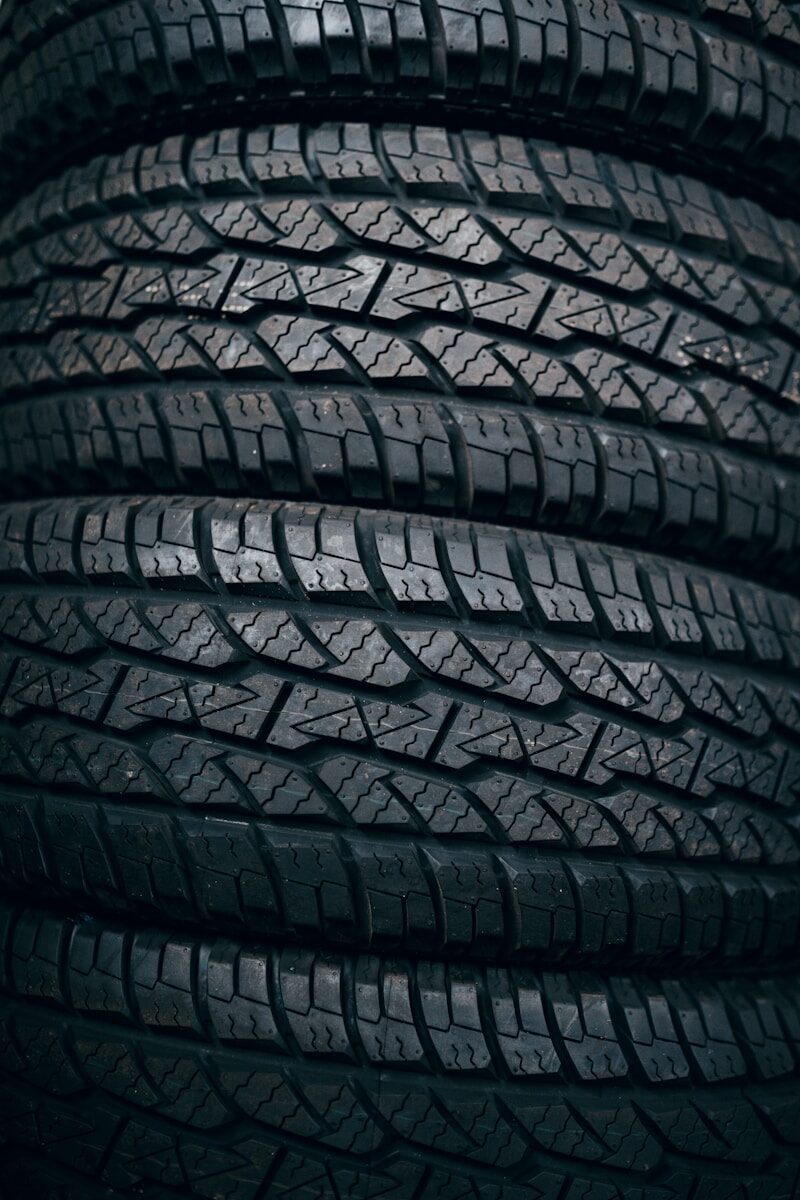
On Monday, the California Energy Commission voted unanimously to approve the Replacement Tire Efficiency Program, the first regulation of its kind in the country. The rule doesn’t touch the tires your car rolls off the dealer lot wearing. It targets what happens next — the aftermarket tires nearly every driver eventually buys once that original rubber wears out.
The target is rolling resistance, which is exactly what it sounds like: the force it takes to keep a tire rotating under the weight of a moving car. Every tire flexes as it rolls, and that flexing generates heat in the sidewall and tread compound. That heat is energy your engine or battery had to produce, and it went nowhere useful — it just left the tire as waste. Engineers measure the effect in newtons of force per kilonewton of load, and the lower that number, the less energy a tire wastes just existing under your car.
The commission didn’t invent this authority overnight. It’s been sitting on the books since 2003, when Assembly Bill 844 directed the commission to write a program ensuring replacement tires are, on average, at least as efficient as the tires that come on new cars. That statute is now California Public Resources Code sections 25770 through 25773. It took the state 23 years to turn that mandate into an actual enforceable regulation — a reminder that writing a law and writing a workable rule around it are two very different jobs, especially when an entire manufacturing industry gets a seat at the table before anything is finalized.
The rollout happens in two phases. Starting in 2029, replacement tires sold in California will need a maximum rolling resistance of 9.1 newtons per kilonewton. That ceiling drops to 7.2 in 2033, when the program reaches full effect. Tires that already meet both thresholds are on shelves today, built by multiple manufacturers — this isn’t a mandate for tire tech that doesn’t exist yet, it’s a mandate that the laggards catch up to what the leaders are already selling.
The commission’s own math puts the incremental cost at about $1.50 per tire during Phase 1 and $6.50 per tire once Phase 2 kicks in. Against that, a typical gas-powered car with more efficient replacement tires saves about $179 in fuel over the roughly four-year life of a set — about seven times the added cost — based on commission calculations using $4.60-per-gallon gas. With pump prices running higher than that through much of 2026, the commission says real-world savings could land 25% above the estimate. Scaled statewide, the agency projects the rule will save California drivers close to $1 billion a year in fuel and electricity costs by 2035, while cutting roughly 2 million metric tons of CO2 annually — comparable to pulling about 400,000 gasoline-powered cars off the road for a year.
Enthusiasts checking whether this touches their build sheet can relax. After a five-year stakeholder process, the commission carved out exemptions for competition tires, large off-road tires, and all-weather winter performance tires, and created separate product categories for long-life tires, ultra-high-performance tires, and low-load-index tires. Track days, off-roading, and winter beaters are untouched. This is a daily-driver commuter-tire rule, not a blanket mandate on every rubber compound sold in the state.
That exemption list didn’t write itself. Commission staff say it reflects direct input from tire manufacturers and trade groups gathered over five years of rulemaking, which tells you the industry pushback over cost and technical feasibility was real enough to reshape the final regulation before it ever reached a vote. Michelin came out publicly supportive, with the company’s Francesca Mosteller telling the commission the proposed thresholds are “technically feasible within the defined timeframes.” That’s not a surprising position for a manufacturer that already sells low-rolling-resistance tires — Michelin is closer to compliant today than competitors still reformulating tread compounds and casing designs to hit a 2029 deadline. Not every manufacturer is working from the same financial footing, either; Goodyear reported a $204 million quarterly loss this past summer, and absorbing new compliance and testing costs lands differently on a balance sheet like that than it does on a market leader’s.
Enforcement isn’t limited to trusting manufacturer paperwork. Commission staff plan to run their own lab testing to verify submitted rolling-resistance data and to conduct checks at the retail level, meaning tire shops, not just manufacturers, become part of the compliance chain.
California doing this alone matters more than it sounds. Tire makers and automakers have a long history of building to whatever standard California sets rather than manufacturing separate versions of the same product for one state, because two production lines cost more than one. It’s the same dynamic that turned California’s tailpipe emissions rules into a de facto national standard for decades. A tire maker that reformulates a tread compound to hit 7.2 N/kN for California customers has little incentive to keep selling a worse-performing version everywhere else.
This also isn’t the only regulatory swing California has taken at the auto industry this year. The state has been active on multiple fronts, from a rewritten EPA rule for heavy-duty diesel pickups, to handing Kodiak’s driverless semis a learner’s permit for California roads, even as the state’s own decade-long truck-automation freeze now faces pushback from the Teamsters. Tires are just the latest system in the car to get a compliance deadline.
For owners, nothing changes at the counter tomorrow. Phase 1 doesn’t bite until 2029, so today’s tire shopping is unaffected, and every currently sold compliant tire remains a legal option regardless of the mandate’s timeline. Drivers racking up serious highway miles have a real financial reason to seek out lower-rolling-resistance replacement tires now, mandate or not, since the fuel math already favors it. Track cars, off-road rigs, and winter setups keep their tire options exactly as they are.
A tire is the only part of a car that actually touches the road, and for 23 years, California law said that part had to pull its weight on efficiency the same way the engine and drivetrain do. It just took until 2026 for the state to finish the paperwork.
About the Author