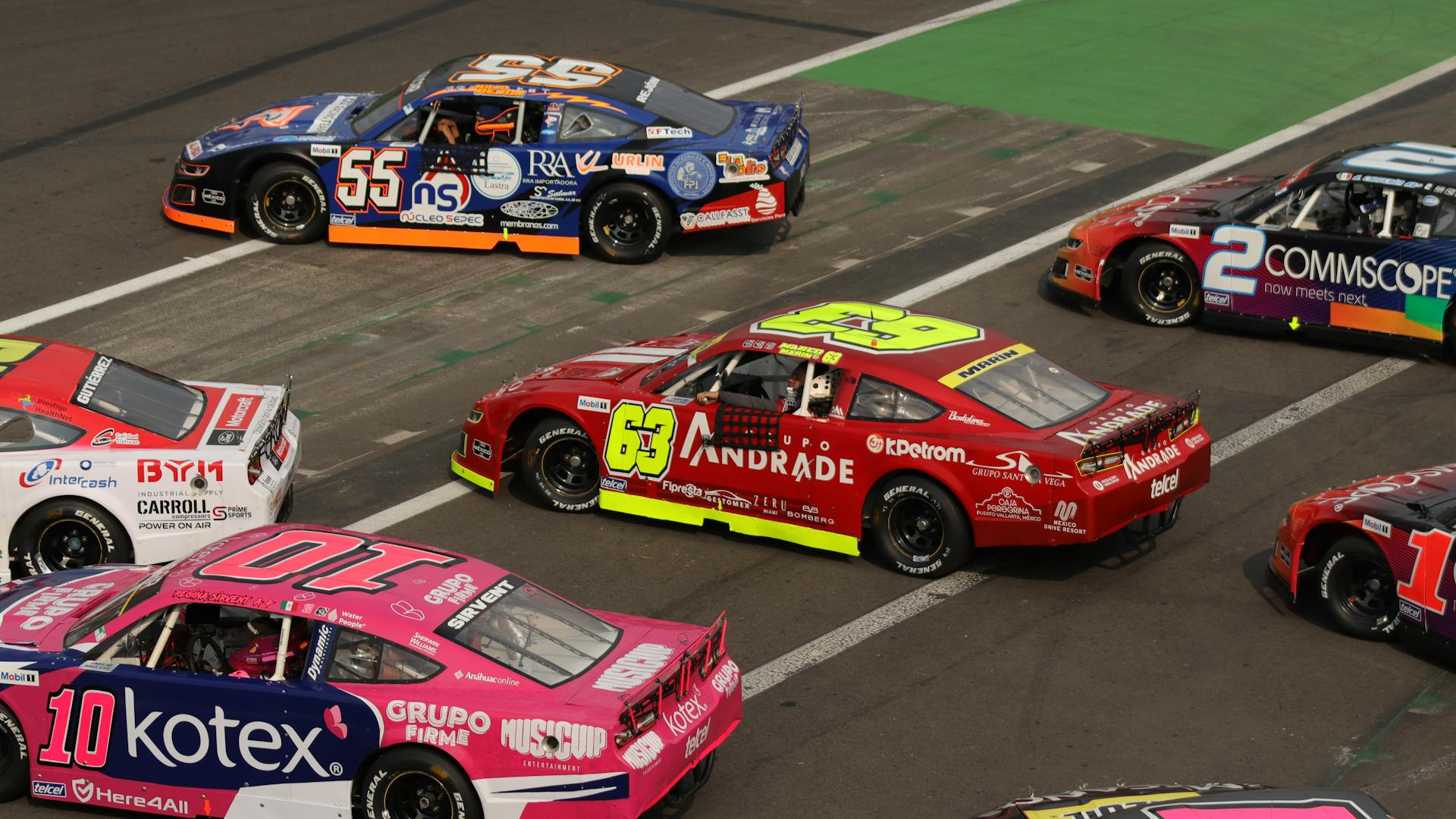
Photo by Diego Martinez on Pexels
Championship trophies and win totals tell part of the story. But the drivers who defined NASCAR’s history did something more than accumulate statistics — they shaped the culture of the sport, influenced how it was perceived, and left marks on stock car racing that are impossible to measure with a points table alone.
We’ve already looked at the 10 greatest NASCAR drivers of all time with a straightforward ranking. This piece goes a layer deeper, looking at what actually made those men extraordinary — the qualities and circumstances that separated them from everyone else competing in the same era.
The Weight of Consistency
Richard Petty’s seven Cup championships and 200 career victories are numbers so large that they can feel almost abstract. But what sustained Petty across multiple decades wasn’t just raw talent — it was consistency under pressure, mechanical sympathy, and an uncanny ability to manage a race rather than merely drive it. His teams evolved around him, and he evolved with them. That adaptability is rarer than pure speed.
Dale Earnhardt possessed that same adaptability, but expressed it in a completely different style. “The Intimidator” was famous for aggressive racecraft, an ability to find passing opportunities that other drivers couldn’t see, and a psychological edge that affected competitors’ decision-making. Seven championships over multiple decades with different teams and in different eras of the car demonstrates just how complete a driver he was.
The Art of Knowing When to Push
Jeff Gordon’s arrival at the Cup level in the early 1990s genuinely changed how people thought about NASCAR’s future. He was younger, more marketable, and drove with a technical precision that reflected his open-wheel background. His four championships came at different points in his career and under different competitive circumstances, which is the real measure of a great driver — not winning when you have the best car, but winning even when you don’t.
Tony Stewart is another example of this quality. Few drivers have matched his ability to mentally outlast a field over the course of a long season. Stewart could be breathtakingly fast when conditions called for it, but his real skill was in understanding race dynamics — when to save tires, when to pit strategically, when to force a situation and when to let it develop. Three championships across two different teams tell that story clearly.
Character Beyond the Car
The drivers who achieve legendary status in NASCAR typically do something beyond performing well on track — they become figures that fans connect with on a personal level. Dale Earnhardt Jr.’s popularity exceeded even that of his father in some respects, driven not by pure statistics but by an authenticity and relatability that resonated across a broad audience. His role as an ambassador for the sport after his driving career ended has only deepened that connection.
Jimmie Johnson’s seven championships (matching Petty and Earnhardt Sr.) made him the most decorated driver in the modern era, yet he remains somewhat underappreciated by the casual fan base. His consistency was almost too perfect — the kind of excellence that’s easier to respect in hindsight than to celebrate in real time. History will continue to reassess his legacy as the years pass.
What Today’s Stars Are Building
The current generation of NASCAR talent is writing new chapters every season. Kyle Larson has shown the kind of versatile, electrifying ability that puts him in discussions about the sport’s all-time greats at a relatively young stage of his career. His dirt-track background gives him a car control dimension that produces overtaking moves and recoveries that other Cup-level drivers simply can’t replicate.
NASCAR’s history is also one of the things that makes American car culture so rich — a culture that extends well beyond the oval. The same passion that drives fans to follow these races is the same passion that produces remarkable machines like the 550-HP Ford F-150 Ranger restomod or the jaw-dropping collectors’ pieces that come up for grabs at events like the 2006 Ford GT giveaway we’ve been covering.
The Common Thread
Look across the careers of NASCAR’s most celebrated drivers and one thing stands out above everything else: they raced with intention. Every lap, every strategy call, every confrontation on track was purposeful. Greatness in stock car racing isn’t accidental. It’s built through years of refinement, self-awareness, and a willingness to keep learning even after the trophies start arriving.
The sport continues to produce drivers capable of joining that conversation. And as long as stock cars keep going around tracks at speed, fans will keep arguing about who belongs at the top of the list — which is exactly as it should be.
About the Author