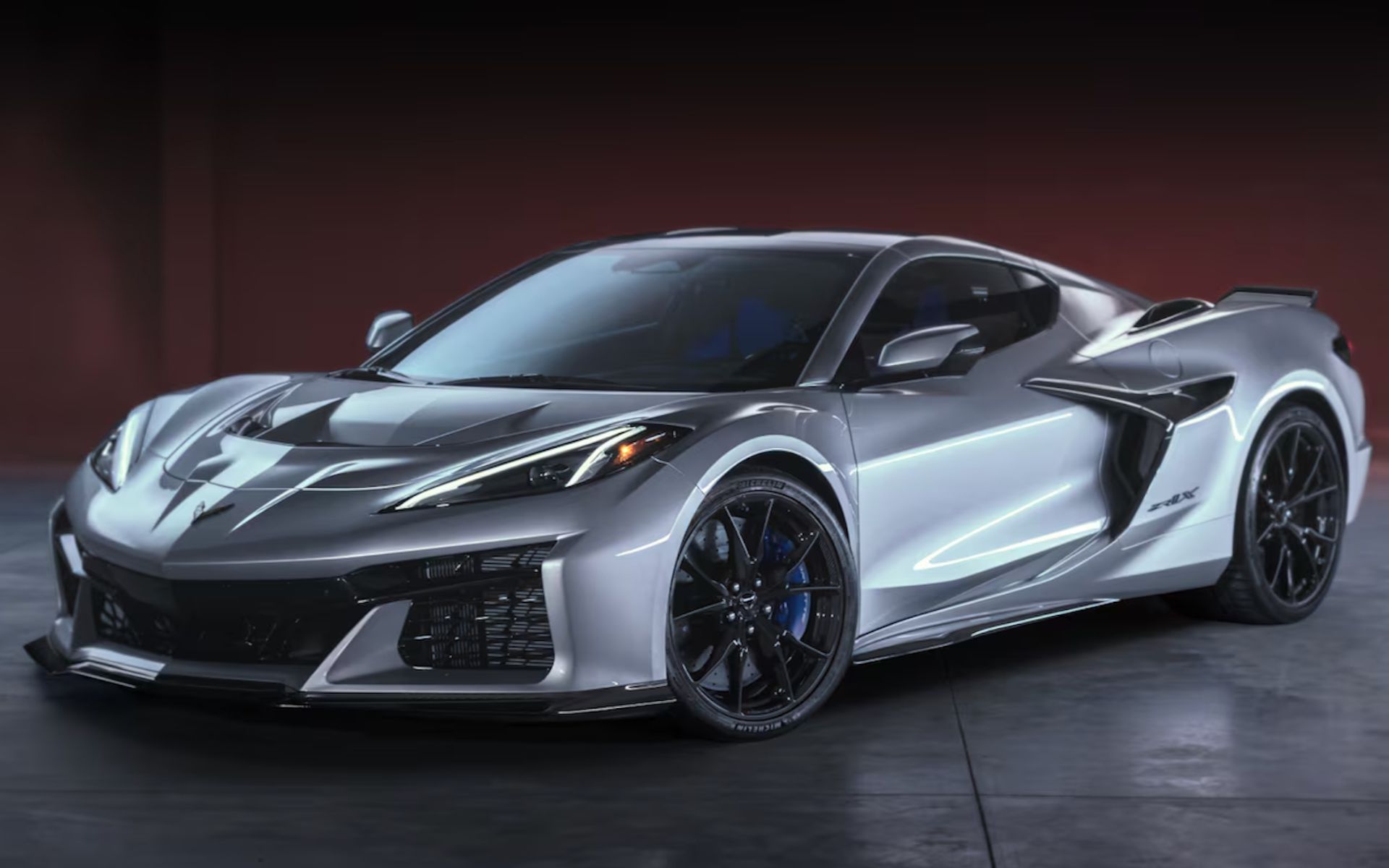
The 2026 Chevrolet Corvette ZR1X has run quarter-mile numbers so quick that it falls outside the safety limits the NHRA sets for street-legal production cars at sanctioned drag events. During testing at US 131 Motorsports Park in Michigan, the car posted an 8.675-second pass at 159.57 mph — well past the threshold the NHRA allows for cars without roll cages or competition-licensed drivers.
Why The NHRA’s Rulebook Wasn’t Built For This
NHRA rules for street-legal production cars at sanctioned events are straightforward: without a roll cage or a competition license, a driver can’t run quicker than 9.0 seconds in the quarter-mile or exceed 150 mph through the traps. Those limits exist because crash survivability drops sharply once unprotected drivers and standard street cars start reaching those speeds. The rulebook simply wasn’t written with a showroom car like the ZR1X in mind.
Even in less-than-ideal conditions, the ZR1X still breaks those limits. Testing on an unprepared track using standard road tires produced a 9.2-second pass at 155 mph — slower than Chevrolet’s official testing number, but still five miles per hour over the NHRA’s speed cap. In other words, there’s no easy way to keep this car inside the current street-car safety envelope, even without ideal drag-strip conditions.
The Hybrid Hardware Behind The Numbers
Chevrolet’s internal testing recorded a 1.68-second 0-60 mph launch with peak acceleration hitting 1.75g, numbers that put the ZR1X among the most aggressive production vehicles ever built, rivaling dedicated race programs despite coming with a factory warranty. Power comes from a twin-turbocharged 5.5-liter LT7 V8 producing 1,064 horsepower on its own, paired with an upgraded electric motor at the front axle contributing another 186 horsepower for a combined 1,250 horsepower system output. That hybrid layout also gives the ZR1X all-wheel drive, a major factor in how efficiently it launches off the line despite weighing 4,139 pounds with all that hybrid hardware on board.
Chevrolet’s engineering choices make clear this level of performance wasn’t an accident. Engineers had to raise the operating limit of the front electric motor from its original 150 mph cutoff to 160 mph specifically so the all-wheel-drive system would stay engaged through the entire length of a quarter-mile pass, keeping the front axle motor delivering power and traction all the way to the finish line rather than dropping out early.
A Genuine Street Car In Race-Car Territory
What makes the ZR1X’s numbers complicated for the NHRA is that it isn’t a race car adapted for street use — it’s a factory-built production vehicle available directly from a Chevrolet dealership starting at $212,195. It runs on standard pump gasoline, keeps its normal interior features and cargo space, and remains fully street-legal in all 50 states. That combination of everyday usability and mid-eight-second acceleration puts it in a category the NHRA’s existing street-legal rules simply weren’t designed to categorize.
Once a car’s quarter-mile time drops below nine seconds or its trap speed climbs past 150 mph, NHRA safety requirements escalate quickly, typically demanding roll cages, specialized harnesses, and a competition license — equipment built for dedicated race cars, not daily-driven Corvettes. That leaves ZR1X owners in an unusual spot at sanctioned events: running the car anywhere near its actual potential would require safety gear well beyond what a factory Corvette normally carries.
Organizations like the NHRA periodically revisit their rulebooks as production vehicles push into new performance territory, and the ZR1X is a clear example of how quickly factory engineering can outrun the assumptions those rules were built around. For now, the fastest Corvette Chevrolet has ever built is legal to buy, legal to drive on public roads, and quick enough that organized drag racing currently treats its performance as race-car territory — a production car running quicker than the street-car rulebook was ever designed to handle.
About the Author