Image via Scout Motors
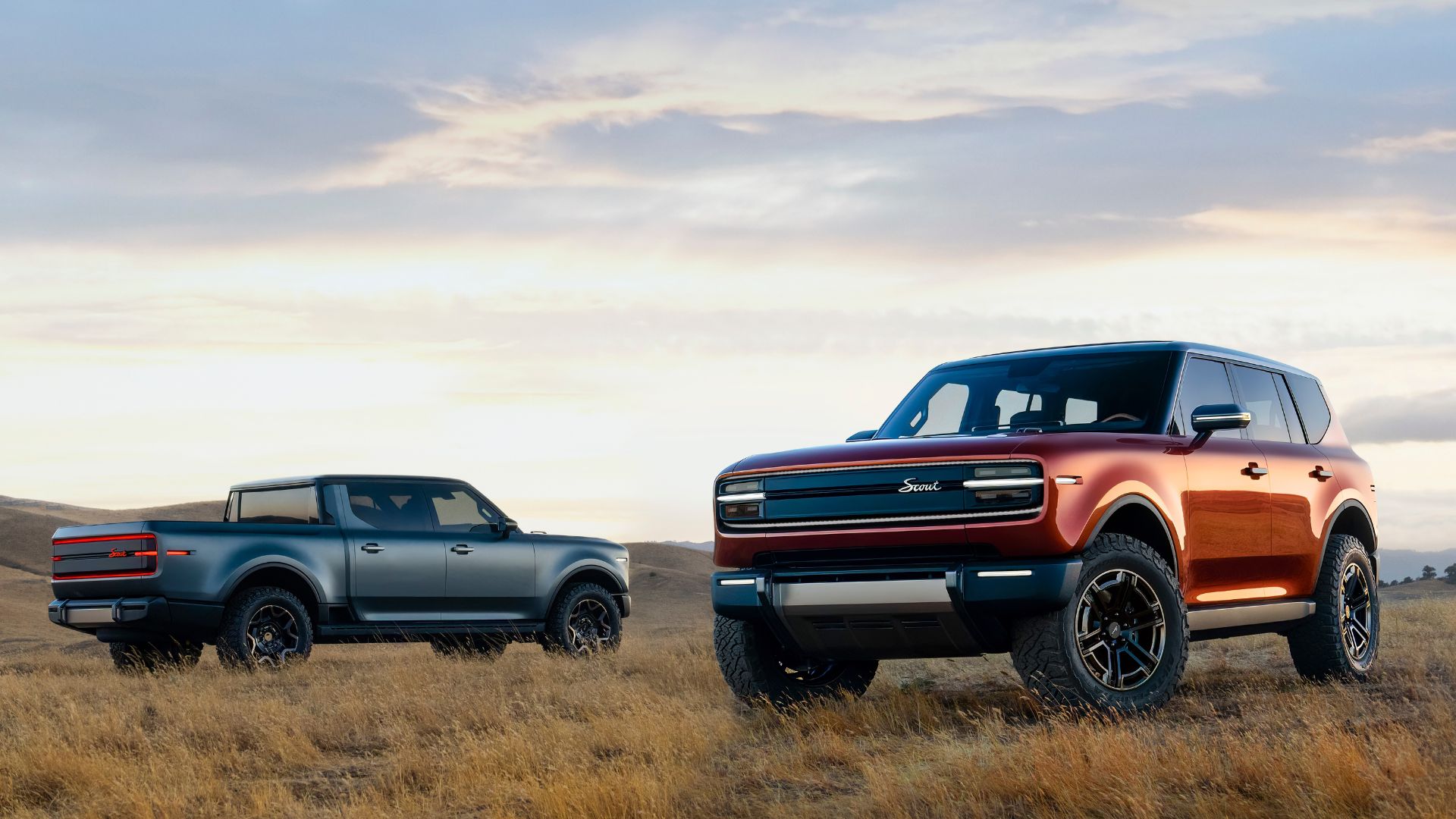
Scout Motors has crossed 160,000 reservations for its upcoming trucks and SUVs, and the reservation data reveals something Volkswagen probably didn’t expect when it revived the brand: the overwhelming majority of buyers want the extended-range hybrid, not the fully electric version.
A Milestone With A Delayed Timeline
Scout CEO Scott Keogh confirmed the reservation milestone during an Automotive Press Association event in Detroit, where he also said prototype vehicles will begin development later this year. Customer deliveries are now targeted for 2028, pushed back roughly a year from an earlier 2027 goal after technical challenges required additional engineering work.
The more interesting number sits inside that reservation total: according to company figures, roughly 87 percent of reservations are for extended-range electric vehicles, commonly called EREVs. These combine electric propulsion with a small gasoline engine that recharges the battery on the go, extending range well past what the battery alone could manage while letting the vehicle run primarily on electric power with a gas-generator backup when the battery runs low.
A Brand That Started All-Electric And Changed Course
Scout originally launched as a fully electric brand when Volkswagen revived the historic nameplate in 2022, with plans focused exclusively on battery-electric trucks and SUVs aimed at the American off-road and utility market. The company later expanded the lineup to include EREV powertrains as EV demand growth slowed across the U.S. and buyer preferences shifted — and based on this reservation data, that pivot looks like it read the market correctly. The appeal is straightforward: EREV buyers get electric-driving convenience for daily use without depending entirely on charging infrastructure for longer trips, a formula that mirrors hybrid systems many buyers already understand and trust.
Why Volkswagen Needs Scout To Work
Volkswagen ranked just 11th in U.S. vehicle sales last year according to research firm Motor Intelligence, trailing competitors including Tesla in a market where trucks and SUVs remain the backbone of American sales. Those categories are driven by buyers who need real hauling, towing, and off-road capability, and Volkswagen has historically struggled to compete there. Scout represents the company’s attempt to compete directly in the segments where American buyers actually spend their money, rather than trying to win them over with VW-badged products that were never built around that use case.
Scout is currently building a new manufacturing plant in South Carolina that will serve as the production hub for both electric and EREV models once the lineup moves from prototypes into full manufacturing. Those prototypes begin testing later this year, giving engineers time to refine performance, durability, and manufacturing systems before deliveries start in 2028.
A Sales Model Already Facing A Lawsuit
Scout’s launch strategy is also drawing attention for how the vehicles will actually be sold. Volkswagen plans to distribute Scout models through a direct-to-consumer model rather than the traditional franchised dealership network that handles most U.S. vehicle sales, letting customers order directly from the company instead of through a dealer.
That decision has already triggered legal pushback: two Volkswagen dealerships filed a lawsuit against the automaker this week, seeking class-action status and arguing the direct-sales approach breaches contractual obligations tied to VW’s existing dealer network. It’s a dispute that echoes a broader tension in the industry, as newer EV brands increasingly bypass dealer networks entirely while automakers with existing franchise agreements have to navigate that conflict directly.
What The Numbers Actually Mean Right Now
The reservation total reflects genuine interest rather than finalized purchases, and Scout still has years of development ahead before any of these trucks reach a driveway. But if the reservation split holds once real sales begin, extended-range hybrid trucks and SUVs could end up playing a much bigger role in America’s electrification shift than a straight jump to full battery-electric vehicles — a signal worth watching for any automaker chasing the same truck and SUV buyers Scout is targeting.
About the Author