Image via Tesla
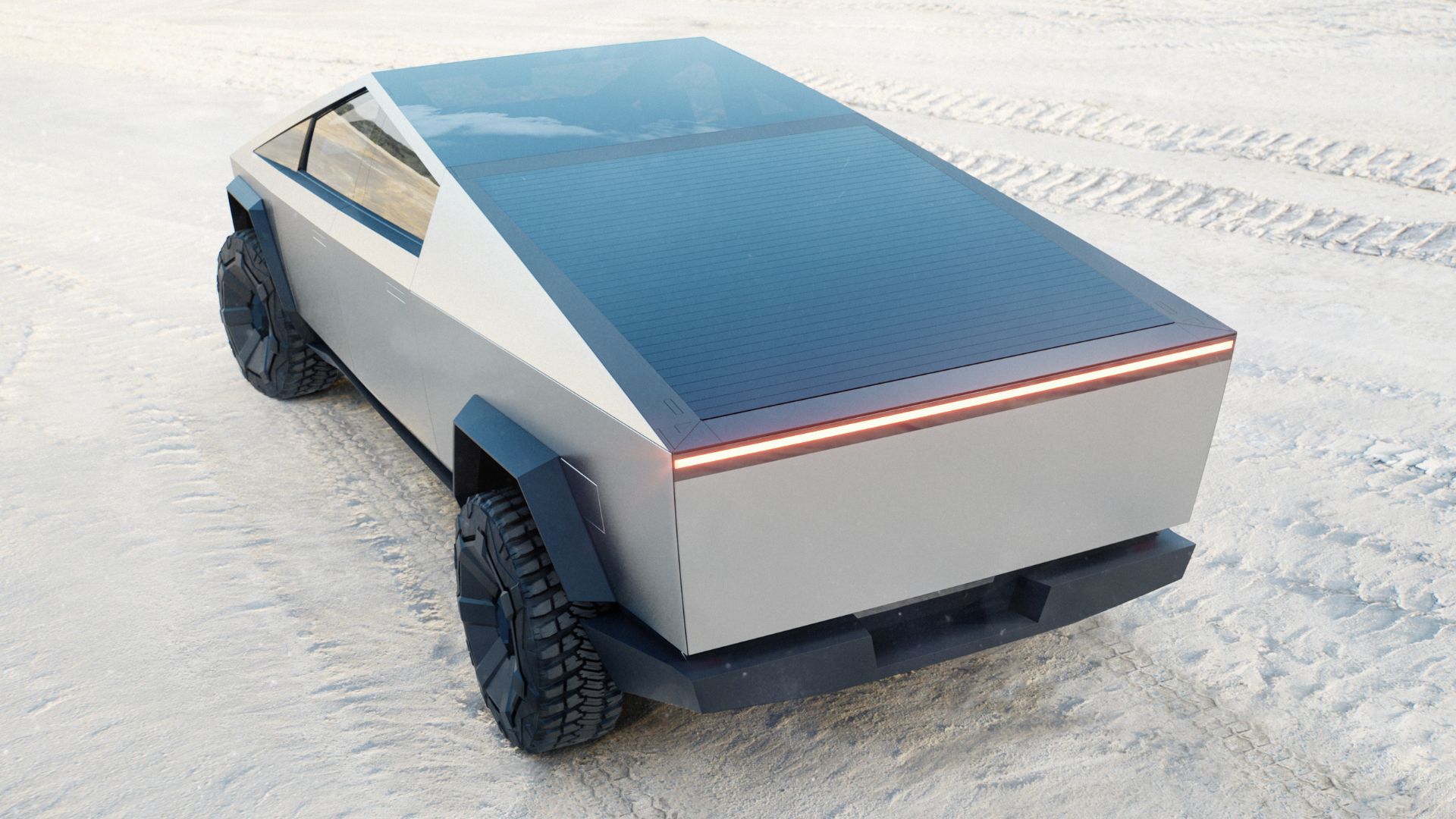
The Tesla Cybertruck’s angular stainless steel body and unusually low center of gravity have made it a subject of interest for rollover testing, with multiple documented attempts to flip the vehicle producing results that surprised observers accustomed to how conventional trucks behave under the same conditions.
The Physics
Rollover resistance in a vehicle is primarily determined by the relationship between its center of gravity height and its track width. The Cybertruck’s all-stainless construction concentrates significant weight in the vehicle’s lower body structure, and its wide stance further improves its rollover resistance ratio compared to conventional body-on-frame trucks with higher gravity centers. The result is a truck that’s significantly harder to tip onto its side than appearance suggests.
The Tests
Videos of deliberate rollover attempts showed the Cybertruck resisting conventional tipping maneuvers that would have flipped a standard pickup. Whether this is a meaningful real-world safety advantage or primarily a curiosity depends on how often rollover incidents occur under conditions that the Cybertruck’s geometry specifically addresses — which in practice is a relatively narrow set of scenarios.
Context for the Numbers
Rollover resistance is one metric among many in vehicle safety evaluation, and the Cybertruck has faced scrutiny on other fronts since its launch. Its braking distances, panel fit issues, and recall history have generated more practical concern among owners than its rollover characteristics. Still, a truck that’s hard to flip is a legitimate engineering achievement worth documenting.
About the Author