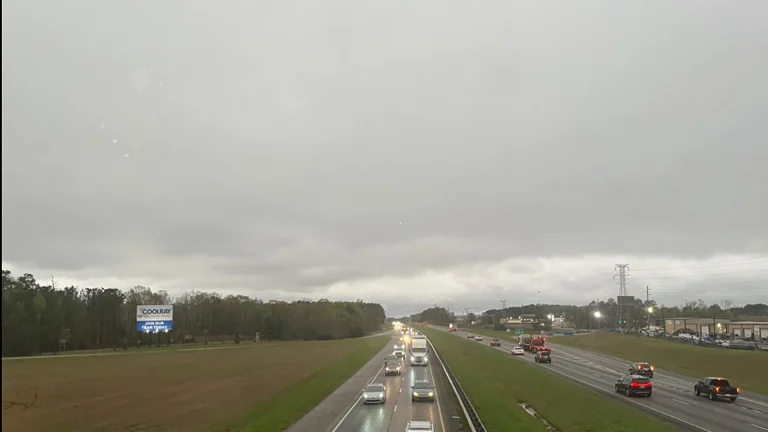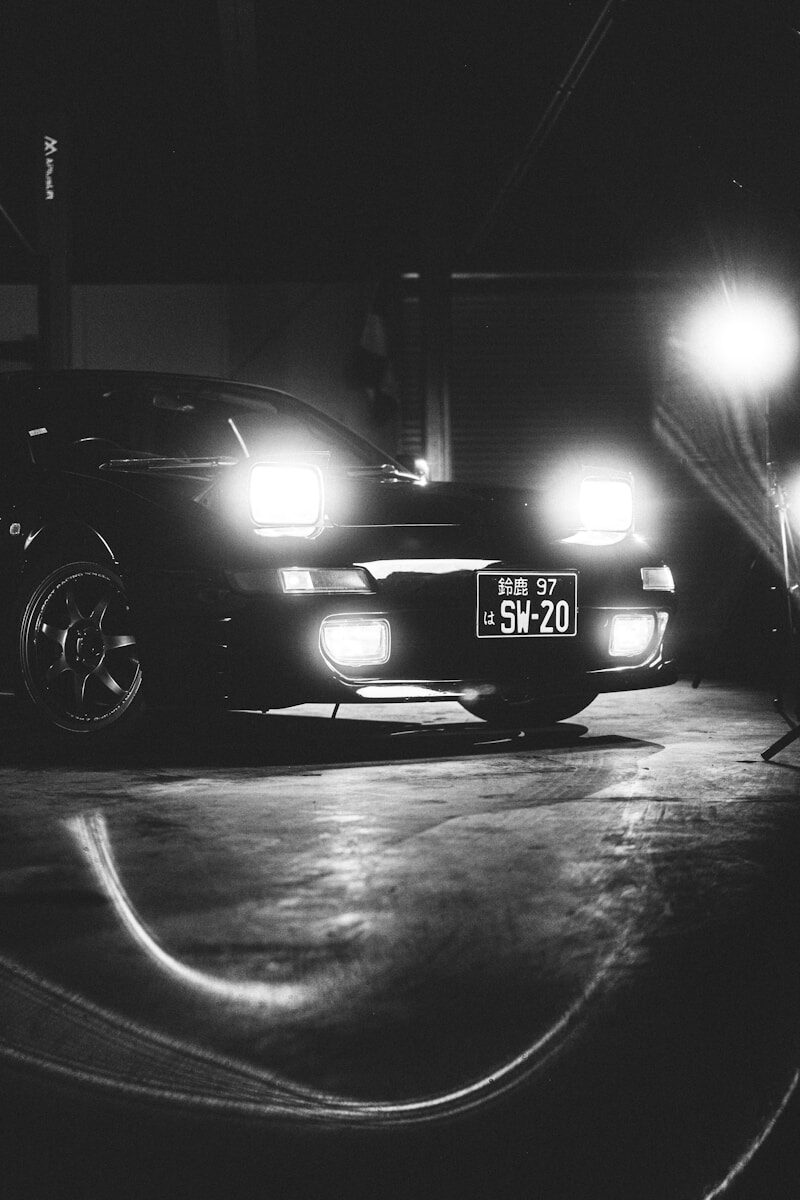
A Tennessee Highway Patrol trooper on Interstate 140 just after midnight Sunday found himself behind a slow-moving wall of cars — three of them, spread across the lanes, bleeding speed and stacking up traffic behind them. Two more cars sat at the front of that wall, side by side. Then those two left. The trooper estimated they were running near or past triple digits before he lit them up. All five pulled onto the right shoulder near the Westland Drive off-ramp, and all five drivers were charged.
The detail worth understanding is that the three blockers are looking at the same charge as the two who actually raced. That is not prosecutorial creativity. It’s how the statute has been written since 1959.
The 1959 sentence that sinks the blockers
Tennessee’s drag racing definitions contain a term that most street racers have apparently never read. A “participant” isn’t just the person operating a racing vehicle. It also covers anyone who arranges for, supervises, or in any manner sets a drag race in motion — and the statute says so expressly regardless of whether that person was driving a car in the race, or was even a passenger in one.
Related Articles
- Kia and Hyundai Mobis Just Paid $11.5 Million to Settle a Georgia Visa Scandal — Here’s What the Filing Reveals
- Koenigsegg’s 1,600-HP CCGT1 Is the Le Mans Monster the FIA Never Let Race
Read that plainly: under Tennessee law, you don’t have to touch a throttle in anger to be a participant. Coordinating the block is arranging. Clearing the road is setting it in motion. The guy filming from the shoulder is exposed under the same sentence. The blocker cars were, in the state’s telling, part of the apparatus of the race, and the apparatus is what the definition reaches.
There’s a second reason the blockers can’t hide behind their speedometers. Nothing in the definition requires anyone to prove how fast the racers went. The offense includes using vehicles to compare relative speeds or to outgain another vehicle. So the trooper’s missing radar lock — he gave an estimate, not a reading — is far less damaging to the state’s case than it would be in a straight speeding prosecution. The number is color. The conduct is the crime.
This is no longer a misdemeanor
Here’s the part that hasn’t caught up with the street-racing scene: as of July 1, 2024, drag racing in Tennessee is a Class E felony. It used to be a Class A misdemeanor. Under the state’s sentencing statute, a Class E felony carries one to six years.
That single reclassification changes the arithmetic of a night out entirely. A misdemeanor is a bad weekend, a fine, and a lawyer’s bill. A felony conviction follows you through job applications, professional licensing, firearm rights, and housing. Five people allegedly agreed to help two cars have a fifteen-second contest, and the exposure is a felony record apiece.
The same statute also puts the cars on the table. Any vehicle used to commit drag racing — or to run from it — is subject to seizure and forfeiture upon conviction. If you’ve spent four years and $30,000 building a car, that provision should get your attention more than the jail exposure does.
Then the license. Tennessee’s additional penalties provision requires a one-year revocation for anyone convicted of drag racing. A trial judge has discretion to allow a restricted license on a first offense, using the same framework applied to first-time DUI defendants. Convicted twice within ten years, and the revocation is permanent — not a long suspension, permanent.
Why the roadblock was the dangerous part
Enthusiasts tend to rationalize the blocker cars as the safety measure. It’s the opposite. The race itself is two vehicles moving in the same direction at similar speeds, which is a comparatively low-energy scenario until someone loses it. The blockade is where the energy gradient lives.
Interstate 140’s statutory ceiling is 70 mph, and the same speed statute makes it unlawful to drive slower than 55 mph in the left lane of a four-lane controlled-access highway. The blockers were breaking that provision before anyone launched. Now put a driver doing 70 into traffic that has suddenly dropped to, say, 40 in the dark. That’s a 30 mph closing rate on cars that are neither braking hard nor showing hazard lights, in a lane the approaching driver has every reason to expect is the fast one.
At 100 mph a car covers roughly 147 feet every second. A typical 1.5-second reaction adds about 220 feet before the brake pedal even moves, and a good street car still needs several hundred more feet to stop from that speed. That’s why the coordinated slowdown, not the burst of acceleration, is what turns an empty interstate into a multi-car pileup — and why a wrongful-death claim would name the blockers right alongside the racers.
The insurance surprise cuts both ways
Most drivers assume a racing conviction voids their auto policy. Look at the actual language. The standard ISO form excludes liability coverage for a vehicle located inside a facility designed for racing while competing in or preparing for a prearranged or organized racing or speed contest. Inside a facility. A street race on a public interstate doesn’t trip that particular exclusion — though plenty of carriers write their own broader wording covering prearranged, organized, or spontaneous speed contests, which absolutely would.
Related Articles
- Stolen in 1993, Found Decades Later: How a Routine CHP VIN Check Cracked This Chevelle Cold Case
- NASCAR Turns 8/18 Into Kyle Busch Day—and the Numbers Tell the Story
The exclusion isn’t where you get hurt anyway. The same form permits the insurer to cancel mid-term once the policy has been in force 60 days if the driver’s license — or that of anyone living with you, or anyone who customarily drives your car — has been suspended or revoked during the policy period. A drag racing conviction hands the carrier that trigger on a platter.
And what comes next isn’t cheap. Tennessee’s reinstatement rules tie the SR-22 filing period directly to the revocation period: a one-year revocation means a one-year SR-22, filed electronically by a licensed carrier, and letting it lapse restarts the mess. One of the drivers here also faces a financial responsibility charge — a Class C misdemeanor with a fine up to $300, plus a suspension once the state is notified of the conviction.
The takeaway
Rent the track. Knoxville has drag strips that will sell you a full evening of legal quarter-mile passes for less than a lawyer charges for an initial consultation. And if you’re the friend who “just blocks” — the one who never races, never gets a slip, never even opens the throttle — understand that Tennessee wrote you into the statute by name sixty-seven years ago, and the legislature made your role a felony two years ago. The charges here are allegations, and everyone involved is presumed innocent. The statute isn’t an allegation.
About the Author